Explore Cyprus with Our Interactive Map

Explore our top stories and discover ideas worth your time.

Cyprus Wedding Traditions

Cyprus Wedding Traditions

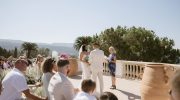
Cyprus wedding traditions blend Orthodox Christian ceremony with cultural practices maintained for generations in mountain villages and coastal towns. These customs involve entire communities, from engagement negotiations between families to multi-day celebrations featuring ritual preparations, church ceremonies, and elaborate feasts. While many couples now incorporate modern elements, traditional rituals like the groom's shaving ceremony, the dancing of wedding clothes, and the tying of red scarves around waists persist across the island. Cyprus's identity as the birthplace of Aphrodite, Greek goddess of love, adds symbolic weight to matrimonial ceremonies celebrated here. From Proposal to Formal Engagement Traditional Cypriot engagements begin when the groom's family visits the bride's family to formally request permission for the marriage. This meeting addresses practical matters including the dowry, wedding date, and financial arrangements. The groom's family brings gifts such as jewelry, clothes, and money to demonstrate goodwill and seriousness of intent. After families reach agreement, the couple exchanges rings worn on the right hand until the wedding day. Orthodox tradition places rings on the right hand because it represents God's blessing hand. The engagement announcement spreads to relatives and friends who offer congratulations and blessings to the couple. The groom's family accepts responsibility for making glistarkes, traditional sesame-coated breads that the bride's family distributes as wedding invitations. These round breads carry symbolic meaning related to fertility…

Read more
Sanctuary of the Great Mother (Avdimou)

Sanctuary of the Great Mother (Avdimou)

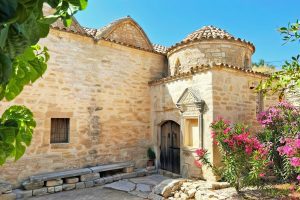
A cult site dedicated to the prehistoric fertility goddess, showing the continuity of worship from pagan fertility rites to later religious forms. The Sanctuary of the Great Mother in Avdimou represents a timeless spiritual hub in Cyprus, where ancient veneration of a fertility goddess evolved into Christian devotion to the Virgin Mary. Located in the rural village of Prastio Avdimou near the south coast, this site embodies the island's layered religious history, blending prehistoric fertility cults with Byzantine and medieval Christian practices. It highlights Cyprus's role as a crossroads of civilizations, where pagan rites centered on life, birth, and renewal transitioned seamlessly into the worship of Panagia, the "All-Holy" mother figure, fostering a enduring tradition of pilgrimage and miracle-seeking that persists today. A Cult Site of Continuity The Sanctuary of the Great Mother, embodied in the Church of Panagia Diakinousa in Prastio Avdimou, stands as a testament to Cyprus's spiritual evolution, nestled in a serene valley amid olive groves and rolling hills. This site, spanning less than a hectare but rich in symbolic depth, draws from prehistoric roots where fertility goddesses were honored for their power over life and nature. In ancient times, Cypriots revered a "Great Goddess" depicted in cruciform statues symbolizing childbirth, with hundreds of artifacts dating to 3000-2500 BC found across the island. The Avdimou area, with…

Read more

Tombs of the Kings

Tombs of the Kings

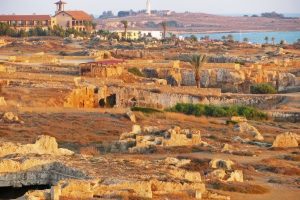
The Tombs of the Kings is a large necropolis that served the ancient city of Nea Paphos from the 3rd century BCE to the 3rd century CE. The site covers approximately 1.2 square kilometers in the northwestern part of the city, just outside the ancient fortifications. Eight major tomb complexes have been excavated, along with numerous smaller burial chambers. These monuments were built for Ptolemaic officials and aristocratic families who governed Cyprus during the Hellenistic period. The royal institution had been abolished in 312 BCE, so no actual kings were buried here. The name comes purely from the impressive scale and elaborate architecture of the tombs themselves. When early visitors saw these underground structures with their Doric columns and painted frescoes, they assumed only royalty could command such magnificent burial monuments. The tombs were carved from the natural limestone bedrock using tools and techniques developed in Alexandria, Egypt. The architecture imitates the houses of the living, following an Egyptian tradition that believed the dead should reside in spaces resembling their earthly homes. This created underground courtyards, burial chambers, and ritual spaces that remain remarkably preserved today. Historical Background Nea Paphos, meaning "New Paphos," was founded in the late 4th century BCE as the administrative capital of Cyprus under Ptolemaic rule. After Alexander the Great's death in 323 BCE, his empire…

Read more