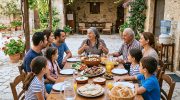
Community solidarity in Cyprus is a long-running social system that spread risk through trust, shared labour, and reciprocity, especially during foreign rule, hardship, and displacement. In villages, it acted as a practical safety net through kinship ties, communal work, and rituals that redistributed time, food, and care when families were vulnerable.

This article explains how those habits formed, how they still operate in modern cities through associations and digital networks, and why mutual support remains one of Cyprus’s most durable survival strategies.
Surviving Without Reliable Institutions
For much of its history, Cyprus existed under external rule, shifting borders, and limited self-determination. In this environment, survival depended less on state protection and more on community reliability. Villages became self-sustaining units where food production, housing, care for the vulnerable, and conflict resolution were managed collectively.

This mindset was established early. Archaeological evidence from sites such as Khirokitia shows that Cyprus’s earliest settled communities were already organised around shared labour and communal responsibility. Homes were built collectively, resources were managed locally, and daily life depended on cooperation rather than individual independence. These early patterns laid the foundation for a culture where solidarity was not optional but essential.
The Village as a Social Safety Net
Traditional Cypriot villages functioned as living social systems rather than simple residential clusters. Kinship extended beyond immediate family to include cousins, in-laws, godparents, and long-established neighbour relationships. Reputation mattered because trust determined access to support.
In times of illness, harvest failure, or financial hardship, assistance came from within the village. Labour was shared, food was redistributed, and childcare responsibilities were absorbed collectively. This was not charity in the modern sense, but reciprocity built on long-term expectation. Helping today meant being helped tomorrow.
Marriage and property practices reinforced these bonds. Homes were passed through families in ways that strengthened alliances between households, ensuring that support networks remained physically close and socially intact. Even after urban migration, many families recreated these structures within apartment buildings and extended family neighbourhoods.
Rituals That Shared the Burden
Life events in Cyprus rarely belonged to a single household. Weddings, funerals, and religious observances unfolded as communal experiences that reaffirmed shared responsibility rather than private milestones.

Traditional weddings, in particular, revealed how deeply solidarity was woven into social life. Preparations extended across entire villages, with families contributing labour, food, and financial support to ensure the couple’s stability. Guests arrived not simply to witness the event, but to participate in securing the new household’s future through collective giving. These gestures were understood as investments in continuity, strengthening the social fabric that would, in turn, support others in time.
Funerals carried a similar communal weight. Mourning did not end with burial, nor was grief confined to immediate relatives. Neighbours assumed practical responsibilities, from meal preparation to household assistance, allowing families space to mourn without isolation. Through these rituals, solidarity became visible during moments of vulnerability, reinforcing bonds precisely when they were most needed.
Shared Labour Built Reliability
Collective work formed one of the most enduring expressions of Cypriot solidarity. Agricultural life required cooperation, but the value of shared labour extended far beyond efficiency. Harvesting, food preservation, bread baking, and seasonal preparation became social acts that strengthened trust through repetition and shared effort.
Communal ovens, cooperative fields, and shared storage facilities reduced individual risk while ensuring that resources remained within the community. These systems offered protection against scarcity and external control, allowing villages to maintain a degree of autonomy even during periods of economic or political uncertainty.
Over time, this cooperative instinct evolved into formal structures. Credit unions and village-based cooperative banks emerged as extensions of older traditions, enabling farmers and small producers to access financial support without dependence on exploitative lenders. Economic resilience, like social resilience, remained grounded in collective ownership and shared responsibility.
Women’s Quiet Infrastructure
Much of Cyprus’s social endurance was sustained through informal networks led by women. In villages such as Lefkara, daily gatherings around lace-making, embroidery, and domestic work created spaces where economic activity, knowledge exchange, and emotional support converged.

These networks operated quietly but effectively. Skills were passed across generations, information circulated organically, and mutual assistance was offered without formal recognition. While men often represented households in public or administrative roles, women maintained the daily rhythms that kept communities functioning.

Through these interactions, solidarity became habitual rather than ceremonial. It was practised in conversation, cooperation, and shared responsibility, reinforcing continuity even as circumstances changed.
From Lace Circles to Networks
Urbanisation and technological change have reshaped how Cypriots interact, but not the underlying logic of solidarity. In cities such as Nicosia and Limassol, community support now emerges through neighbourhood associations, volunteer groups, and digital networks that mirror the communicative role once played by village squares.

Social media platforms have become modern extensions of communal coordination, allowing rapid responses to illness, financial hardship, or collective need. Fundraising campaigns, shared resources, and volunteer initiatives reflect older instincts expressed through contemporary tools.
Migration and refugee arrivals have further tested these traditions. Grassroots organisations offering food, housing assistance, and integration support demonstrate how filoxenia, the ethic of hospitality, continues to adapt without losing its core meaning. Solidarity remains responsive, reshaping itself without dissolving.
Why Solidarity Still Holds
Cyprus’s history reveals that resilience has never been built on individual strength alone. It has depended on cooperation, trust, and the expectation that support will circulate rather than accumulate. These practices allowed communities to endure conquest, displacement, and economic disruption without fracturing social bonds.
To understand Cyprus is to understand how the community operates beneath formal structures. The island’s identity is shaped not only by geography or politics, but by everyday systems of care that persist across generations. In Cyprus, solidarity is not symbolic. It is practical, lived, and deeply ingrained, a survival strategy that became a cultural inheritance.