
Cyprus holds a unique position in the history of fertility worship in the Mediterranean world. Archaeological evidence shows that a cult of female fertility developed intensively around 3000 BC in the Paphos region, with limestone and clay figurines representing birth-giving women in cruciform shapes.
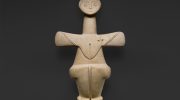
These early statuettes, ranging from 2 to 40 centimeters high, predate the famous Cycladic idols and center on protection during childbirth, crucial in societies where infant mortality ran high. This ancient worship eventually evolved into the cult of Aphrodite, the Greek goddess of love, beauty, and fertility, who became inseparably linked to Cyprus as her mythological birthplace.
The Great Sanctuary at Paphos
The Sanctuary of Aphrodite at Paphos, located at modern Kouklia, became the main center of worship for the entire Aegean world. The site gained UNESCO World Heritage status in 1980 for its historical and religious significance. According to Pausanias, the worship was introduced to Paphos from Syria, and from Paphos spread to Kythira in Greece. The cult likely had Phoenician origins, with archaeology establishing that Cypriots venerated a fertility goddess before the Greeks arrived and developed a cult combining Aegean and eastern mainland aspects.
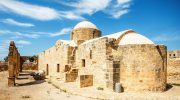
The goddess was worshipped in aniconic form, represented by a conical black stone believed to have come from a meteorite. This cult object stood in an open-air sanctuary, differing from typical Greco-Roman temples. According to ancient sources, blood could not be shed on the altar, with offerings limited to prayers, pure fire, painted animal figurines, rich perfumes, balms, honey libations, pancakes, foliage, and fruit. Despite being exposed to weather, legend claims the sacred stone never became wet from rain. During rituals, priests anointed the stone with oils, a practice echoed in the Homeric Hymn to Aphrodite.
The Aphrodisia festival took place annually. This celebration involved purification of the temple, followed by offerings, feasts, and processions. Men and women walked separately along the Sacred Way from New Paphos to Old Paphos wearing garlands, where games and contests of music and poetry were held. Ancient sources mention that every young maiden went once in her lifetime to the sanctuary to make love with a stranger, a practice known as sacred prostitution, though modern scholars debate the extent and exact nature of this custom.
Rituals at the Temple of Amathous
Amathous, on the southeastern coast near modern Limassol, hosted another major sanctuary dedicated to the fertility goddess. The site dates to at least the 11th century BC. Rituals performed at the annual celebration of Ariadne-Aphrodite, who was said to have died in childbirth, included sacrifice and a unique couvade rite during which a young man performed the part of a woman in labor. This ritual survives as one of the earliest documented examples of ceremonial male lying-in.

The couvade rite involved a young man lying down and imitating the crying and gestures of women during childbirth. This sympathetic magic aimed to ensure safe delivery and healthy children. The practice honored the myth of Ariadne, shown a tomb in the grove of Ariadne-Aphrodite at Amathous. Ariadne possessed features of a fertility goddess and became identified with the Cypriot deity.
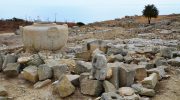
Aphrodite at Amathous probably had a bisexual character. Water played important roles in the cult, as evidenced by the enormous stone vases from the 6th to 5th centuries BC used for ritual ablutions. Sacred stones were worshiped on the acropolis, along with stone pillars shaped like Hathor heads, combining Egyptian motifs with Phoenician details. These represented visual synthesis between Cypriot Aphrodite and Egyptian Hathor or Isis, goddesses associated with love and motherhood.
The Temple Complex at Kition
At Kition, modern Larnaca, evidence of fertility rituals comes from rich archaeological finds discovered during excavations. Open courtyards contained sacrificial altars and offering tables. Skulls of oxen and other animals found on temple floors suggest these bucrania may have been worn as masks during ceremonies as part of fertility rites. Anthropomorphic masks were also worn during ritual performances.
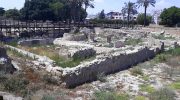
The bull symbolized fertility, with men wearing bull masks during ceremonies. Cult objects kept in the holy-of-holies included an ivory pipe for smoking opium and a perforated vase for burning opium to be inhaled. Opium served religious purposes, likely inducing trance states during which worshipers experienced direct connection with the divine.
The Phoenicians established a colony at Kition around 900 BC and rebuilt earlier temples. They dedicated the largest temple to Astarte, their goddess of fertility who shared many similarities with the Cypriot fertility goddess. Astarte worship at Kition continued until the 4th century BC, demonstrating the persistence of fertility cult practices across different ruling cultures.
Adonis and the Cycle of Death and Rebirth
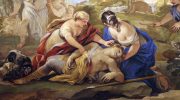
The myth of Aphrodite and Adonis, deeply rooted in Cypriot tradition, formed the basis for annual fertility festivals celebrating death and renewal. According to myth, Adonis was born from myrrh after Aphrodite transformed her daughter Myrrha into a fragrant bush. Adonis became Aphrodite’s lover but died young, gored by a wild boar during a hunt.
Funerary lamentations took place during annual celebrations honoring Aphrodite and Adonis. These festivals involved separate processions of men and women, ritual mourning, and ceremonies marking the death and resurrection of the vegetation god. The cycle represented agricultural renewal, with Adonis symbolizing crops that die in summer heat and revive with autumn rains.
Modern Cyprus preserves echoes of these ancient celebrations. The Kataklysmos Festival, a water-based celebration, traces roots to ancient ceremonies honoring Aphrodite and Adonis. While the Christian church frames it around the biblical flood, origins lie firmly in the goddess’s ancient cult. Similarly, the Anthistiria spring flower festival, especially popular in Paphos, continues traditions of processional worship though without the sacred prostitution that ancient sources describe.
The Power and Punishment of the Goddess
Ancient sources emphasize Aphrodite’s immense power and her punishment of those who failed to respect her. The Propoetids, women from Amathous who denied her divinity, were forced into prostitution and transformed into stone figures. The Kerastes, horned men who sacrificed strangers at the city entrance, became furious bulls through her curse.
These punishment myths reinforced the goddess’s authority and the necessity of proper worship. The fertility goddess demanded recognition and appropriate offerings. Communities that neglected her cult risked crop failure, infertility, and divine wrath. The stories served as cautionary tales maintaining religious observance across generations.
Legacy in Modern Cyprus
The Greek Orthodox Church of Cyprus preserves echoes of pagan rituals once dedicated to Aphrodite. Among these is the offering of wax babies, a custom meant to invoke blessings for fertility and health. Women seeking to conceive visit churches and offer these votive figures, continuing practices that predate Christianity by millennia.
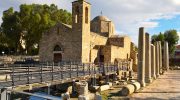
The name Aphrodite remains widely used for girls born on the island, demonstrating the goddess’s enduring cultural significance. Even as Orthodox Christianity replaced pagan worship, the fertility concerns that drove ancient rituals persisted. The church adapted rather than eliminated these deeply rooted practices, channeling them into Christian frameworks while preserving their essential function of addressing human reproductive anxieties.
Archaeological sites at Paphos, Amathous, and Kition attract thousands of visitors annually, many drawn by the romantic mythology of Aphrodite’s birthplace. The sites demonstrate how fertility worship shaped ancient Cypriot society, influenced Mediterranean religion, and created cultural patterns that persist today.