Explore Cyprus with Our Interactive Map

Explore our top stories and discover ideas worth your time.

Teaching Traditional Crafts in Cyprus Villages

Teaching Traditional Crafts in Cyprus Villages

"Learn a craft even if you don't need to and if you get hungry, practice it." This old Cypriot folk saying reflects the pragmatic wisdom of village life where craftsmen held backup skills to supplement income during agricultural hardship. Not so long ago people living at Cyprus villages were either farmers or shepherds and at the same time handcrafters. fetchpik-com People had to be creative and multi-talented, able to supplement their income if they faced difficulties, and a craft always came in handy. They engaged in basket weaving, icon painting for rich churches and landlords, silversmithing, wood carving, ceramic and pottery making, mosaic making, embroidery, wine and Commandaria making, and many more. The Cyprus Handicraft Service System In 1975 the Ministry of Commerce, Industry and Tourism undertook the responsibility for the preservation of Cyprus Folk Art, its development and encouragement into modern cottage industry and handicrafts. Specialised members of staff made studies and started projects initially funded by the High Commission for Refugees with the main target of offering employment to refugees and other affected persons and in parallel, the long-term development of cottage industry and handicrafts. fetchpik-com For the implementation of these goals the Cyprus Handicraft Service created the Handicraft Centre in Nicosia in 1979 with experimental workshops such as Embroidery, Weaving, Woodcarving, Pottery, Metalwork, Basketry and General Handicrafts,…

Read more

Cape Aspro Reserve

Cape Aspro Reserve

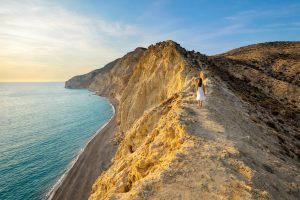
Cape Aspro is located on the southern coast of Cyprus between Limassol and Paphos. The name translates to "white" in Greek, a fitting description for the dramatic limestone cliffs that tower over 200 meters above the turquoise Mediterranean Sea. This natural reserve offers visitors a unique combination of geological wonder, biological diversity, and outdoor adventure. pissouriana-com The white cliffs of Cape Aspro formed over millions of years through natural geological processes. Composed of sedimentary limestone, these formations emerged as wind and sea erosion sculpted the coastline into its current dramatic shape. The cliffs feature caves, arches, and steep edges that create stunning visual contrasts, especially during sunrise and sunset when light reflects off the pale limestone surfaces. These geological formations connect to Cyprus's broader Troodos Ophiolite complex, a rare example where ancient oceanic crust and mantle rock were uplifted through tectonic activity approximately 90 million years ago. Today, visitors can see rocks that once existed more than 20 kilometers below the ocean floor, now exposed and accessible along the coastal trails. Network of Trails Leads to Panoramic Views The reserve features seven interconnected color-coded trails, with routes ranging from 3.5 kilometers to 12.3 kilometers in total distance. These paths wind along cliff edges and through the rugged coastal terrain, with the longest trail reaching approximately 10 kilometers when including the…

Read more
Larnaca Salt Lake Cyprus

Larnaca Salt Lake Cyprus

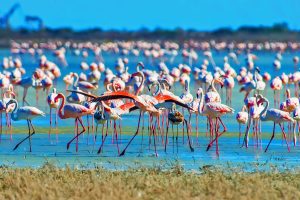
Larnaca Salt Lake is a complex network of four salt lakes of different sizes to the west of the city of Larnaca. The largest is Lake Aliki, followed by Lake Orphani, Lake Soros, and Lake Spiro. Three of these lakes interconnect to form the second largest salt lake complex in Cyprus after Limassol Salt Lake. Wikipedia-com The total surface area of the lakes adds up to 2.2 square kilometers, positioned between Larnaca International Airport and the historic Hala Sultan Tekke mosque. This location makes the salt lake one of the most visible natural landmarks for anyone arriving in Cyprus by air. Historical Background Archaeological finds show that the salt lake area has been inhabited since the Late Bronze Age, with a harbor that served the town unearthed near where the Hala Sultan Tekke mosque stands today. Ancient Larnaca, then known as Kition, functioned as one of Cyprus's major urban and commercial centers between 1650 and 1050 BC. The natural harbor provided strategic access to trading routes connecting Africa, Asia, and Europe. Before sediment deposit cordoned off the salt lakes, they formed a lagoon that was connected to the Mediterranean Sea. Over centuries, sediment accumulated in the channels linking the lagoon to the sea. Evidence suggests Bronze Age Cypriots dug an artificial channel to maintain port operations as natural waterways became…

Read more