In Cyprus, civic life is often learned long before formal politics, through scouts, youth clubs, cultural groups, and community projects where responsibility has real consequences. These organisations teach leadership through practice, from organising festivals and rehearsals to running clean-ups and coordinating volunteers, so accountability becomes a habit rather than an idea. This article explains the main youth pathways into civic participation, how they build trust across communities, and why these structures remain one of Cyprus’s most resilient sources of social cohesion.

- Civic learning outside the classroom
- Scouting as a long-standing leadership pathway
- Youth Clubs Run Village Life
- Culture Groups Teach Discipline
- Bridging communities through shared projects
- Environment as Entry Point
- Leadership through innovation
- Why these structures matter
- A living framework for civic life
Civic learning outside the classroom
Much of Cyprus’s youth engagement happens through non-formal education. Unlike school curricula, these settings emphasise participation over instruction. Young people learn by organising events, managing groups, resolving disagreements, and working toward shared goals that have visible outcomes in their communities.

Scout groups, youth clubs, and cultural associations function as practical training grounds. Leadership is learned by doing, whether that means coordinating a village festival, leading a patrol on a hike, or managing volunteers during a clean-up campaign. These experiences teach decision-making, accountability, and cooperation in ways that formal education rarely replicates.
Scouting as a long-standing leadership pathway
Scouting has existed in Cyprus for more than a century and remains one of the most structured systems for youth leadership development. Its model is built around gradual responsibility, where young members progress from participation to coordination and, eventually, mentorship.

A key feature is the patrol system, which places small groups under peer leadership. This approach encourages early confidence, problem-solving, and responsibility for others. Leadership is not symbolic. It is practical, tested in real situations, and reinforced through service activities that connect young people directly to their communities.
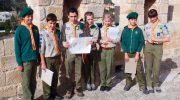
Scouting’s endurance reflects its adaptability. While its values remain consistent, its activities have evolved to include environmental action, social support, and emergency response, ensuring relevance across generations.
Youth Clubs Run Village Life
Beyond scouting, local youth clubs form one of the most widespread networks for youth engagement in Cyprus. Present in both urban neighbourhoods and rural villages, these clubs provide safe, structured environments where young people can gather, plan activities, and contribute to local life.

In smaller communities, youth clubs often play an outsized role. They organise festivals, support elderly residents, maintain public spaces, and keep cultural traditions active. Leadership here is deeply personal. Young organisers are accountable not to an abstract audience, but to neighbours, relatives, and familiar faces.

These settings teach responsibility through proximity. Success and failure are immediately visible, reinforcing the real-world consequences of organisation and follow-through.
Culture Groups Teach Discipline
Cultural associations occupy a distinctive position within Cyprus’s youth landscape, not merely as guardians of tradition, but as active spaces where civic skills are continuously practised. While dance groups, choirs, and theatre ensembles are often viewed through the lens of performance, participation demands far more than artistic ability. It requires discipline, coordination, and sustained commitment, qualities that closely mirror the foundations of civic responsibility
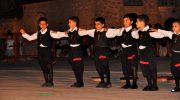
Rehearsals are collective efforts, shaped by timing, cooperation, and mutual reliance. Individual talent matters, but it only finds expression within shared structure. Young participants gradually take on organisational roles, coordinating practices, supporting newer members, and representing their communities at public events. Through this process, culture becomes more than heritage. It becomes a lived exercise in leadership and accountability.
Bridging communities through shared projects
On an island shaped by division, youth organisations increasingly serve as informal bridges between communities. Joint workshops, environmental initiatives, and heritage projects create opportunities for collaboration without demanding political alignment or uniform identity.

Working together on tangible tasks, whether restoring a shared landscape or organising a cultural exchange, allows young people to develop trust through action rather than debate. Leadership in these contexts is defined by listening, compromise, and cooperation. Civic engagement, here, emerges quietly, built through shared effort rather than ideological discussion.
Environment as Entry Point
Environmental initiatives have become one of the most visible expressions of youth-led civic participation in Cyprus. Clean-up campaigns, conservation projects, and sustainability workshops draw young volunteers into collective action with immediate and visible results.

When beaches are cleared, trails restored, or habitats protected, the impact of cooperation becomes tangible. These experiences reinforce a simple but powerful lesson. Civic action is not abstract. It produces change that can be seen, measured, and shared.
Environmental engagement also offers a rare form of inclusivity. It transcends political, cultural, and generational boundaries, allowing young people to step into civic roles through care for shared spaces.
Leadership through innovation
In recent years, youth leadership in Cyprus has expanded beyond traditional frameworks into areas of innovation and social entrepreneurship. Programs focused on technology, digital skills, and creative problem-solving encourage young participants to see innovation as a form of civic contribution rather than personal advancement alone.

Projects addressing community health, education access, or environmental challenges illustrate how leadership now includes adaptability and initiative. These efforts frame entrepreneurship not as separation from society, but as engagement with it, responding to real needs through practical solutions.
Why these structures matter
What unites scouting groups, youth clubs, cultural associations, environmental initiatives, and innovation programs is not the activity itself, but the environment they create. Each offers a structured space where young people practice responsibility in real contexts, with outcomes that affect others.
These organisations do more than occupy time. They cultivate habits that sustain communities over generations: cooperation, accountability, empathy, and initiative. Long before formal political participation begins, civic identity is already being shaped through these experiences.
A living framework for civic life
Youth engagement in Cyprus endures because it is woven into everyday life. It unfolds in village squares, community halls, rehearsal rooms, beaches, and digital spaces. Leadership is learned through shared responsibility and visible results, not abstract instruction.
As Cyprus continues to navigate social, environmental, and political challenges, these youth-driven structures remain among its most resilient civic resources. They ensure that participation is not postponed until adulthood, but practised early, grounded in culture, community, and care.
In this way, Cyprus’s youth organisations do more than prepare future leaders. They quietly sustain civic life itself, one meeting, rehearsal, and shared project at a time.