Cyprus has emerged as one of Europe’s top retirement destinations, attracting thousands of retirees annually with its combination of Mediterranean climate, favorable tax treatment, and accessible healthcare.

The island offers multiple pathways to residency for retirees from EU and non-EU countries, with costs and requirements that make long-term settlement achievable for many pensioners. Understanding why Europeans choose Cyprus for retirement reveals practical advantages that extend beyond the obvious appeal of year-round sunshine.
The Tax Advantage That Changes Everything
Cyprus offers one of Europe’s most attractive tax regimes for foreign pension income. Tax-resident retirees can choose between two taxation methods for their foreign pensions. The first option applies a flat 5% tax rate on pension income exceeding €5,000 annually, with amounts below this threshold remaining exempt. The second option taxes pension income at progressive rates ranging from 20% to 35% based on total earnings.
Most retirees select the 5% flat rate, which dramatically reduces tax burdens compared to home countries. A British retiree paying 40% tax in the UK who moves to Cyprus immediately cuts their pension tax to just 5% on amounts over €5,000. This difference adds thousands of euros to annual retirement income without any change to the pension itself.

Cyprus maintains double taxation agreements with 67 countries including the UK, United States, Germany, France, and most EU members. These treaties ensure retirees avoid paying taxes in both their origin country and Cyprus. UK state pensions and private workplace pensions become taxable only in Cyprus for residents, though UK government service pensions from military, police, teachers, and civil servants remain taxed in Britain.
Lump sum payments received as retirement gratuities or pension commutations face no taxation in Cyprus. The country also eliminated inheritance tax, gift tax, and wealth tax entirely, making estate planning simpler and reducing financial burdens on beneficiaries. These combined tax benefits can save retirees €10,000 to €30,000 annually depending on pension size.
Residence Permit Options and Requirements
Non-EU retirees have three main pathways to legal residency in Cyprus. The Category F permanent residence permit targets retirees with secure foreign income who do not need to work. Applicants must prove guaranteed annual income of at least €9,568 from sources outside Cyprus, increasing by €4,613 for each dependent. The permit covers spouses and children under 18, making it suitable for couples and families.
Category F requires depositing €15,000 to €20,000 in a Cypriot bank account and maintaining this balance throughout the residency period. Applicants must purchase or rent accommodation in Cyprus and provide proof through property contracts or rental agreements. Private health insurance covering both inpatient and outpatient care becomes mandatory, including provisions for repatriation and emergency transport.
The main drawback involves processing times. Migration authorities currently process Category F applications submitted in 2019, creating wait times of five to six years. During this period, applicants need temporary Pink Slip permits to remain in Cyprus legally beyond the 90-day visitor allowance. The Pink Slip grants one-year renewable residence for retirees with secured income and costs significantly less to obtain.
EU citizens enjoy automatic residence rights under EU freedom of movement rules. British retirees lost this advantage after Brexit and now must apply through Category F or Golden Visa routes. However, EU retirees can register for residence permits without income requirements or investment thresholds, making Cyprus particularly accessible for pensioners from France, Germany, Italy, and other member states.
Healthcare Access for Retirees
Cyprus operates the General Healthcare System that provides comprehensive medical coverage for all legal residents who contribute. Retirees with Category F permits or Golden Visas become eligible for GESY after registration through the Health Insurance Organization. Coverage includes general practitioners, specialist consultations, hospital care, prescription medications, laboratory tests, diagnostic imaging, physiotherapy, and maternity services.

GESY requires minimal copayments of €6 per specialist visit, €10 for emergency department visits, and €1 per prescription for generic medications. Annual copayment caps prevent excessive expenses, with standard residents paying maximum €300 yearly and vulnerable groups including pensioners paying only €75. Once these thresholds are reached, all subsequent services become free for the remainder of the year.
Cost of Living Considerations
Cyprus offers living costs roughly 13.8% below the United Kingdom on average, though this varies significantly by location and lifestyle. The Category F income requirement of €9,568 annually represents a minimum threshold that proves insufficient for comfortable living. Realistic budgets require €1,800 to €2,200 monthly for single retirees including rent, rising to €2,500 to €3,000 for couples.

Housing costs vary dramatically between cities. Paphos offers the most affordable options with one-bedroom apartments renting for €600 to €800 monthly. Limassol commands premium prices at €1,200 to €1,600 for comparable units. Nicosia sits in the middle at €700 to €1,200 monthly. Property purchase prices range from €170,000 for apartments in Paphos to over €500,000 in central Limassol.
Utility costs present the biggest expense surprise for newcomers. Cyprus ranks 10th in the EU for electricity prices at 30.95 cents per kilowatt-hour compared to the 24.6 cent EU average. Summer air conditioning and winter heating can push electricity bills to €150 to €200 for two-month periods. Water and garbage collection add another €50 to €100 monthly.
Grocery costs remain reasonable with weekly shopping for one person running €23 to €37, or roughly €250 to €400 monthly. Restaurant meals average €15 for inexpensive venues and €60 for three-course dinners for two at mid-range establishments. Public transportation provides affordable options with monthly bus passes costing €40 to €50, though most retirees own cars for convenience.
Where Retirees Choose to Settle
Paphos attracts over 50% of British retirees in Cyprus and serves as the primary retirement hub. The city combines affordable housing, slower pace of life, picturesque harbor, UNESCO World Heritage archaeological sites, and established English-speaking communities. Paphos hosts its own international airport with direct connections to the UK and Europe, eliminating the need to travel through Larnaca.
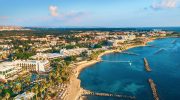
The Paphos district provides extensive support infrastructure for foreign retirees including English-language medical services, British-style pubs, familiar grocery stores stocking UK products, and social clubs. The British and Commonwealth Association, International Women’s Club, and various sports and hobby groups create ready-made social networks for newcomers.

Limassol serves retirees who prefer urban energy and modern amenities despite higher costs. The city features sophisticated restaurants, cultural events, marina districts, and the island’s strongest business ecosystem. Some retirees choose Limassol for its cosmopolitan atmosphere and extensive private healthcare facilities, accepting premium prices for enhanced convenience.

Larnaca offers middle-ground appeal with beaches, reasonable housing costs, and proximity to the main international airport. The city provides relaxed coastal living without the tourist intensity of other areas. Mountain villages like Lania, Omodos, and Platres attract retirees seeking cooler summers, traditional Cypriot culture, and peaceful rural settings within short drives of coastal cities.
Climate and Lifestyle Factors
Cyprus delivers over 300 sunny days annually with mild winters rarely dropping below 10°C in coastal areas. This climate supports year-round outdoor activities including swimming, hiking, cycling, and golf. Summers bring intense heat exceeding 35°C from June through September, requiring air conditioning and limiting midday outdoor activities.

The Mediterranean lifestyle emphasizes leisure, family, and social connections over work and productivity. This pace appeals to retirees escaping the rushed atmosphere of Northern European cities. Fresh local produce, seafood, traditional tavernas, and wine culture enhance the retirement experience for food enthusiasts.
Cyprus ranks among the safest countries globally with very low crime rates that particularly appeal to retirees concerned about security. The island’s EU membership provides legal protections, consumer rights, and economic stability. Plans to join the Schengen Area in 2026 will eliminate passport checks between Cyprus and 29 other European countries, making travel even easier.