Explore Cyprus with Our Interactive Map

Explore our top stories and discover ideas worth your time.

Whispers of White Petals in the Cypriot Breeze

Whispers of White Petals in the Cypriot Breeze

Picture a sun-drenched Cypriot meadow in spring, dotted with cheerful daisy-like flowers that bob like tiny suns on slender stems, their delicate scent mingling with the salty sea air. These are the Anthemis or Mayweed species, often mistaken for their chamomile cousins, a group of wildflowers that paint the island's landscapes with subtle beauty. But what tales do these unassuming blooms tell of Cyprus' wild heart? Getting Acquainted with the Island's Daisies Anthemis is a genus of flowering plants in the vast Asteraceae family, which includes everything from sunflowers to dandelions, showing how these humble herbs fit into a broader world of composite blooms that rely on wind and insects for their spread. In Cyprus, they're known as wild chamomiles or μαργαρίτες (margaritas) in Greek, evoking simple, everyday beauty. Think of them as the island's resilient ground-huggers, annual or perennial herbs that thrive in open spaces, offering a gentle introduction to the Mediterranean's floral diversity without any fuss. A Legacy Etched in Ancient Soils The story of Anthemis in Cyprus reaches back to the island's Bronze Age settlers, who likely encountered these flowers amid terraced fields and rocky hills, perhaps using them in early herbal remedies as hinted in ancient texts like Dioscorides' "De Materia Medica," where similar chamomiles were praised for soothing woes. Over centuries, as Phoenicians, Greeks, and…

Read more
Epiphany Water Blessings Cyprus

Epiphany Water Blessings Cyprus

Epiphany in Cyprus marks the conclusion of the 12-day Christmas period on January 6, commemorating Christ's baptism in the Jordan River by John the Baptist. Known as Theophania or Ta Fota meaning Feast of Lights, the celebration centers on water blessing ceremonies that purify homes, drive away evil spirits, and renew communities for the coming year. The most dramatic ritual involves priests throwing a wooden cross into the sea, rivers, or lakes while brave swimmers dive into cold winter waters to retrieve it. The person who successfully recovers the cross receives blessings and good fortune for the entire year ahead. Beyond the cross diving spectacle, Epiphany includes church services, home blessings, distribution of holy water, children's caroling, and traditional sweets. The day officially ends the presence of Kalikantzari, mischievous goblins believed to plague homes during the Christmas period, restoring order and spiritual cleanliness to Cypriot households and communities. Historical Background The Feast of Epiphany commemorates the moment when Jesus was baptized by John the Baptist in the Jordan River, marking the public beginning of his ministry. According to the Gospels, when Christ emerged from the water, the heavens opened and the Holy Spirit descended in the form of a dove while God's voice proclaimed Jesus as his beloved son. This event represents the Theophany or manifestation of the Holy Trinity,…

Read more
Limassol Lefkosia Fault Zones

Limassol Lefkosia Fault Zones

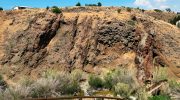
The Limassol-Lefkosia region contains several major fault systems, with the Southern Troodos Transform Fault Zone being the most significant. This fault zone runs along the southern margin of the Troodos ophiolite, the massive block of ocean floor rock that forms the central mountains of Cyprus. The fault is at least 5 kilometers wide in some places and trends east to west across the island. Transform faults are places where two tectonic plates slide horizontally past each other rather than colliding or pulling apart. The Southern Troodos Transform Fault formed around 90 million years ago on the ocean floor when Cyprus was still underwater. The fault separated two spreading ridges where new ocean crust was being created, much like the San Andreas Fault in California separates two plates today. Historical Background About 90 million years ago, during the Late Cretaceous period, Cyprus didn't exist as an island. Instead, the rocks that now form the Troodos Mountains were part of the Neotethys Ocean seafloor. At underwater spreading ridges, hot magma rose from deep in the Earth and created new ocean crust. This process happened in a region above a subduction zone where one tectonic plate was diving beneath another. The transform fault developed perpendicular to these spreading ridges and allowed different sections of ocean floor to move past each other. As the…

Read more