Picture a sun-drenched Cypriot meadow in spring, dotted with cheerful daisy-like flowers that bob like tiny suns on slender stems, their delicate scent mingling with the salty sea air. These are the Anthemis or Mayweed species, often mistaken for their chamomile cousins, a group of wildflowers that paint the island’s landscapes with subtle beauty. But what tales do these unassuming blooms tell of Cyprus’ wild heart?
Getting Acquainted with the Island’s Daisies
Anthemis is a genus of flowering plants in the vast Asteraceae family, which includes everything from sunflowers to dandelions, showing how these humble herbs fit into a broader world of composite blooms that rely on wind and insects for their spread. In Cyprus, they’re known as wild chamomiles or μαργαρίτες (margaritas) in Greek, evoking simple, everyday beauty. Think of them as the island’s resilient ground-huggers, annual or perennial herbs that thrive in open spaces, offering a gentle introduction to the Mediterranean’s floral diversity without any fuss.
A Legacy Etched in Ancient Soils
The story of Anthemis in Cyprus reaches back to the island’s Bronze Age settlers, who likely encountered these flowers amid terraced fields and rocky hills, perhaps using them in early herbal remedies as hinted in ancient texts like Dioscorides’ “De Materia Medica,” where similar chamomiles were praised for soothing woes.
Over centuries, as Phoenicians, Greeks, and Ottomans shaped Cyprus, these plants adapted to human-touched lands, symbolizing endurance in a place where geology – from volcanic peaks to limestone coasts has sculpted a mosaic of habitats. In folklore, they’re tied to rural life, where villagers saw them as signs of fertile earth, blending natural history with the island’s layered cultural past.
Portraits of Petaled Charm
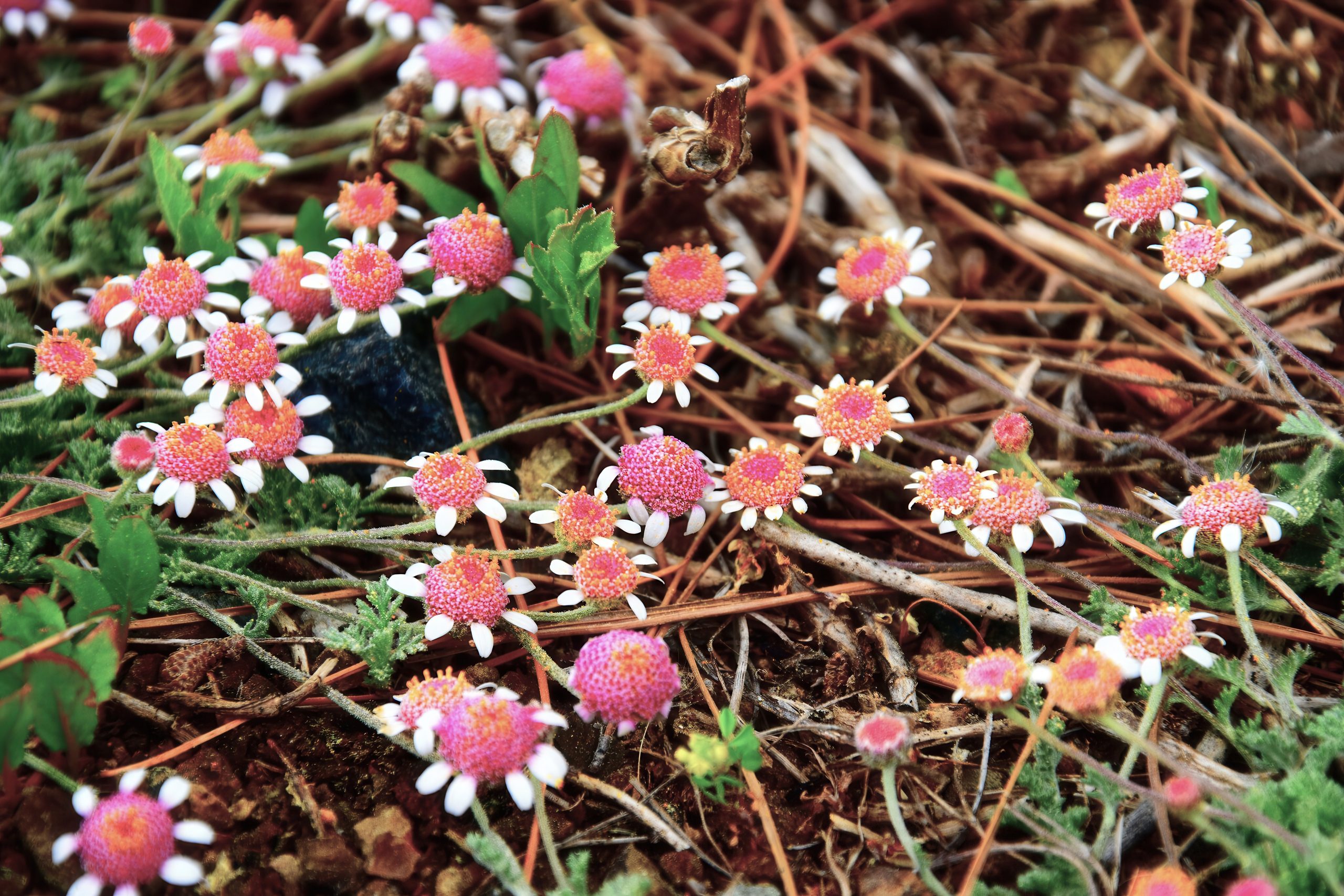
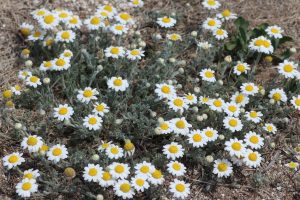
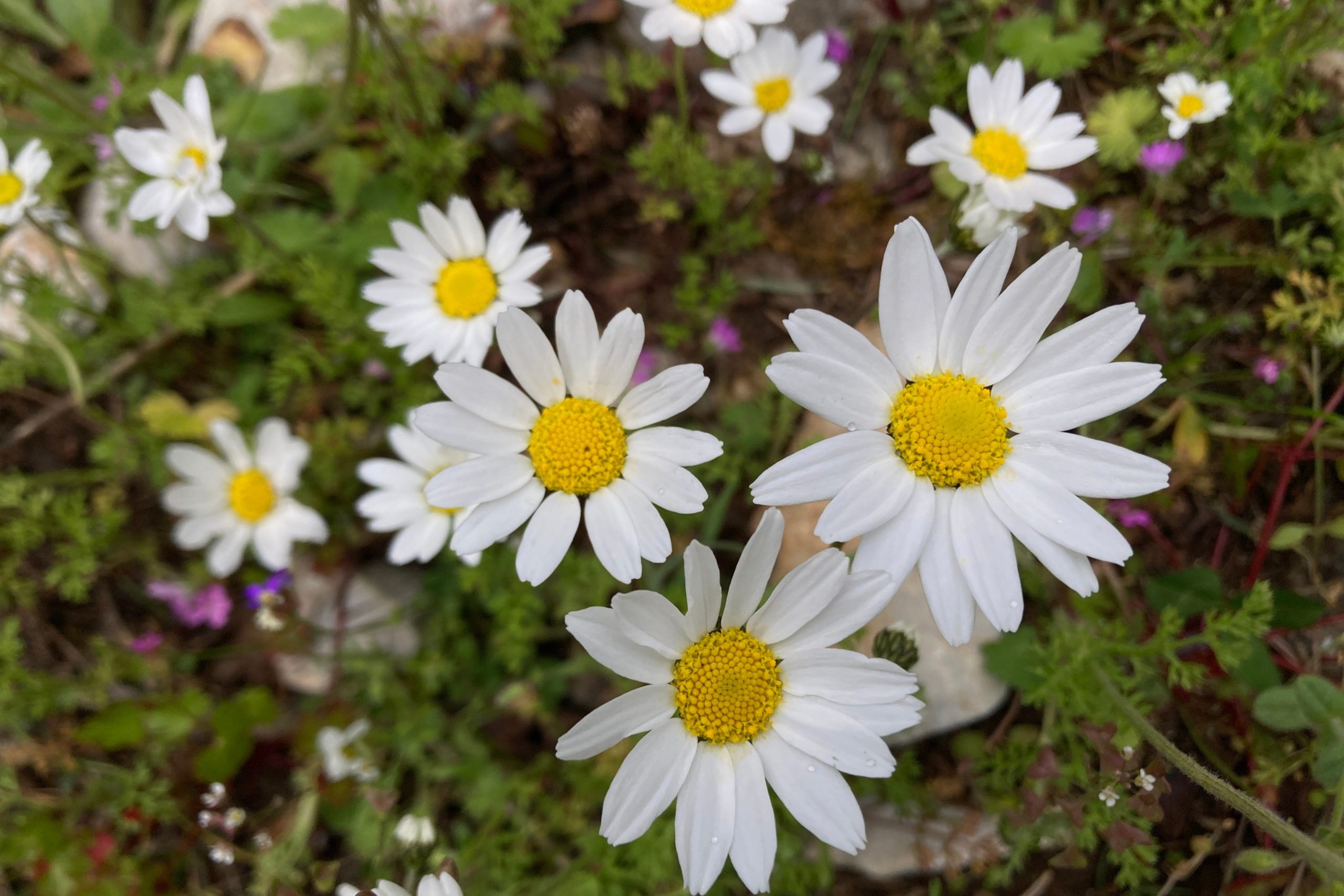
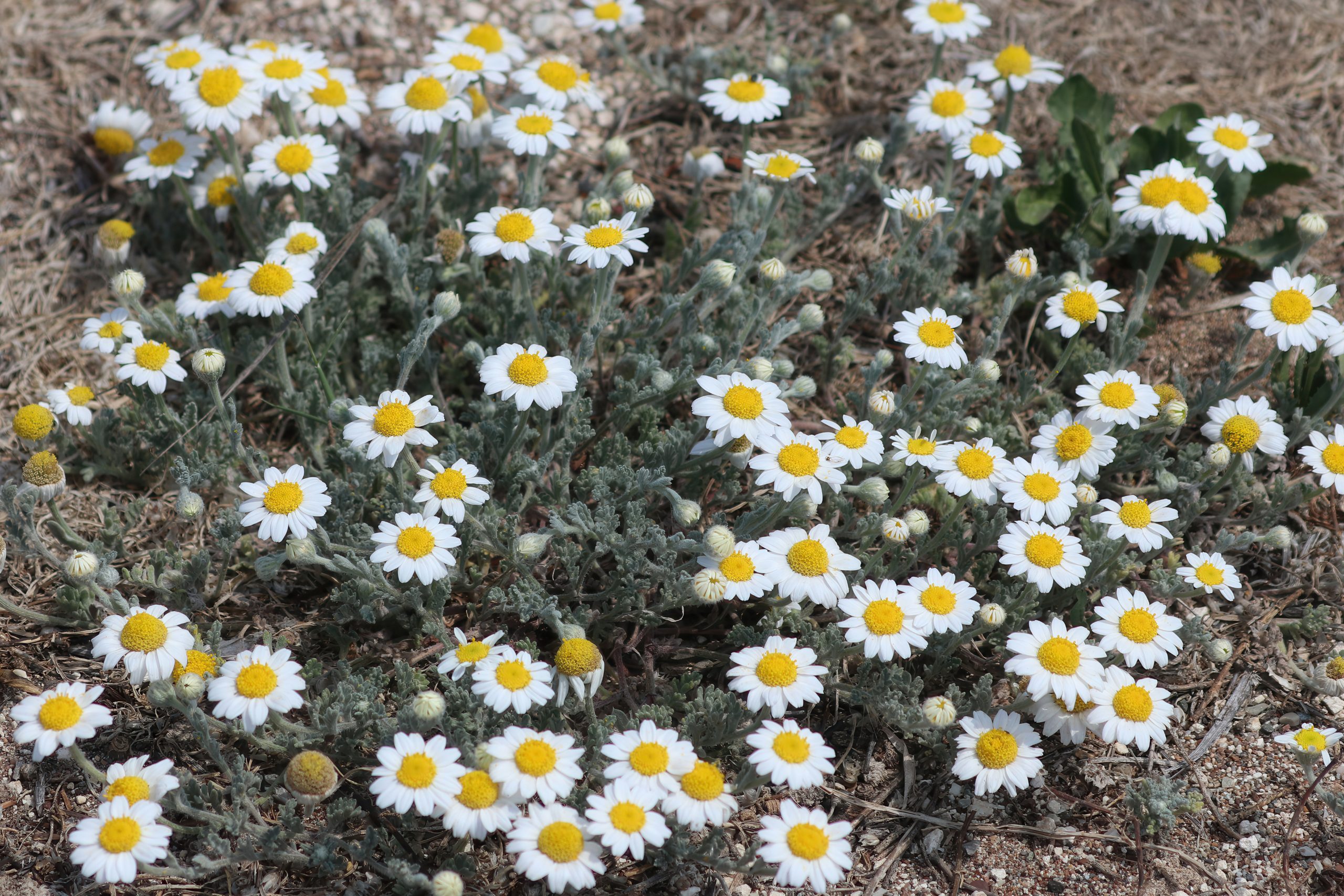
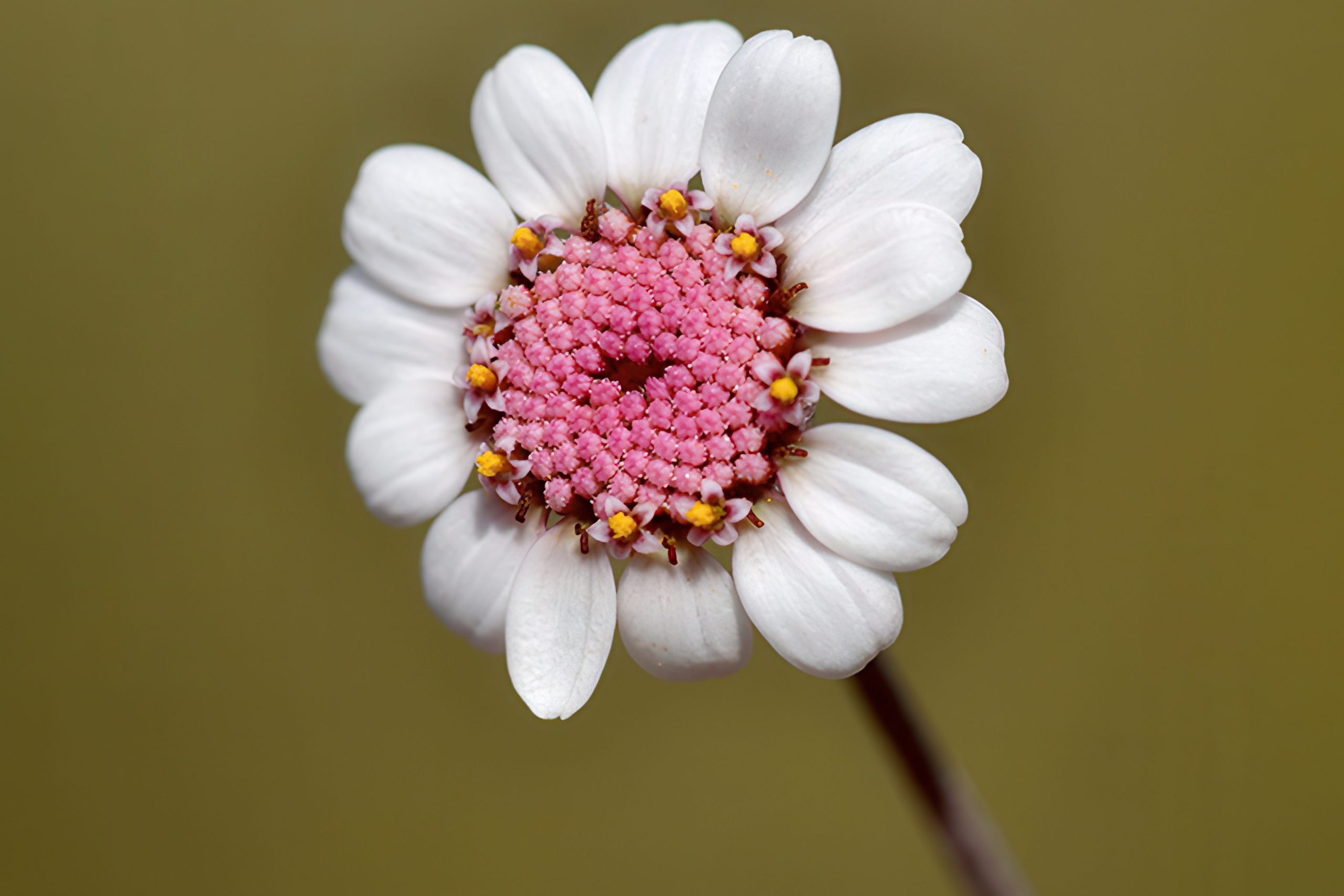
What sets Anthemis apart is their classic daisy form: small heads with white ray florets encircling a yellow disk, perched on stems from 10 to 60 centimeters tall, with feathery, divided leaves that release a mild, sometimes pungent aroma when crushed. Species like Anthemis cotula, with its foul-smelling foliage earning the name “stinking mayweed,” contrast with the woolly, silver-tinged Anthemis tomentosa, which hugs coastal sands like a soft blanket. Their blooms, often 1-3 centimeters wide, vary from pure white to hints of pink or purple, making each one a unique brushstroke in Cyprus’ wild canvas.
Delightful Discoveries
• Anthemis tinctoria, known as dyer’s chamomile, was once used by ancient Cypriots to extract golden-yellow dyes for fabrics, turning everyday blooms into artistic tools – imagine your tunic glowing like the sun!
• Some species, like Anthemis chia (locally called “χία ανθεμίς,” referencing its Chios island first description), attract butterflies with their nectar, hosting mini pollinator parties, while Anthemis rigida’s rigid stems were believed in old tales to ward off storms, a charming superstition from stormy Troodos winters.
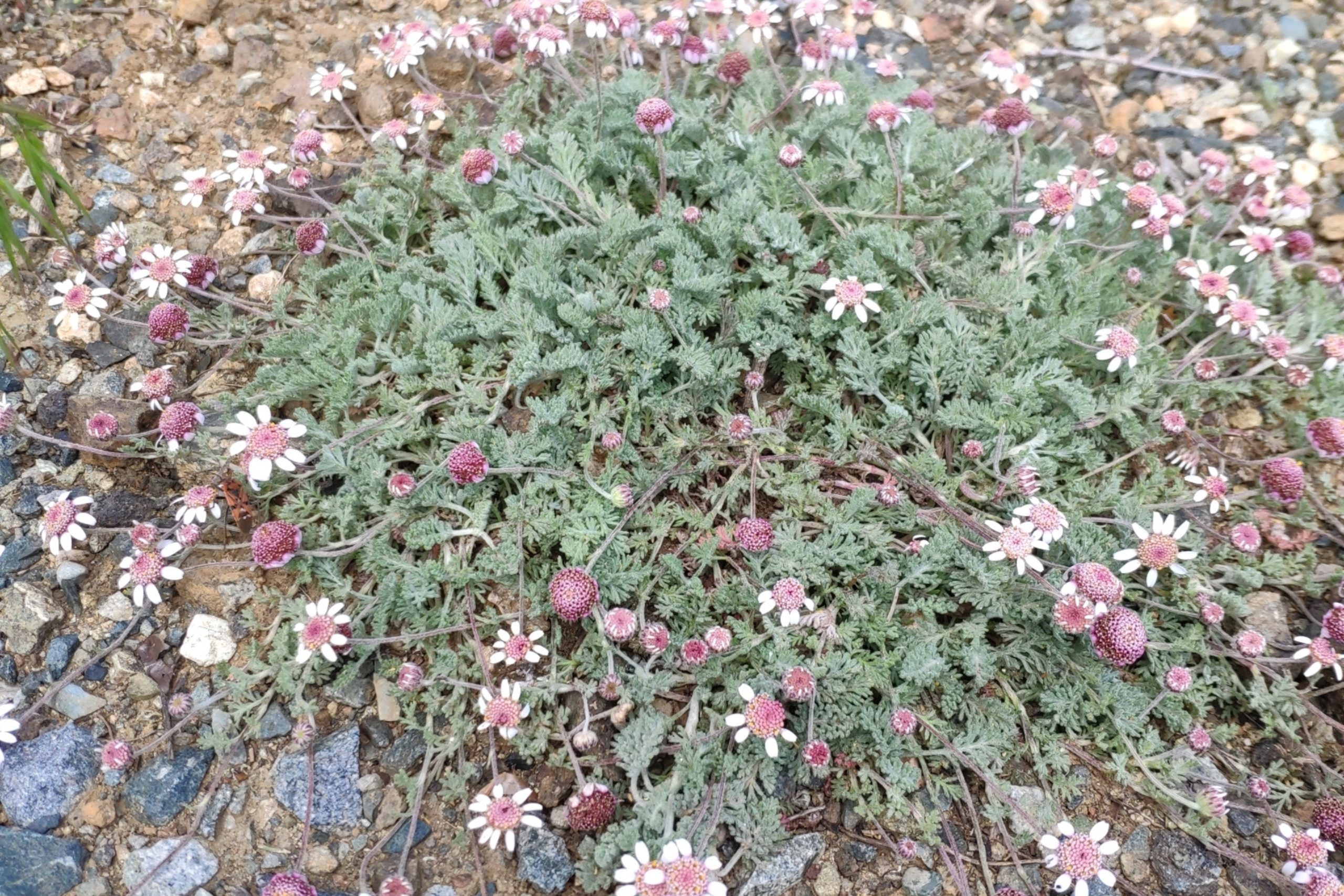
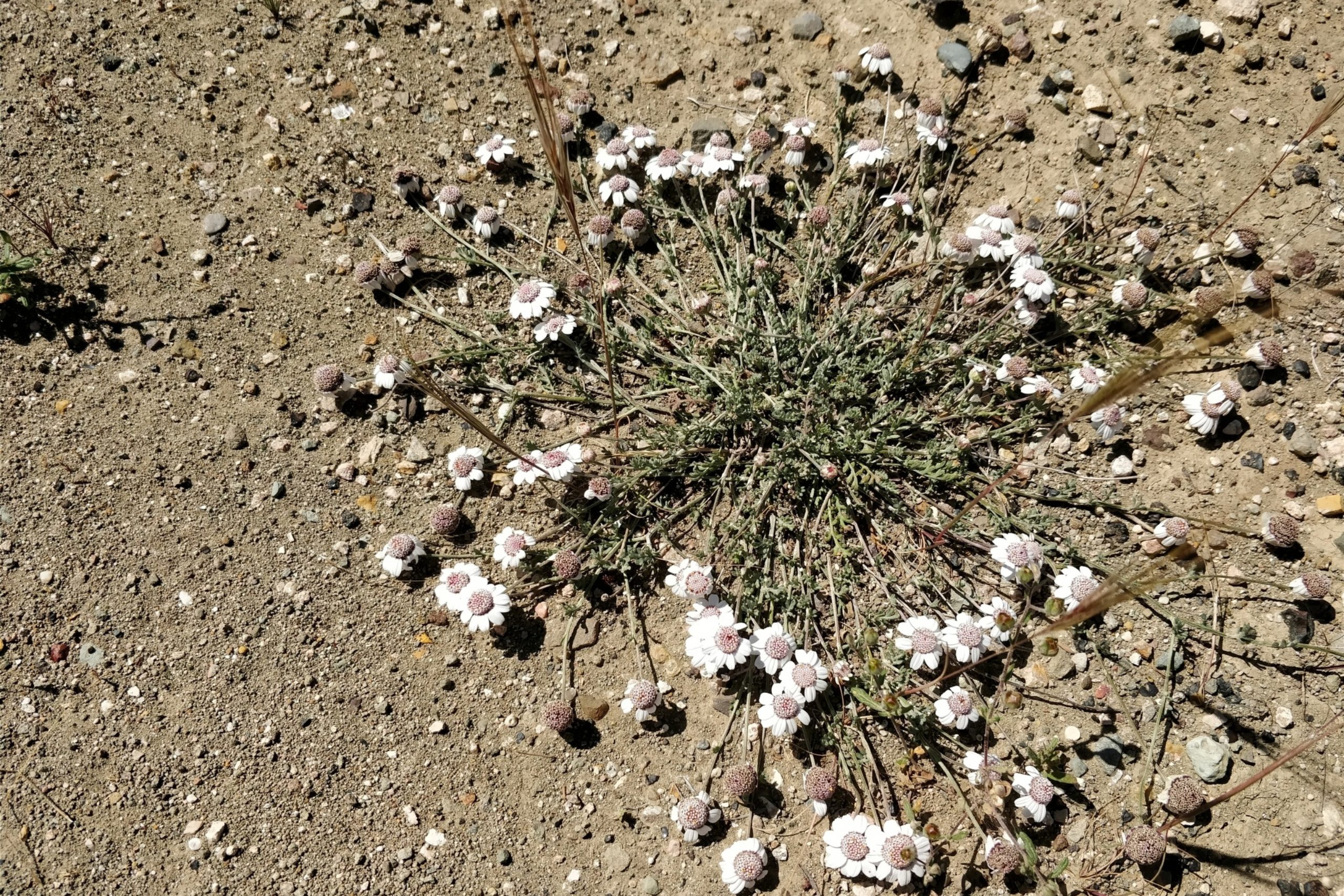
• Anthemis plutonia – Named After the God of the Underworld. The species epithet plutonia comes from the Latin Pluto and the Ancient Greek Πλούτων (Pluton), the male subterranean god of the Underworld in Greek and Roman mythology. Despite this ominous name, it is a very common plant on the dry igneous hillsides and roadsides of the Troödos Mountains, growing all the way from 250 m up to the island’s highest peaks at 1,950 m.
• True to its name, A. tricolor produces disc florets that can be white, pink, or purple – hence “tricolor.” Chemically it stands out too: researchers found it contains totarol, an unusual compound with both cytotoxic and acetylcholinesterase-inhibitory properties – the latter being relevant to Alzheimer’s research – making it a potentially valuable source of pharmacologically active compounds. Analysis of the essential oil from A. tricolor revealed 40 compounds, – a chemical fingerprint unlike most other Anthemis species and one that hadn’t been studied in detail until relatively recently.
• Antibacterial Potential in a Woolly Coastal Plant: A. tomentosa is a procumbent, whitish woolly-hairy annual found at sea level in Cyprus. Studies on its essential oil found that the oils from aerial parts showed good activity against Gram-positive bacteria, suggesting potential applications as preservative agents in food manufacture and cosmetology, or as candidates for new antibiotics.
• The Chamomile That Stings! Present across Cyprus, A. cotula has a long history of traditional use for conditions ranging from rheumatism to fevers, but comes with a twist: the whole plant is penetrated by an acrid juice, and touching or ingesting it can cause allergic reactions in some people, with the remedy itself potentially giving sensitive individuals painful blisters. It’s essentially a chamomile that bites back.
Layers of Lore and Science
Diving a bit deeper, Cyprus hosts about 11 Anthemis species, including endemics like Anthemis plutonia and Anthemis tricolor, alongside widespread ones such as Anthemis palaestina, Anthemis amblyolepis, Anthemis austriaca, Anthemis chia, Anthemis cotula, Anthemis parvifolia, Anthemis pseudocotula subsp. rotata, Anthemis rigida, and Anthemis tomentosa.
Botanically, their essential oils contain compounds like chamazulene, similar to true chamomile, offering anti-inflammatory perks in traditional teas for tummy troubles or skin soothers. In Cypriot herbal lore, they’re brewed for calming infusions, echoing broader Mediterranean uses in mythology where they symbolized healing gods.
Blooming in Today’s Cyprus
In modern Cyprus, Anthemis species weave into everyday life as symbols of biodiversity, with some like Anthemis tomentosa classified as Endangered on the island’s Red Data Book (though not globally assessed by IUCN, highlighting local vulnerabilities), urging conservation amid urban sprawl. Others, such as Anthemis cotula (Least Concern on IUCN), pop up in organic farms or eco-tourism spots, where they’re valued for natural pest control or as wild edibles in salads. They remind Cypriots of sustainable living, fitting into the island’s push for green identity in a warming world.
Wandering Among the Wildflowers
To experience Anthemis, stroll coastal paths like those near Paphos or the Akamas Peninsula in spring, when blooms carpet the ground in white and yellow – it’s a peaceful hike, feeling like stepping into a living postcard, with the sea’s murmur and floral scents creating a serene, restorative escape. For rarer ones like endemic Anthemis plutonia (not assessed by IUCN but precious locally), Troodos trails offer glimpses, always treading lightly to preserve their habitats.
Cyprus’ Enduring Floral Friends
Understanding Anthemis enriches our view of Cyprus as a Mediterranean jewel, where these simple flowers bridge ancient remedies to today’s eco-awareness, fostering appreciation for the island’s fragile wild beauty. In a land of myths and mountains, they teach us that even the smallest petals hold stories worth protecting, inviting us to nurture nature’s quiet gifts.