Explore Cyprus with Our Interactive Map

Explore our top stories and discover ideas worth your time.

Cyprus’s Beaches and Coastlines

Cyprus’s Beaches and Coastlines

Cyprus's beaches aren't just beautiful stretches of sand and sea - they're ancient gateways where civilizations arrived, traded, and shaped Mediterranean history for over 11,000 years. From the legendary birthplace of Aphrodite rising from sea foam to remote turtle nesting grounds, from Bronze Age harbors buried beneath modern sand to medieval fortresses guarding strategic bays, the island's 650 kilometers of coastline blend natural beauty with deep cultural memory. Step onto these shores and visitors will find themselves standing where prehistoric sailors first landed, where ancient traders shipped copper to distant empires, and where myths were born from the meeting of land and water. An Island Defined by Its Edges Cyprus has over 650 kilometers (about 400 miles) of extraordinarily diverse coastline packed into a relatively small island. This isn't one uniform beach experience but a spectrum ranging from soft white sand to golden grit, from dark volcanic pebbles to pale limestone shelves, from shallow turquoise bays to dramatic cliffs plunging into deep blue water. Some beaches are calm and protected, perfect for families with small children, while others face open sea with waves that attract surfers and adventurers. The coastline functions as more than just scenic backdrop or tourism amenity - it's where Cyprus's story begins and continues. Long before beaches became places of leisure and sunbathing, they were gateways…

Read more
Phyti Weaving Tradition

Phyti Weaving Tradition

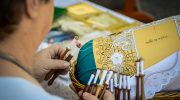
Phyti Weaving Tradition is a distinctive Cypriot craft originating from the village of Phyti, involving highly symbolic woven textiles characterized by bright colors and ritual motifs, originally created for dowries and ceremonial purposes. This handmade art form uses intricate patterns on cotton or linen fabrics to convey themes of protection, fertility, and harmony, passed down through generations of female artisans. Recognized as part of Cyprus's intangible cultural heritage, it embodies the island's blend of ancient symbolism and practical beauty, preserving a legacy of women's creativity in rural life. A Timeless Craft of Color and Symbol Phyti weaving stands as a vibrant expression of Cypriot textile heritage, where artisans produce fabrics adorned with geometric designs and bold hues that hold deep symbolic value. Centered in the village of Phyti in the Paphos District, this tradition focuses on hand-loomed cotton or linen pieces, often in red, blue, and yellow, featuring motifs like diamonds for protection or crosses for faith. These textiles were historically crafted by women for dowries - essential marriage gifts symbolizing a bride's skill and family's prosperity - or ceremonial uses like altar cloths in churches. The craft's emphasis on ritual patterns reflects a worldview where everyday items carried spiritual weight, blending utility with meaning in Cypriot rural life. The process begins with "dafna," a counted thread technique where threads…

Read more
Village Loom Weaving Fythkiotika

Village Loom Weaving Fythkiotika

Village Loom Weaving (Fythkiotika & Regional Variants) is a home-based textile production tradition in Cyprus, combining wool and cotton to create symbolic fabrics that preserve ancient patterns linked to identity and status. Originating in rural villages, this craft involves intricate loom work by women, producing items like bedcovers and rugs with geometric designs that carry meanings of protection, fertility, and heritage. Recognized as part of Cyprus's intangible cultural heritage, it reflects the island's agrarian past and women's role in sustaining cultural continuity through generations. A Timeless Craft of Thread and Tradition Village loom weaving in Cyprus represents a cornerstone of the island's folk artistry, where domestic looms produce textiles that blend functionality with profound symbolism. Known as Fythkiotika in regions like Phyti village, this practice uses wool for warmth and cotton for durability, creating heavy fabrics suited to mountain climates. Patterns feature geometric motifs like diamonds, crosses, and zigzags, often in bold reds, blues, and natural whites, each carrying cultural weight – diamonds for unity, crosses for faith. This weaving was historically a women's domain, done in homes as part of daily life, producing items for household use, dowries, or ceremonial purposes. The craft's emphasis on ritual designs ties to a worldview where everyday items served as talismans, protecting families and marking social status in rural communities. The process involves…

Read more