Explore Cyprus with Our Interactive Map

Explore our top stories and discover ideas worth your time.

Pyrgos Mavroraki Sacred Site

Pyrgos Mavroraki Sacred Site

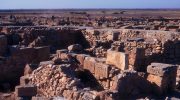
Pyrgos-Mavroraki is an Early to Middle Bronze Age settlement on the southern coast of Cyprus near modern Limassol. Excavations began in the early 2000s by the Italian Archaeological Mission of ITABC-CNR. Radiocarbon dating shows copper smelting started here as early as 4229–3960 BC during the Chalcolithic period. Even older copper slag from 8631–8291 BC was found, possibly from accidental metal use while making lime. This makes Pyrgos one of the earliest places for metal work in the Mediterranean. The settlement was on the slope of a small hill in a valley crossed by a stream. It sat on rocks with copper and had easy access to nearby mines at Mavrovouni and other sites. People lived there continuously from the 9th millennium BC until an earthquake destroyed it around 1850 BC. Historical Background The area around Pyrgos was rich in copper deposits and had plenty of water, making it ideal for metalworking. Nearby mines created a line of activity along the coast through villages such as Aghios Tychonas, Parekklisha, Pyrgos, Moni, Monagroulli, Asgata, and Kalavassos. Excavations at Pyrgos-Mavroraki revealed the full process of copper production. Archaeologists found workshops with basalt anvils, thousands of copper nuggets, broken crucibles, clay molds, stone tools, and pit furnaces dating to the early Bronze Age. These finds show how copper was extracted, processed, and shaped at…

Read more
Cyprus Metal Crafts Through Ages

Cyprus Metal Crafts Through Ages

Cyprus holds a unique position in metalworking history. The island gave its name to copper itself, with the Latin term "cuprum" deriving from "Cyprus." For over 6,000 years, Cypriot artisans have shaped metals into tools, weapons, jewelry, and decorative objects. The tradition spans from simple Chalcolithic copper tools around 4000 BCE to Byzantine gold treasures and modern handcrafted silver jewelry. This heritage connects ancient mining operations in the Troodos Mountains with contemporary workshops where craftspeople maintain techniques passed down through generations. Historical Background The metal story in Cyprus begins during the Chalcolithic period when early settlers discovered native copper deposits. By 3000 BCE, Cypriots were already working copper to create artifacts of high quality that circulated throughout the Mediterranean. Archaeological evidence shows that copper smelting started during the third millennium BCE, transforming the island into a major production center. The Bronze Age brought massive expansion. Cyprus became the largest copper supplier around the Mediterranean, with the island's strategic location between three continents making it a vital trading hub. Ancient texts from Babylon, Mari, and Alalakh dating to the 19th through 17th centuries BCE mention copper from Alashiya, the Bronze Age name for Cyprus. The Ulu Burun shipwreck discovered off Turkey's southwestern coast carried over 10 tons of Cypriot copper ingots when it sank in the late 14th century BCE, demonstrating…

Read more
Omodos Medieval Architecture

Omodos Medieval Architecture

Omodos is a mountain village in the Limassol district of Cyprus, located 42 kilometers northwest of the city at an elevation of 810 meters. The village sits in the heart of the Krasochoria region, a wine-producing area in the Troodos foothills. The village square, covering 3,000 square meters and dating to 1910, stands as one of the largest in Cyprus. The architectural character of Omodos creates what many describe as a living museum, where centuries of building traditions remain visible in everyday structures. This preservation has made the village a protected heritage site and a key destination for those interested in traditional Cypriot architecture. Historical Background The village likely came into existence at the end of the Byzantine period, sometime around the 12th or 13th century. According to historical records, two earlier settlements called Pano Koupetra and Kato Koupetra existed on the east bank of the Cha-potami river. After these settlements dissolved, residents established a new community around the Monastery of the Holy Cross, creating what became modern Omodos. Historical tradition claims that Isaac Comnenos, the Byzantine despot of Cyprus from 1185 to 1191, took refuge in Koupetra after his defeat by the English King Richard the Lionheart, confirming that settlements existed in this area by 1191. Medieval records document the village during the Frankish period when Cyprus was under…

Read more