Explore Cyprus with Our Interactive Map

Explore our top stories and discover ideas worth your time.

Why Retirement in Cyprus Popular Among Europeans

Why Retirement in Cyprus Popular Among Europeans

Cyprus has emerged as one of Europe's top retirement destinations, attracting thousands of retirees annually with its combination of Mediterranean climate, favorable tax treatment, and accessible healthcare. The island offers multiple pathways to residency for retirees from EU and non-EU countries, with costs and requirements that make long-term settlement achievable for many pensioners. Understanding why Europeans choose Cyprus for retirement reveals practical advantages that extend beyond the obvious appeal of year-round sunshine. The Tax Advantage That Changes Everything Cyprus offers one of Europe's most attractive tax regimes for foreign pension income. Tax-resident retirees can choose between two taxation methods for their foreign pensions. The first option applies a flat 5% tax rate on pension income exceeding €5,000 annually, with amounts below this threshold remaining exempt. The second option taxes pension income at progressive rates ranging from 20% to 35% based on total earnings. Most retirees select the 5% flat rate, which dramatically reduces tax burdens compared to home countries. A British retiree paying 40% tax in the UK who moves to Cyprus immediately cuts their pension tax to just 5% on amounts over €5,000. This difference adds thousands of euros to annual retirement income without any change to the pension itself. Cyprus maintains double taxation agreements with 67 countries including the UK, United States, Germany, France, and most EU members.…

Read more
Daily Life in Cyprus

Daily Life in Cyprus

Cyprus life revolves around the Mediterranean Sea and the simple pleasure of walking. The island's 650 kilometers of coastline and 326 days of annual sunshine create perfect conditions for daily seaside visits that locals consider essential rather than optional. Walking serves multiple purposes in Cypriot culture, from exercise and social connection to mental relaxation and community participation. The coastal promenades and beaches function as outdoor living rooms where families gather, friends meet, and strangers become acquaintances through repeated casual encounters. The History of Coastal Walking Traditions The tradition of evening coastal walks, known as the volta, traces back to ancient Greek and Roman practices of gathering in public spaces. During Byzantine times, promenades along harbor areas served as meeting points for merchants, fishermen, and community members. The Ottoman period introduced coffee culture that complemented these walking traditions, creating social patterns that persist today. British colonial rule added formal promenade design to coastal cities, particularly in Limassol and Larnaca where waterfront development emphasized public access. The modern promenade culture emerged after Cyprus's independence in 1960, when cities began investing in coastal infrastructure. The Paphos promenade development connected the medieval harbor with archaeological sites, while Limassol created the Molos, a palm-lined waterfront park that opened in 2014. These projects reclaimed seafronts for public use after decades of commercial and industrial dominance, transforming…

Read more
Calabrian Pine in Cyprus

Calabrian Pine in Cyprus

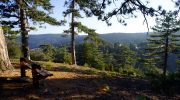
Imagine stepping onto sun-drenched slopes where tall evergreens sway in the breeze, their long needles catching golden light and filling the air with a fresh, resinous scent. This is the world of Pinus brutia, Cyprus’s most iconic pine and the backbone of the island’s woodlands. Together with its mountain cousin, it reveals a story of ancient resilience that still thrives across the Mediterranean landscape today. A Pine Built for the Island Pinus brutia, commonly known as the Calabrian pine, is a hardy evergreen conifer perfectly suited to the warm, dry conditions of the eastern Mediterranean. In the broad pine family (Pinaceae), it stands out for its fire-adapted seeds and drought tolerance. On Cyprus it reigns supreme, forming the vast majority of the island’s forests from sea level right up to the cooler heights where its relative, the black pine (Pinus nigra ssp. pallasiana), takes over. The Aleppo pine (Pinus halepensis) also appears, sometimes as a planted companion or in transitional zones. Echoes of Ancient Forests In 1881, French forester P.G. Madon climbed Mount Troodos and described a Cyprus once cloaked in “vast forests… pines of different species in dense profusion” mingling with cedar, oak and cypress down to the plains. For millennia these trees supplied timber for Phoenician mines, Ptolemaic fleets, Lusignan palaces and Venetian ships. Yet centuries of temporary…

Read more