Explore Cyprus with Our Interactive Map

Explore our top stories and discover ideas worth your time.

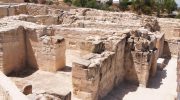
Temple of Aphrodite at Amathus

Temple of Aphrodite at Amathus

Located on the acropolis of Amathus, this sanctuary was a major rival to Paphos and featured two giant stone vases symbolizing the city's wealth. The Temple of Aphrodite at Amathus stands as an enduring symbol of Cyprus's ancient religious landscape, where devotion to the goddess of love and fertility rivaled the famed sanctuary at Paphos, drawing pilgrims from across the Mediterranean. Perched on the acropolis of the ancient city-kingdom of Amathus, near modern Limassol, this site blended indigenous Cypriot traditions with Phoenician, Greek, and Roman influences, reflecting the island's role as a cultural melting pot. Dedicated to Aphrodite, often syncretized with the earlier Astarte, the temple highlighted Amathus's prosperity through monumental features like two colossal stone vases, each weighing around 14 tons and standing over 1.85 meters tall, which served as emblems of the city's wealth and engineering prowess. As a key center for rituals tied to fertility, beauty, and renewal, it competed with Paphos for prestige, underscoring regional rivalries in ancient Cyprus. Today, the ruins offer insights into millennia of worship, from prehistoric roots to Roman grandeur, fostering appreciation for the island's layered heritage amid ongoing archaeological discoveries. A Major Sanctuary on the Acropolis The Temple of Aphrodite crowned the acropolis of Amathus, a strategic hilltop overlooking the southeastern coast, providing both defensive advantages and panoramic views of the…

Read more
Panigyria Cyprus Villages Festivals

Panigyria Cyprus Villages Festivals

Across Cyprus, every village has at least one night each year when the roads feel a little busier, the air smells faintly of smoke and grilled meat, and familiar voices reappear as if they never left. The panigyri, the traditional village festival, is that moment: a lived ritual shaped by faith, agriculture, and the island's instinct for togetherness, turning quiet communities into crowded, luminous meeting places where memory and belonging become tangible again. A Gathering of Everyone The word panigyri carries its meaning in its roots. It comes from the ancient Greek panēguris, built from pan ("all") and agora ("gathering" or "marketplace"), and it points to an older world where people came together for religious, political, and cultural life in the same shared space. In Cyprus, that idea endured through centuries of change and settled into the calendar as the central annual pulse of village life. Today, a panigyri usually marks a patron saint's feast day or aligns with a seasonal moment tied to harvest and local rhythm, which is why it often feels both sacred and grounded, elevated and practical at the same time. It blends devotion with celebration, turning the village square into a social arena where residents, visitors, and returning diaspora find each other again, sometimes after years, sometimes after a single season away. What makes the…

Read more
The Soli Basilica Frescoes

The Soli Basilica Frescoes

The Soli Episcopal Basilica preserves rare fragments of early Christian wall painting from a period when church imagery in Cyprus was still being invented rather than standardised. Painted above the site’s famous mosaics, the fresco remains show Roman decorative habits being adapted into a new visual language for worship, before later Byzantine rules became fixed. This article explains Soli’s rise as an ecclesiastical centre, what the surviving plaster fragments suggest about the original interior, and why the basilica’s destruction ended up preserving an important artistic transition. Trade, Farmland, Copper, Harbour Ancient Soli, also known as Soloi, occupied a strategic position near fertile farmland, copper-rich foothills, and a natural harbour. This combination sustained the city for centuries, from its legendary foundation in the Archaic period through its Roman peak and into the Christian era. By Late Antiquity, Soli was no longer just a trading hub. It had become an important ecclesiastical centre, serving the surrounding region as Christianity spread across Cyprus. The basilica that rose here in the 4th century was not a modest village church. It was one of the largest early Christian complexes on the island, reflecting both wealth and confidence during a period of profound cultural change. A Basilica Built on Confidence The Soli Episcopal Basilica went through multiple phases, mirroring the development of Christian worship itself. The…

Read more