Explore Cyprus with Our Interactive Map

Explore our top stories and discover ideas worth your time.

The Ayia Napa Medieval Festival

The Ayia Napa Medieval Festival

For a few days each year, the coastal town of Ayia Napa seems to loosen its grip on the present. Streets soften under banners and colour, music carries through stone courtyards, and spaces normally passed without notice begin to feel deliberate and ceremonial. The Medieval Festival of Famagusta is not designed as a reconstruction frozen in time, nor does it resemble a museum exhibition staged outdoors. Instead, it functions as a living cultural moment, one that uses costume, performance, craft, and architecture to reawaken the Lusignan era and allow Cyprus’s medieval identity to surface in ways that feel social, shared, and immediately accessible. What makes the festival distinctive is how quickly it communicates its intent. Even visitors with little knowledge of Cypriot history sense the shift almost at once. There is no requirement to understand dates or dynasties. The atmosphere takes on the work of explanation, and immersion replaces instruction. A Festival That Transforms History into Public Space At its core, the Medieval Festival is a large-scale heritage event inspired by the centuries when Cyprus stood at the centre of crusader politics, Mediterranean trade routes, and cultural exchange. Performers dressed as knights, nobles, clergy, merchants, and artisans move fluidly through public spaces, while music, theatre, and craft demonstrations turn streets and squares into interconnected stages rather than isolated venues. Although…

Read more
The Gymnasium of Salamis

The Gymnasium of Salamis

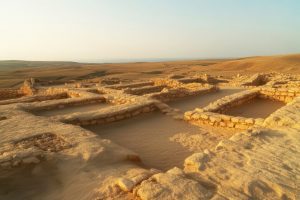
The ancient city of Salamis on Cyprus holds some of the Mediterranean's most remarkable Roman architecture. Among its treasures, the Gymnasium stands out as a testament to how Romans blended physical training, social interaction, and luxury bathing into a single sprawling complex. Located on the eastern coast near modern Famagusta, this site offers visitors a direct connection to daily life in Roman Cyprus. The Gymnasium traces its roots to the Hellenistic period, when Greek colonists first established athletic training facilities in Salamis. However, the structure visible today belongs to the 2nd century AD, specifically during the reigns of emperors Trajan and Hadrian. The transformation came after a devastating Jewish revolt in 116 AD that left much of Salamis in ruins. Rather than simply repairing the damage, Roman engineers rebuilt the Gymnasium on a grander scale. The new complex featured a colonnaded palaestra, a large open courtyard surrounded by covered walkways on all four sides. This provided athletes with shaded areas for training and spectators with comfortable viewing spots. The Romans added sophisticated bathing facilities that transformed the Gymnasium from a simple training ground into a complete social center. An inscription found in the pavement credits Trajan with constructing the roof over one of the swimming pools, while multiple honorific decrees mention Hadrian as a benefactor and savior of the city.…

Read more
Ottoman Influence and Adoption

Ottoman Influence and Adoption

Koupes are one of the most iconic legacies from the period of Ottoman rule in Cyprus, bearing resemblance to Levantine kibbeh. The dish arrived on the island during the centuries of Ottoman control, when eastern Mediterranean food culture spread throughout the empire. The broader kibbeh family includes variations found in Lebanon, Syria, Palestine, Jordan, Iraq, Egypt, and Turkey, where it appears as içli köfte. Each region adapted the basic concept of bulgur-encased meat to local tastes and available ingredients. In Cyprus, the dish evolved into koupes with its distinctive cylindrical shape and specific spice combination. The use of extra-fine bulgur became standard, creating a delicate shell texture different from coarser versions found elsewhere. By the 19th century, koupes had become firmly established in Cypriot food culture, appearing at family gatherings, religious celebrations, and village festivals. The Sunday Church Tradition One of the most common places to find koupes was on Sunday mornings outside church yards. Street vendors would set up carts after morning services, selling warm koupes to worshippers as they left. This tradition connected the snack to community life and Orthodox Christian practice. Families would purchase koupes as a post-church treat before returning home for Sunday meals. The vendors typically packed their koupes with generous amounts of onions and parsley but less meat, making them affordable for working families.…

Read more