The Kaledonia Waterfall Trail offers one of Cyprus’s most scenic forest hikes. This 3-kilometer nature trail follows the Kryos Potamos River through dense pine and oak forests in the Troodos Mountains, leading to a spectacular 12-meter waterfall at 1,330 meters elevation.
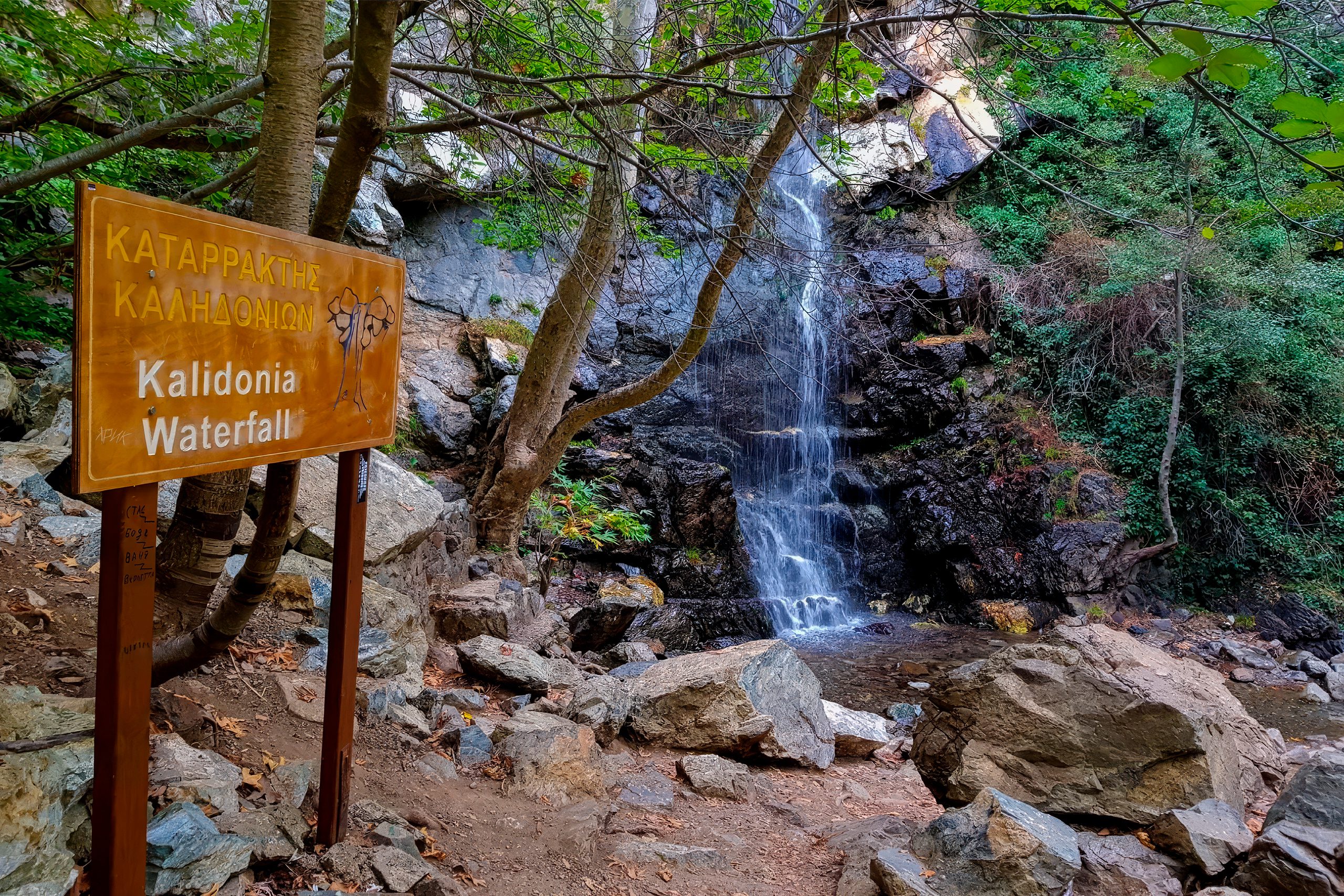
The trail takes its name from the Kaledonia waterfall at its center point, though many maps also spell it Caledonia. The path maintains a mostly shaded route under tall pine trees along the riverbank, creating a cool microclimate even during Cyprus’s hot summer months. The sound of rushing water accompanies hikers throughout the journey as they cross the Kryos Potamos River six to seven times before reaching the main cascade.
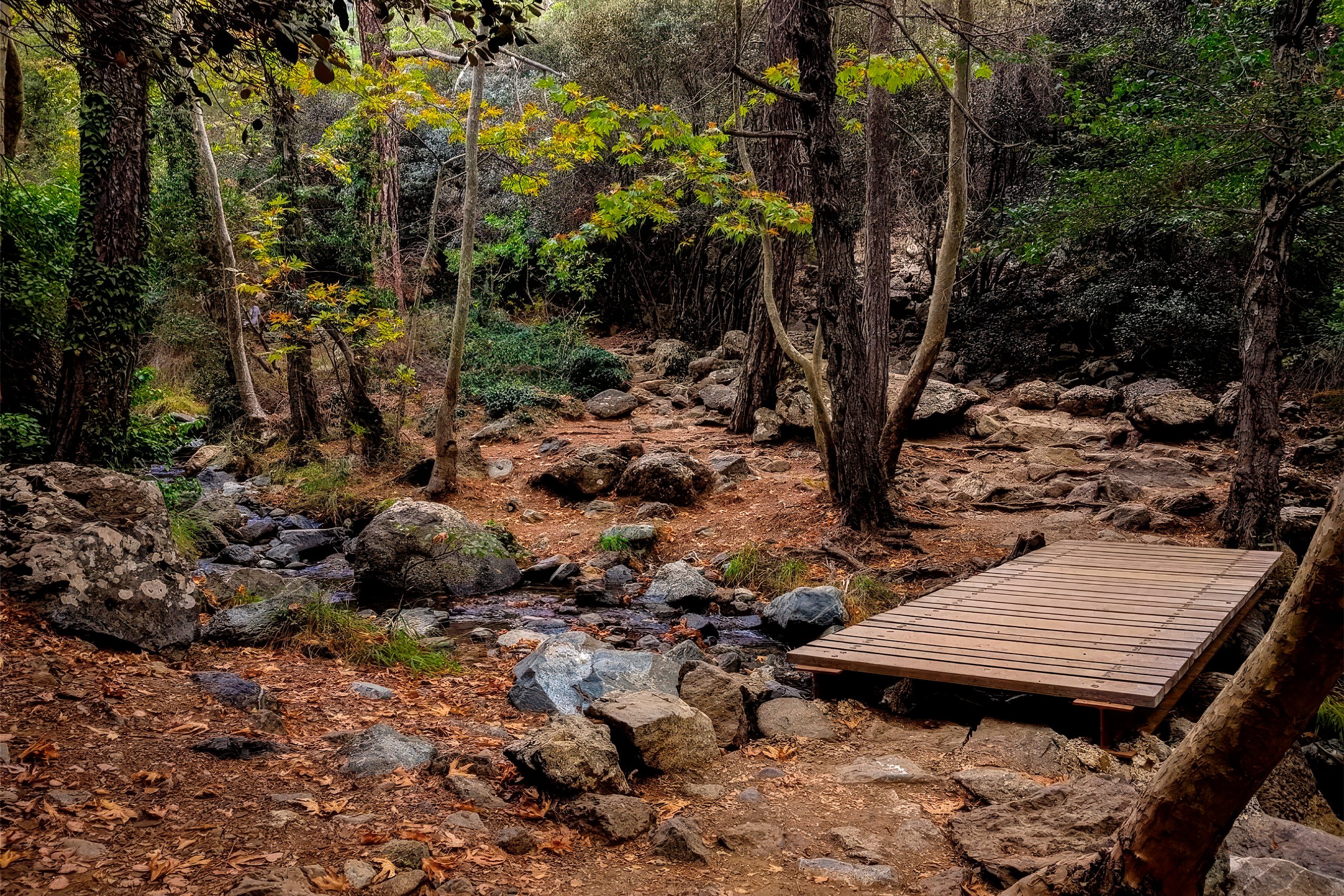
The trail sits within Troodos National Forest Park, a protected area covering 9,147 hectares around Mount Olympus. Wooden bridges span the stream at key points, though hikers must also step across river stones polished smooth by centuries of water flow. Business Insider ranked this waterfall as the 14th best in Europe in 2015, bringing increased international attention to what was previously a lesser-known local hiking destination.
Historical Background
In 1878, a Scottish expedition visited the Platres region during the early period of British colonial administration in Cyprus. When the Scots encountered the waterfall and surrounding landscape, they found remarkable similarities to the waterfalls and forested gorges of their homeland. They named the site Caledonia, the ancient Latin name for Scotland, and the name has persisted ever since.
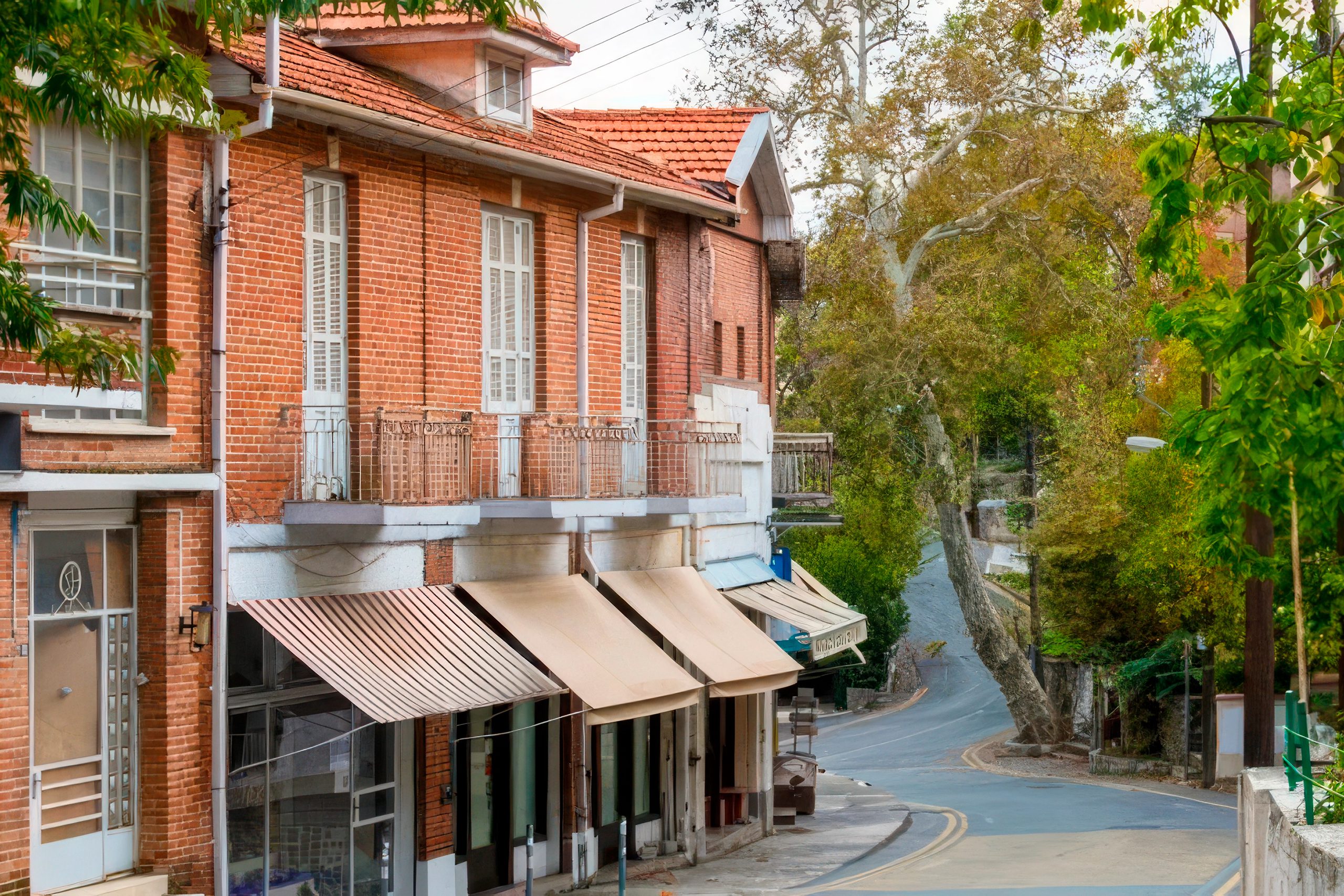
A second local tradition suggests the name actually derives from swallow birds, called “kaledonies” in the Cypriot dialect, which sing throughout the gorge during spring and summer evenings.
These birds add their melodies to the constant sound of rushing water, creating a distinctive acoustic atmosphere that enhances the hiking experience. The waterfall remained relatively unknown to tourism until forest road development and marked nature trail establishment by the Cyprus Department of Forests made access easier in recent decades.
The 12-Meter Cascade and Natural Pool
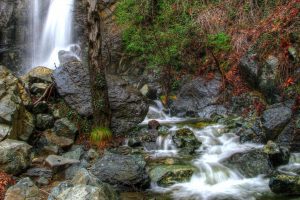
Water plunges vertically over a rocky cliff face, dropping 12 meters into a shallow pool surrounded by moss-covered boulders and lush vegetation. This makes the Kaledonia falls the second highest waterfall in Cyprus. The cascade maintains its flow throughout the year, though volume varies significantly with seasonal rainfall. Winter brings the strongest water flow, with the stream running with greater force and the surrounding rocks often glistening with ice. Spring runoff from melting snow at higher elevations creates spectacular displays, while summer sees reduced but still constant flow.
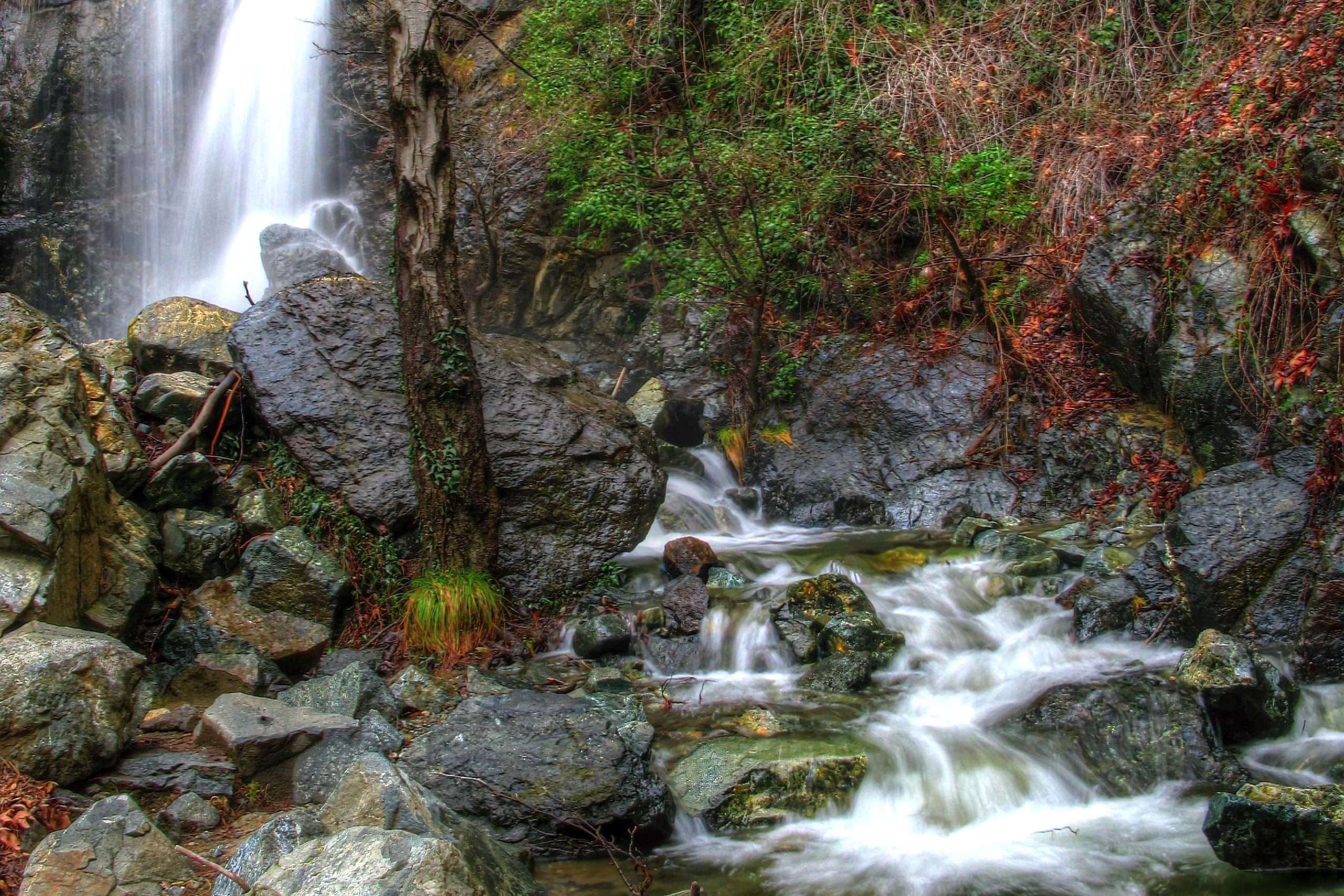
The cliff consists of igneous rock from the Troodos ophiolite complex, a rare geological formation pushed up from the ocean floor approximately 90 million years ago. These ancient rocks provide the foundation for the unique mountain ecosystems found throughout the Troodos range. Spray from the falling water creates a cooling mist that extends several meters from the base, providing natural air conditioning even when ambient temperatures climb. The pool below remains too shallow and cold for proper swimming, though some visitors wade briefly or stand under the cascade for a bracing experience.
Endemic Trees and Mountain Flora
The trail showcases golden oak, Cyprus’s national tree as declared by parliament in 2006. This endemic evergreen oak reaches heights of 10 meters and displays distinctive leaves that are shiny dark green on top and covered in golden or brownish fuzz underneath. The species exists only on the igneous rocks of the Troodos Massif at elevations between 400 and 1,800 meters. Golden oak stabilizes rocky slopes against erosion and modifies soil conditions to support other plant species.
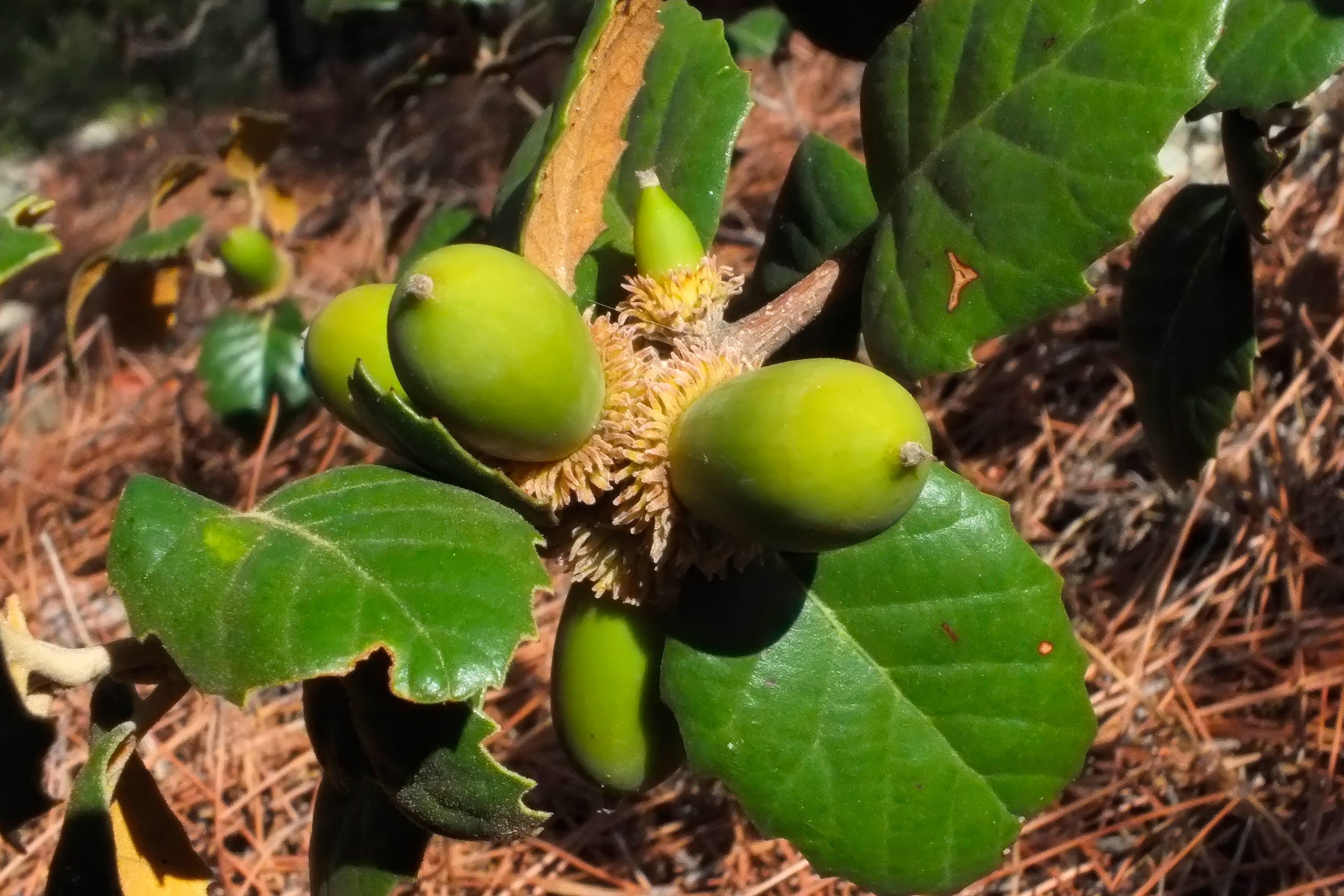
Cyprian law protects the tree, and the European Union designated its habitat as a priority conservation zone. Black pine, or Anatolian black pine, dominates the upper sections and creates dense canopy cover that shades much of the trail. These conifers can live for 500 to 1,000 years, with the oldest specimens receiving strict protection for their ecological and scientific value. The dense black pine forest along the Kryos Potamos creates the characteristic atmosphere that drew comparisons to Scotland’s Highland landscapes.
Moss glows green on rocks along the riverbank, especially in winter when moisture levels peak. Endemic species including Troodos sage, Troodos rock-cress, and barberry grow in the understory. Oriental plane trees thrive near water sources, their broad leaves adding deciduous variation to the predominantly evergreen landscape. Approximately 750 plant species occur in the broader Troodos National Forest Park area, with many concentrated along water sources like the Kryos Potamos.
Wildlife Along the River Trail
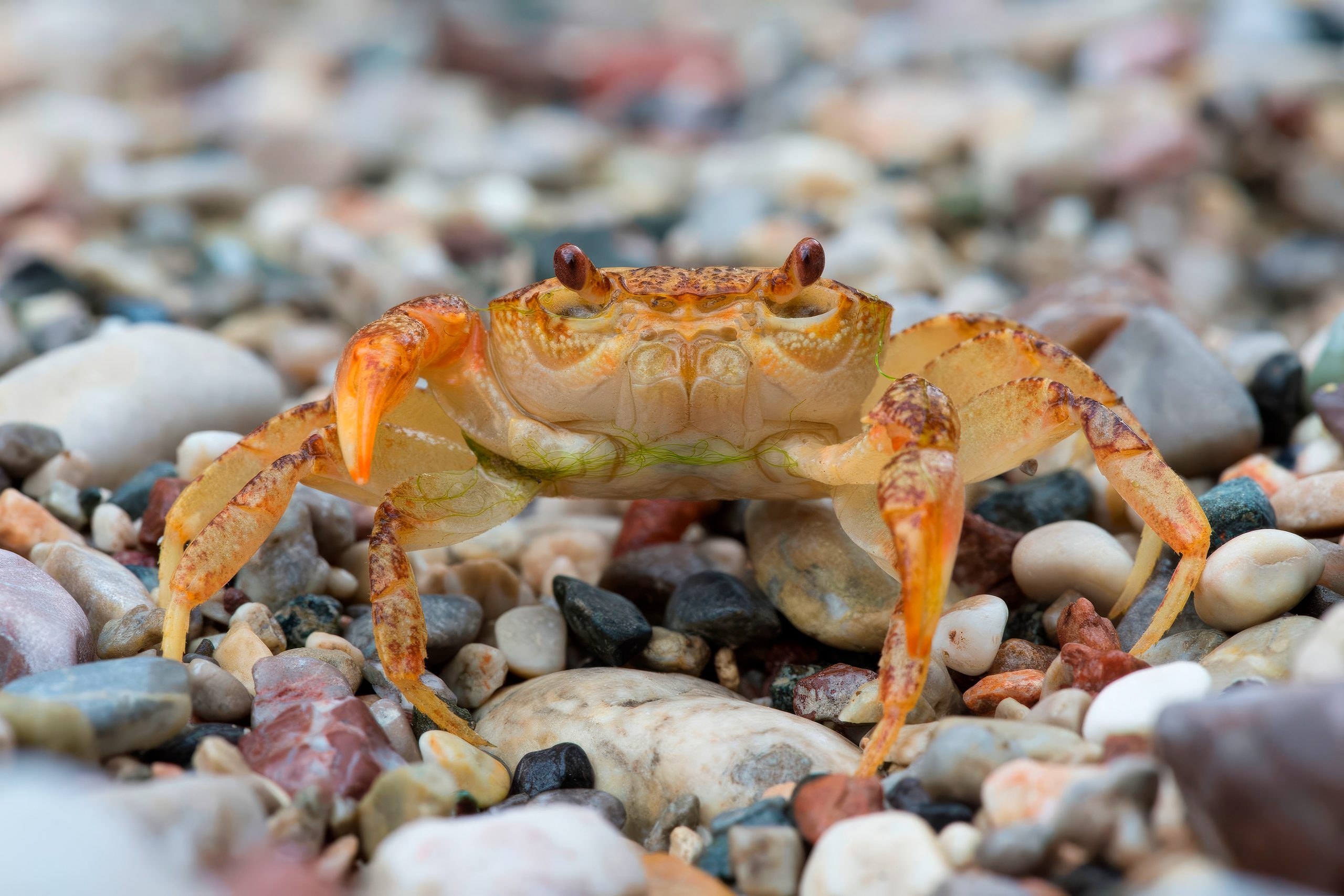
The constant water flow supports diverse animal life adapted to mountain stream environments. Freshwater crabs inhabit the stream bed, hiding under smooth river stones. These crustaceans represent the only freshwater crab species documented in Cyprus. Brown trout swim in deeper pools along the river, forming the basis for local fish farming operations. The Psilo Dendro trout farm restaurant at the southern trailhead serves fresh trout from these operations. Endemic Cyprus warblers and Cyprus wheatears nest in the forest canopy.
Nightingales add their famous songs to the soundscape, particularly during spring migration periods. Ravens, jackdaws, wood pigeons, and rock doves appear commonly along the trail. Small mammals including foxes, hares, and hedgehogs inhabit the surrounding forest. Various lizard species bask on sunny rocks near the water. The cool, moist environment supports populations of marsh frogs and tree frogs whose calls echo through the gorge during evening hours, especially in spring when breeding activity peaks.
Protected Forest Park Status
The entire trail falls within Troodos National Forest Park, managed by the Department of Forests with dual goals of conservation and public access. The park hosts 12 plant species found nowhere else on Earth. The trail received designation as an official nature trail with marked routes, informational signs, and periodic maintenance to support sustainable tourism.
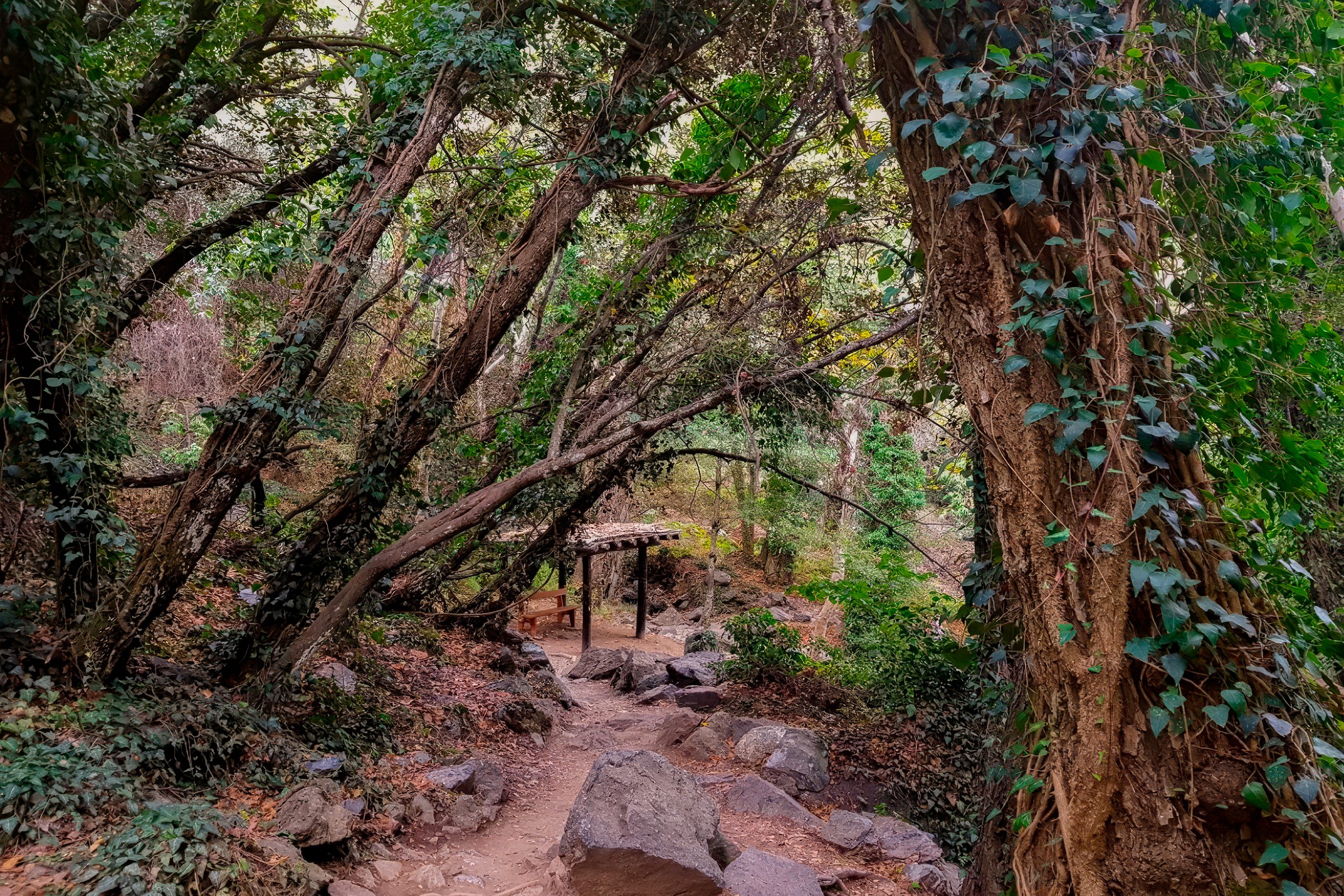
Conservation guidelines prohibit visitors from leaving marked paths to protect rare plant species in sensitive areas. Smoking bans and fire restrictions apply throughout the forest during dry seasons, as forest fires represent the most significant threat to the ecosystem. Climate patterns show increasing temperatures and decreasing precipitation, raising fire risk and potentially altering the moisture-dependent microclimate that supports current species distributions.
Management efforts include fire prevention education, regular patrols, and strategic placement of fire breaks. The protection extends beyond plants to include wildlife habitats and water quality monitoring for the Kryos Potamos River, which eventually flows into the Kouris River and contributes to the Kouris Dam, one of Cyprus’s largest water storage facilities.
Why This Trail Matters Today
The Kaledonia trail demonstrates that Cyprus offers natural attractions beyond its famous beaches and archaeological sites. The trail attracts thousands of visitors annually, spreading tourism revenue into mountain communities like Platres that traditionally relied on agriculture and forestry. The village developed tourism infrastructure centered on mountain recreation, with hotels, restaurants, and outdoor facilities benefiting from trail access.
The trail serves educational purposes through school programs that use the site to teach ecology, geology, and environmental conservation. The accessible terrain makes it suitable for families with older children, providing opportunities for outdoor education in a controlled environment. Research continues on endemic species found along the trail.
Scientists monitor population trends of golden oak and other protected plants, gathering data that informs broader conservation strategies across the Troodos range. The trail represents a successful example of balancing public access with habitat protection, offering lessons for other protected natural areas in Cyprus.
Planning Your Hike to the Waterfall
Two trailheads serve the route, allowing hikers to choose between uphill or downhill approaches. The southern trailhead sits at Psilo Dendro, approximately 3 kilometers from Troodos Square near Pano Platres village. Parking areas accommodate personal vehicles, though the unpaved access road challenges low-clearance cars. The Psilo Dendro restaurant marks the starting point, a popular establishment serving locally farmed trout.
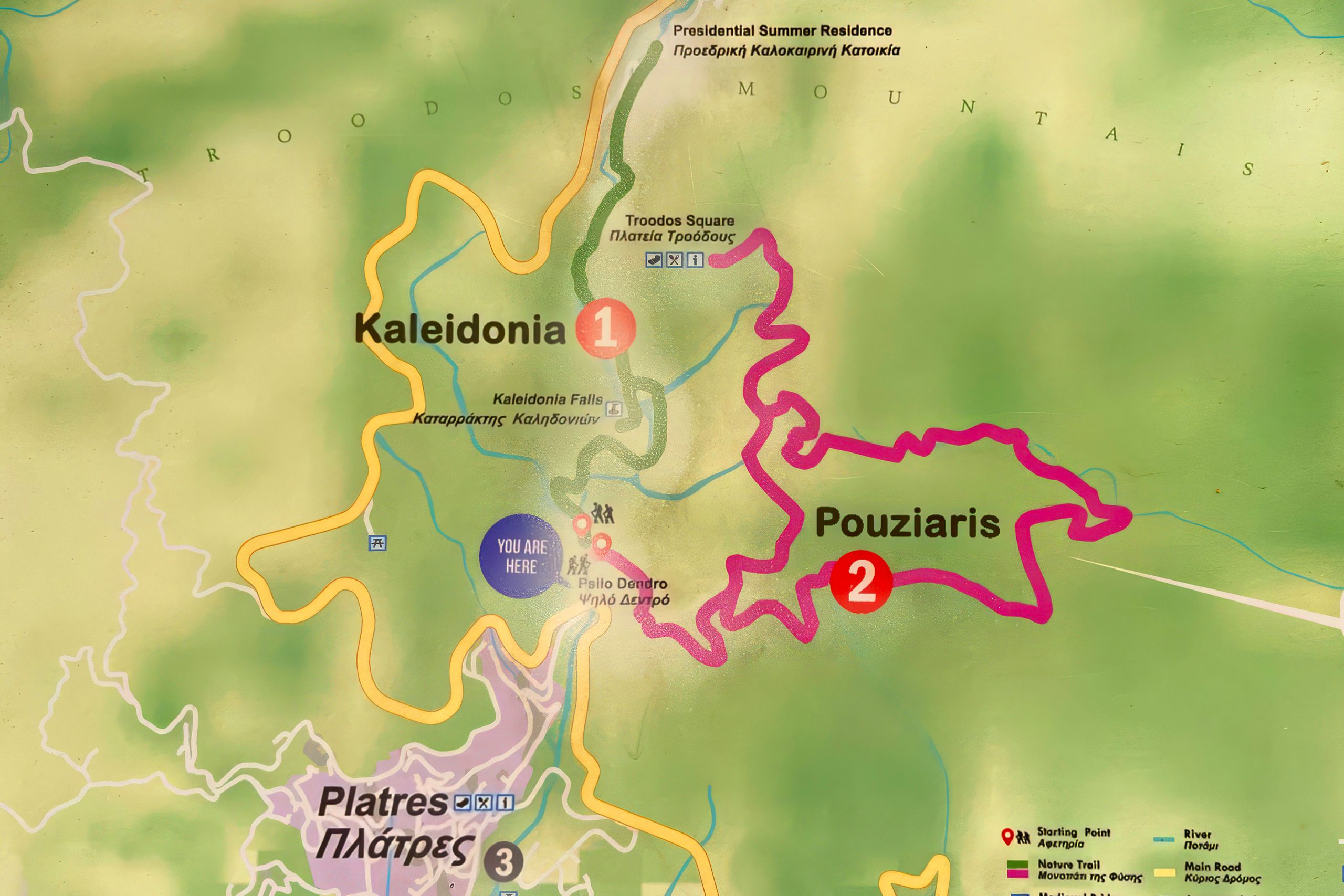
The northern trailhead sits near the Presidential Summer House, placing hikers at a higher elevation. The trail covers 3 kilometers one way, with most people completing the round trip in 2 to 3 hours. Starting from Platres means ascending steadily to the waterfall, requiring moderate fitness. The northern route descends to the falls, then requires climbing back up on return. Approximately 150 human-made steps mark the steepest section near the northern end.
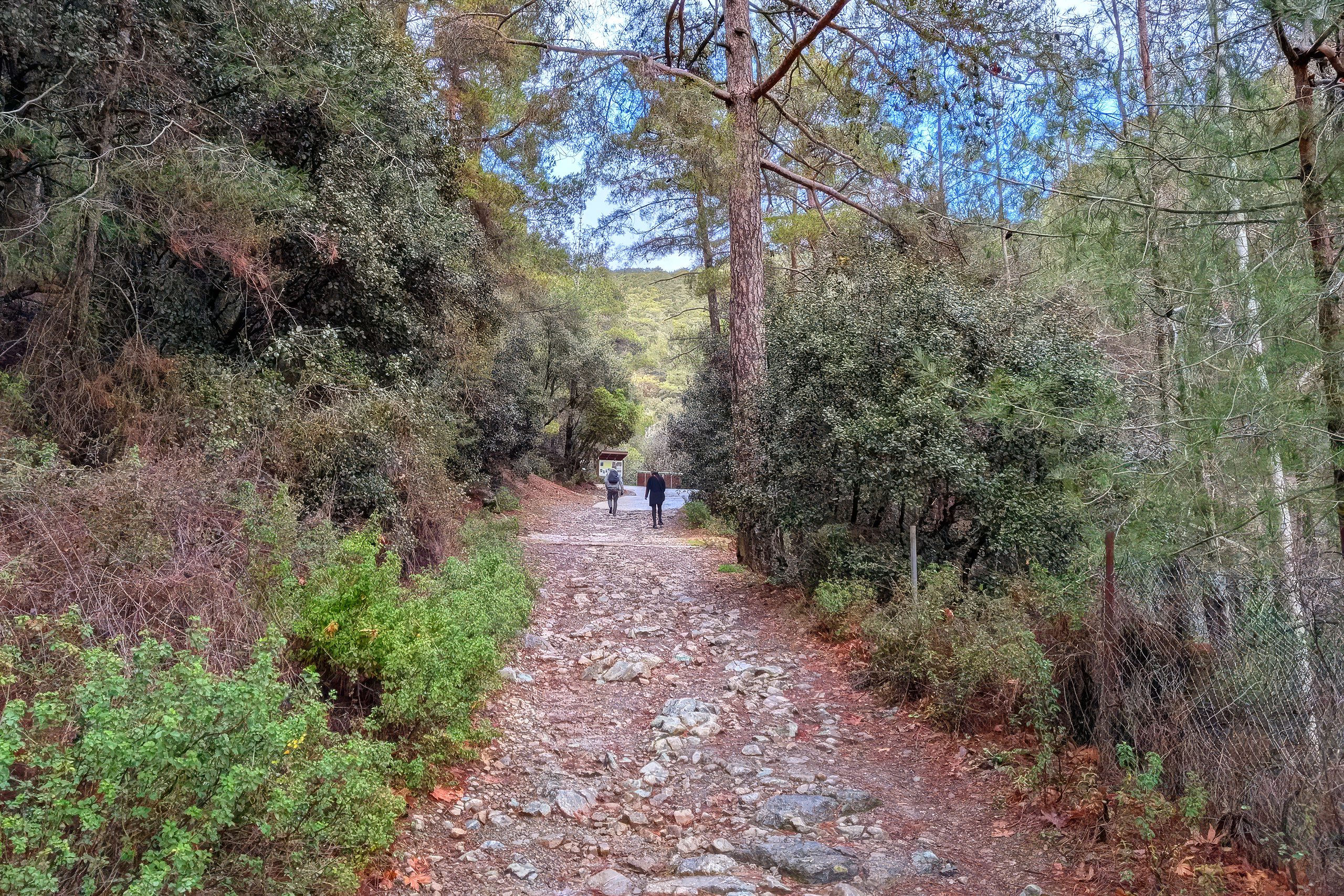
The northern half presents significantly more difficulty than the southern approach. The path surface consists of natural soil, rocks, tree roots, and river stones. Sturdy waterproof hiking boots provide necessary traction and protection, as sections become quite slippery after rain or during spring snowmelt when water flow increases. Spring offers ideal conditions with moderate temperatures, blooming wildflowers, and strong waterfall flow from snowmelt.
A Window Into Mountain Cyprus
The Kaledonia Waterfall Trail preserves an ecosystem type increasingly rare in the Mediterranean region. The combination of reliable water flow, ancient forests, and protected status creates a refuge for species threatened elsewhere by development and climate change. The trail offers an accessible introduction to Cyprus’s mountain ecology without requiring advanced hiking skills or specialized equipment.
For visitors accustomed to the island’s coastal landscapes, the trail reveals a completely different environmental character. The sound of rushing water, the cool shade of dense forest, and the presence of endemic species found nowhere else create an experience distinct from beach tourism. The trail’s popularity demonstrates public interest in natural heritage preservation and outdoor recreation.
As Cyprus continues balancing economic development with environmental protection, sites like the Kaledonia trail serve as examples of sustainable tourism that protects ecosystems while providing recreational and educational opportunities. The ancient pines, endemic oaks, and constant flow of the Kryos Potamos River connect modern visitors to natural processes that have shaped the Troodos Mountains for millions of years.