Explore Cyprus with Our Interactive Map

Explore our top stories and discover ideas worth your time.

Akrotiri Peninsula

Akrotiri Peninsula

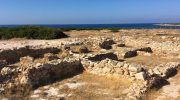
The Akrotiri Peninsula in the Limassol District marks the southernmost tip of Cyprus and also the southernmost part of Europe. This 123 square kilometer area contains the largest complex of natural wetlands on the island, centered around Akrotiri Salt Lake. The peninsula hosts over 300 recorded bird species, more than 800 indigenous plant species representing roughly 40 percent of all plants found on Cyprus, and critical habitats ranging from coastal sand dunes to Mediterranean juniper forests. Most of the peninsula lies within the British Sovereign Base Area of Akrotiri, territory retained by the United Kingdom when Cyprus gained independence in 1960. From Ancient Island to Protected Reserve The Akrotiri Peninsula was once a small island that merged with the rest of Cyprus through processes spanning thousands of years, creating what geologists call a double tombolo. The Kouris River carried sediment to create a land bridge on the western side at least 56,000 years ago, while the Garilis River later formed a second connection on the eastern side. This gradual process trapped seawater between the two land bridges, forming Akrotiri Salt Lake. The south cliffs of the peninsula, known as Aetokremmos, host the earliest known archaeological site in Cyprus and are believed to be the first part of the island inhabited by people during the pre-Neolithic period. The site contains 12,000-year-old…

Read more
International Schools in Cyprus

International Schools in Cyprus

Cyprus hosts over 100 international schools that serve expat families, digital nomads, and local families seeking globally recognized education. These institutions offer instruction in English and follow British, American, or International Baccalaureate curricula that prepare students for universities worldwide. The island's international school sector has grown significantly over the past three decades, creating diverse options across major cities. International schools in Cyprus follow three main educational frameworks, each with distinct characteristics and outcomes. The British curriculum dominates the market and represents the most common choice among schools. Students work toward IGCSE exams around age 16, followed by A-Level qualifications at age 18 that serve as the standard for UK university entrance. This system offers structured learning with clear assessment points and strong preparation for British and Commonwealth universities. The International Baccalaureate program provides a comprehensive alternative recognized worldwide for its academic rigor and holistic approach. Four schools in Cyprus hold IB World School authorization to offer the IB Diploma: The American International School in Cyprus, Pascal English Schools in Larnaka and Lefkosia, and The English School of Kyrenia, illegally operated by the Turkish Cypriot authorities. The IB emphasizes critical thinking, cultural awareness, and personal development through programs like Creativity, Activity, Service that challenge students beyond traditional academics. Cost Breakdown and Financial Planning Annual tuition fees typically range from €5,000 to…

Read more
Cypriot Legends Academic Research

Cypriot Legends Academic Research

Academic research into Cypriot legends represents a systematic effort to collect, preserve, and analyze the island's oral traditions and cultural narratives. Researchers use established methodologies from folklore studies and ethnography to document stories that have passed through generations primarily by word of mouth. This work involves recording interviews, observing cultural practices, transcribing oral narratives, and archiving materials for future study. The goal is to preserve these legends before they disappear and to understand what they reveal about Cypriot culture, history, and identity. The development of folklore documentation in Cyprus Formal folklore research in Cyprus began in the mid 20th century. The Cyprus Research Centre established its Folklore Archive in 1962 specifically to collect and record Cypriot linguistic and folklore materials. This marked a shift from casual storytelling to organized documentation. The center later created the Oral Tradition Archive in 1990, which focuses on archiving oral materials using modern recording technology. Earlier in the century, British Cypriot social anthropologist John Peristiany conducted groundbreaking ethnographic work in a Pitsilia village during the 1950s. His 1965 article about honor and shame in a Cypriot highland village helped establish Mediterranean anthropology as a distinct field. This work demonstrated how Cyprus could serve as a valuable case study for understanding broader cultural patterns. The University of Cyprus established a Department of Social and Political Sciences…

Read more