Explore Cyprus with Our Interactive Map

Explore our top stories and discover ideas worth your time.

Troodos Pine Cedar Forests

Troodos Pine Cedar Forests

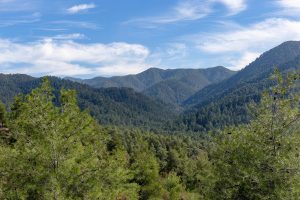
Mediterranean Pine and Cedar Forests (Troodos) consist of high-altitude woodlands in Cyprus's central mountains, featuring endemic tree species that play a crucial role in soil conservation and provide habitats for unique fauna. These forests, dominated by black pine and Cyprus cedar, cover about 18% of the island and support a diverse ecosystem adapted to the Troodos's alpine conditions. They represent a vital natural legacy, where ancient trees anchor the landscape against erosion while sheltering species found nowhere else on Earth. turbinatravels-com A Timeless Woodland in the Highlands The Mediterranean pine and cedar forests of Troodos form a distinctive high-altitude ecosystem, where dense stands of conifers create a canopy that moderates the island's climate and nurtures biodiversity. Rising from 1,200 to 1,952 meters at Mount Olympus, these woodlands transition from lower maquis scrub to pure pine zones, with Cyprus cedar (Cedrus brevifolia) clustered in pockets like the Cedar Valley. The forests' structure—tall pines with understories of endemic shrubs—prevents soil loss on steep slopes, while their roots stabilize the ophiolite soils unique to Troodos. This environment supports over 750 plant species and serves as a refuge for fauna like the mouflon sheep, making it a cornerstone of Cyprus's natural heritage. wikimedia-org The Troodos range, covering 9,200 hectares of forested area, acts as a climatic regulator for the island, capturing moisture from westerly…

Read more
Mediterranean Work Culture and Daily Life

Mediterranean Work Culture and Daily Life

Cyprus combines Mediterranean traditions with European business practices to create a work culture centered on relationships, balance, and quality of life. The standard work week runs 38 to 40 hours, but the rhythm of daily life follows patterns shaped by climate, family values, and ancient hospitality customs. Unsplash-com Work is important to Cypriots, yet it occupies a specific place in life rather than dominating it. Family gatherings, long meals, and social connections receive equal priority. This approach reflects a philosophy where professional success and personal wellbeing exist in harmony rather than competition. How Work Patterns Developed on the Island Cyprus sits at the crossroads of Europe, Asia, and Africa. Its position made it a vital trading hub for millennia. Ancient Phoenicians, Greeks, Romans, Byzantines, Venetians, Ottomans, and British all ruled Cyprus at different times. Each culture influenced how Cypriots approach work and daily routines. wikimedia-org The British colonial period from 1878 to 1960 introduced structured office hours and formal business practices. English became widely spoken in professional settings. After independence in 1960, Cyprus maintained these European business standards while preserving Mediterranean social customs. Climate shaped work patterns significantly. Summer temperatures can exceed 40 degrees Celsius. Historically, people worked early mornings when it was cooler, took long midday breaks during peak heat, then returned to work in the late afternoon. This…

Read more

Khirokitia Figurines: Stone Ancestors at Home

Khirokitia Figurines: Stone Ancestors at Home

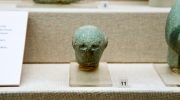
The stone figurines of Khirokitia are among Cyprus’s earliest human representations, carved over 9,000 years ago within one of the island’s first permanent farming settlements. Found in domestic and burial contexts, they were not decoration but durable objects that helped households maintain identity, lineage, and a living relationship with ancestors buried beneath the home. This article explains why the figures are intentionally abstract, why hard stone was chosen despite the labour, and what their placement reveals about memory and belonging at the dawn of settled life in Cyprus. Khirokitia Above the Maroni River The Neolithic settlement of Khirokitia lies on a steep hillside above the Maroni River in southern Cyprus. Occupied during the Aceramic Neolithic period, it represents the island’s first permanent agricultural society. Life here was organised around circular stone houses, shared courtyards, and a tightly knit social structure built on extended families. dtcox-com In this context, figurines were not decorative objects or isolated artworks. They were part of daily life, ritual practice, and memory. Their meaning comes not from how they look alone, but from where they were found and how they were used. Small Figures, Heavy Meaning More than two dozen anthropomorphic figurines have been recovered from Khirokitia, an unusually high number for a Neolithic site. Most are small, abstract, and deliberately simplified. Bodies are reduced to…

Read more