Explore Cyprus with Our Interactive Map

Explore our top stories and discover ideas worth your time.

Religious Processions with Musical Accompaniment in Cyprus

Religious Processions with Musical Accompaniment in Cyprus

In Cyprus, religious processions are not confined to church interiors. On major feast days, faith moves outward, carried through streets, village lanes, and open squares by chanting voices, ringing bells, and slow communal steps. These processions turn ordinary space into sacred ground, if only for an evening. They are not performances staged for an audience, but living traditions that reveal how religion, sound, and community remain tightly bound in Cypriot life. What makes them unforgettable is often the sound. Not a concert sound, not a soundtrack added for effect, but the steady human voice, the measured toll of bells, the hush that falls over a neighbourhood when an icon approaches. In Cyprus, sacred music is not something you only listen to. It is something you walk with. When Worship Leaves the Church Walls In the Orthodox tradition of Cyprus, a procession is a deliberate act. It represents the Church stepping beyond its sanctuary to bless the world outside. Icons, crosses, and relics are carried through public space to remind participants that faith is not separate from daily life. The structure is recognisable across the island. Clergy lead. Chanters follow. The community moves together behind them. Candles flicker in the evening air. Incense drifts slowly, sometimes catching in the folds of stone alleys and lingering under balconies. The pace is unhurried,…

Read more

Noospheric Resonator in Cyprus

Noospheric Resonator in Cyprus

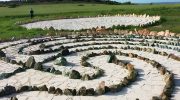
High above the coast between Limassol and Paphos sits one of the most unusual places in Cyprus. The Noospheric Resonator rises near Avdimou where sea breeze meets open sky and silence feels close enough to touch.  At first glance it appears as a group of stone spirals shaped into the earth. Yet after a few steps it becomes much more than art. Visitors come here to slow the mind and feel present again. In a world full of noise this peaceful site offers something rare. It gives space for reflection and a quiet return to the true self. A Hidden Landmark Between Limassol and Paphos Cyprus holds famous beaches ancient ruins and charming villages. Yet some of its most memorable places remain less known. The Noospheric Resonator is one of them. Set near Avdimou Beach on the road between Limassol and Paphos this land art site feels far from busy streets and crowded resorts. Its elevated position gives wide views across the Mediterranean coast. The sea shines below while the horizon stretches into calm blue distance. Because of this setting many visitors feel relaxed before they even enter the spirals. Unlike traditional attractions this place does not ask for tickets loud signs or guided tours. It simply waits in silence. That quiet welcome becomes part of the experience. What Is…

Read more
Emphasis on Frontalism and Hieratic Scale

Emphasis on Frontalism and Hieratic Scale

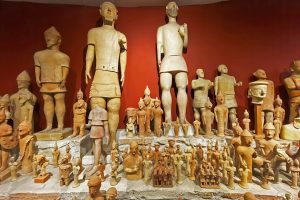
Emphasis on Frontalism and Hieratic Scale in ancient Cypriot art involved depicting figures in direct frontal views, with sizes scaled to reflect spiritual or social significance rather than physical accuracy. This method imbued artworks with a sense of authority and depth, incorporating influences from neighboring cultures to emphasize deities, rulers, or sacred concepts over naturalistic portrayals. The approach created compositions that convey power and divinity through straightforward, impactful forms. A Style Prioritizing Significance Cypriot art from antiquity often avoided precise replication of reality, opting instead for frontalism where subjects face outward directly. Hieratic scale further adjusted proportions, enlarging key elements to denote importance - a deity might dominate over attendants, defying natural dimensions. This was not a limitation but a deliberate strategy to clarify hierarchies, as seen in temple reliefs or vessel decorations, where the format ensured immediate comprehension of narratives. Influences from Surrounding Regions The technique drew from interactions with adjacent civilizations, beginning in the Bronze Age around 3000 BC amid trade with Egypt, the Near East, and Greece. Egyptian art's rigid frontal poses and enlarged rulers influenced Cypriot statues, adopting a formal, unchanging stance. Near Eastern traditions contributed exaggerated scales for monarchs or divinities, while later Greek elements introduced subtle dynamism. As empires like Persia and Rome asserted control, Cypriot adaptations formed a distinctive synthesis aligned with the…

Read more