High above the coast between Limassol and Paphos sits one of the most unusual places in Cyprus. The Noospheric Resonator rises near Avdimou where sea breeze meets open sky and silence feels close enough to touch.
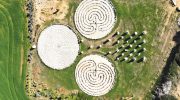
At first glance it appears as a group of stone spirals shaped into the earth. Yet after a few steps it becomes much more than art. Visitors come here to slow the mind and feel present again. In a world full of noise this peaceful site offers something rare. It gives space for reflection and a quiet return to the true self.
- A Hidden Landmark Between Limassol and Paphos
- What Is the Noospheric Resonator
- The Stone Spirals and Their Meaning
- The Labyrinth of Knowledge
- Male and Female Labyrinths
- Art That Lives With Nature
- Why Visitors Feel Drawn to It
- A Different Side of Cyprus Tourism
- Best Time to Visit
- How to Reach the Site
A Hidden Landmark Between Limassol and Paphos
Cyprus holds famous beaches ancient ruins and charming villages. Yet some of its most memorable places remain less known. The Noospheric Resonator is one of them. Set near Avdimou Beach on the road between Limassol and Paphos this land art site feels far from busy streets and crowded resorts.
Its elevated position gives wide views across the Mediterranean coast. The sea shines below while the horizon stretches into calm blue distance. Because of this setting many visitors feel relaxed before they even enter the spirals.
Unlike traditional attractions this place does not ask for tickets loud signs or guided tours. It simply waits in silence. That quiet welcome becomes part of the experience.
What Is the Noospheric Resonator
The Noospheric Resonator is a large outdoor art installation built with stone labyrinths and symbolic spaces. It was created by artist Pavel Muntyan who wanted to offer something meaningful to the island he now calls home.
The word noosphere refers to the world of human thought and shared consciousness. In simple terms it suggests the invisible space where ideas values and awareness exist. By us this concept with natural materials the site links mind earth and human presence.
Rather than speak through walls or screens the resonator speaks through movement. You walk its paths. You feel the stones underfoot. You hear wind and waves nearby. Through that simple act the place invites reflection.
The Stone Spirals and Their Meaning
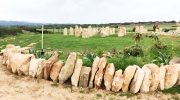
The main attraction of the site is a series of spiral stone labyrinths. These spirals are not traps or puzzles. They are walking paths that lead inward and then back out again.
Across many cultures the spiral represents growth change and the journey of life. Nature uses this shape in shells storms and galaxies. Because of that many people feel a natural bond with it.
At the resonator each turn encourages slower steps and calmer thoughts. As the path curves inward daily stress often begins to fade. By the time visitors reach the center they may feel more grounded and aware.
The walk outward carries a different meaning. It suggests return. You come back to daily life but with a clearer mind and steadier heart.
The Labyrinth of Knowledge
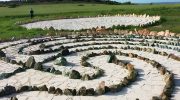
One of the key features of the site is the Labyrinth of Knowledge. This spiral includes twelve circles and a path of many steps that symbolise the course of human life.
Some visitors choose to walk it in silence. Others pause in the center for thought or prayer. There is no fixed rule and no strict ritual. The value comes from personal experience.
For some people the walk feels meditative. For others it becomes a chance to think through a decision or release mental tension. That open meaning is part of the beauty. Each person receives something different from the same path.
Male and Female Labyrinths
On either side of the main spiral stand two more labyrinths built with different coloured stones. One uses blue stones and the other uses red stones. These spaces represent masculine and feminine balance.
This does not refer only to gender. It also reflects qualities that exist in all people. Strength and compassion. Logic and intuition. Action and patience.
Many ancient cultures spoke of balance as a path to harmony. The resonator continues that idea through simple visual form. Visitors often move between the two spaces and reflect on where balance may be missing in their own lives.
Art That Lives With Nature
Many art works stand apart from nature. The Noospheric Resonator does the opposite. It becomes part of the landscape.
Sunlight changes the colour of the stones through the day. Morning light gives softness. Midday brings brightness. Sunset adds warmth and long shadows. Wind moves through the open site while sea air adds freshness.
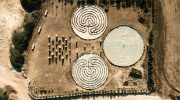
Because of this the place never feels exactly the same twice. Every visit carries a new mood shaped by weather season and light. This natural partnership makes the resonator ideal for those who seek calm outdoor experiences in Cyprus beyond the beach.
Why Visitors Feel Drawn to It
People visit for many reasons. Some come from curiosity after hearing about the spirals. Some seek peace after stressful weeks. Others love unusual art and hidden places.
What they often share is the same response. The site feels calm.
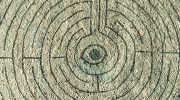
There are no loud distractions. No rush. No demand to buy anything. Instead there is room to sit breathe and listen to wind across stone.
Many travellers say the most valuable moments in Cyprus are not always the famous ones. Sometimes they happen in quiet places where the island reveals a gentler side. The Noospheric Resonator belongs in that category.
A Different Side of Cyprus Tourism
Cyprus tourism often focuses on beaches nightlife and archaeology. Those experiences matter and deserve attention. Yet modern travellers also seek wellness mindfulness and authentic moments.
The resonator fits this new travel style perfectly. It combines scenery art reflection and local character in one stop. It suits solo travellers couples photographers and anyone who values meaningful places.
For visitors who already saw major landmarks this site offers something fresh. It shows that Cyprus is not only a holiday destination. It is also a place for pause thought and inner reset.
Best Time to Visit
Morning and sunset are the best times to visit. At these hours the heat feels softer and the light gives the stones beautiful contrast. More importantly the atmosphere feels even quieter.
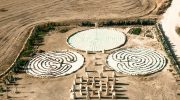
Wear comfortable shoes if the ground feels rough though some choose to walk barefoot for a closer connection with the earth. Bring water during warm months and respect the natural setting.
Because this is a peaceful space visitors should keep noise low and leave no litter behind.
How to Reach the Site
The Noospheric Resonator lies near Avdimou village between Limassol and Paphos. A rental car gives the easiest access and allows you to combine the visit with nearby coastal stops.
Many travellers pair it with Avdimou Beach or a scenic drive along the southern coast. This makes it an ideal half day excursion away from city crowds.
As with many hidden attractions in Cyprus local directions or map guidance can help during the final approach.