Explore Cyprus with Our Interactive Map

Explore our top stories and discover ideas worth your time.

Cyprus Meze Social Dining Tradition

Cyprus Meze Social Dining Tradition

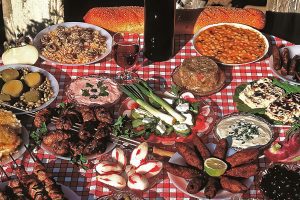
Meze in Cyprus is not a starter, a tasting menu, or a casual sharing plate. It is a complete dining ritual built around time, abundance, and company. When Cypriots sit down for meze, they are committing to an experience that unfolds slowly, dish by dish, over several hours. This article explains what makes Cypriot meze different from its Mediterranean cousins, how it is structured, why it matters socially, and how it continues to shape everyday life on the island. The goal is not to list dishes, but to show how food, pacing, and hospitality come together in one of Cyprus’s most enduring traditions. Meze as a Meal, Not a Prelude In much of the eastern Mediterranean, meze refers to small plates served before a main course or alongside drinks. In Cyprus, meze replaces the entire concept of courses. Ordering meze means you will not choose individual dishes, and you will not rush. The kitchen decides the sequence, and the table follows its rhythm. cyprusen.wiz-guide-com This distinction is essential. Cypriot meze is designed as a narrative rather than a collection. Each plate prepares the way for the next, building flavour and fullness gradually. What matters is not quantity alone, but progression and the shared pace that develops around the table. Why Meze Exists in Cypriot Life While the tradition grew from…

Read more

Marriage and Birth Traditions of Cyprus

Marriage and Birth Traditions of Cyprus

Marriage and birth stand as the most significant life transitions in traditional Cyprus society, each marked by elaborate rituals that involve entire communities. Wedding customs symbolize separation from childhood families and entry into adult society, while birth traditions welcome new members into both family and village. limassoltourism-com Orthodox Christianity frames these milestones through sacraments of marriage and baptism, but older customs dating to pre-Christian times persist beneath the religious overlay. The preservation and transmission of these customs falls mainly to new couples, their families, musicians who perform traditional songs, and folkloric groups that keep practices alive through demonstration and participation. Engagement and Marriage Preparations The engagement is usually arranged by the families of the bride and groom, who agree on the dowry, the wedding date, and other details. The groom's family visits the bride's family with gifts such as jewelry, clothes, and money. The bride and groom exchange rings and wear them on their right hands until the wedding day. In earlier times, marriages in Cyprus used to be arranged through the services of matchmakers known as proxenitra who facilitated negotiations between families. kopiaste-org Upon engagement, the groom's family accepts the task of making traditional sesame-coated breads called glistarkes that the bride's family hands out as wedding invitations. These round breads carry symbolic meaning related to fertility and abundance. The…

Read more
Idalion Sanctuary Complex

Idalion Sanctuary Complex

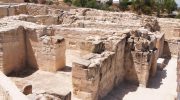
Near the modern village of Dali, 21 kilometers from Nicosia, the ruins of Idalion spread across two hills overlooking the fertile Yialias River valley. This was one of Cyprus’s ten powerful city-kingdoms. It grew wealthy from copper mining and was listed first among Cypriot kingdoms in ancient Assyrian records. wikimedia Idalion thrived from the Late Bronze Age, around 1200 BC, until it was absorbed by the Phoenician kingdom of Kition in the mid-5th century BC. The city continued through the Hellenistic and Roman periods, though it lost much of its former importance. The city had two acropolises and a lower town. The western acropolis, called Ambelleri, had a fortified palace and the Temple of Athena. The eastern acropolis, Moutti tou Arvili, was the sacred center, with temples dedicated to Aphrodite, Apollo, and other gods. The lower town lay between the hills and was fortified during the 5th century BC. According to legend, Adonis, the lover of Aphrodite, was killed here by the jealous god Ares, giving the area special significance in Greek mythology. Historical Background Idalion’s prosperity came from its strategic location, just 10 kilometers from the copper-rich foothills of the Troodos Mountains. The city stood on the south bank of the Yialias River, providing a natural route to the eastern coast ports. This position allowed Idalion to control both…

Read more