Explore Cyprus with Our Interactive Map

Explore our top stories and discover ideas worth your time.

Saint Neophytos Cave Monastery

Saint Neophytos Cave Monastery

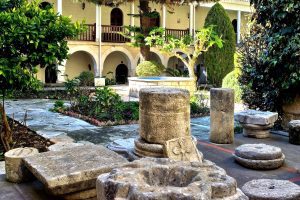
Saint Neophytos spent most of his life alone in a cave. That was his choice, and he fought for it at every turn. Born in 1134 in the small mountain village of Kato Drys near Lefkara, he was the son of farmers, one of eight children. julipapasgardens.com He became a monk at 18, a hermit by 25, and spent over 60 years sealed inside a rock-cut cave above Paphos. Yet for all his devotion to solitude, Neophytos was one of the most outspoken and prolific writers Cyprus has ever produced. He wrote about politics, religion, natural disasters, the suffering of ordinary people, and the foreign rulers who oppressed them. His cave was small, but his voice reached far beyond it. Historical Background Neophytos grew up poor and illiterate. When his parents arranged a marriage for him, he refused and fled to the Monastery of Saint John Chrysostomos in the Turkish-occupied part of Cyprus. There, he learned to read and write for the first time. He was given the role of assistant sacristan, but what he really wanted was to be left alone. His superiors told him he was too young for that kind of life. In 1158, they let him travel to the Holy Land instead. He spent six months visiting monasteries and sacred sites in Jerusalem, but came back…

Read more
How Ancient Harbors Shaped Cyprus Cities

How Ancient Harbors Shaped Cyprus Cities

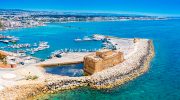
Cyprus did not become influential in the ancient Mediterranean by expanding inland or building empires on land. Its power grew from the edge of the sea. During the Bronze Age, natural harbors along the Cypriot coast evolved into gateways that connected the island to distant worlds. These maritime entry points shaped cities, concentrated wealth, and transformed Cyprus from a resource-rich island into a central player in early Mediterranean exchange. To understand Bronze Age Cyprus, it is necessary to look not at walls or palaces first, but at the waterlines where ships arrived. Where Land Met Opportunity Bronze Age harbors were not abstract ideas or convenient backdrops. They were the practical foundations of coastal life. In Cyprus, sheltered bays, shallow inlets, and calm lagoons allowed early ships to anchor safely, beach their hulls, and unload heavy cargo. These locations quickly attracted people. What began as seasonal landing points became permanent settlements built around maritime access. Harbors created opportunity. Inland communities focused on farming and mining, but coastal settlements gained something more powerful. They gained connection. Through the sea came materials, skills, and ideas that reshaped how people lived and governed. Over time, the harbor was no longer just part of the city. It became its reason for existence. A Coastline Designed for Exchange Cyprus was unusually well positioned for Bronze Age…

Read more
Cyprus Public Bus Transport

Cyprus Public Bus Transport

Cyprus closed its last passenger railway in 1952, and the final narrow gauge system shut down in 1974. Since then, discussions about establishing modern rail connections between major cities have surfaced periodically, particularly as traffic congestion worsens. In October 2024, studies were still underway for potential railway development. However, no concrete plans have materialized, leaving buses as the sole option for public ground transportation. Tripadvisor-com This absence of rail infrastructure places unique pressure on the bus system. Unlike cities where metro systems handle bulk passenger movement, Cyprus relies exclusively on road transport to connect urban centers, rural villages, and tourist destinations. Understanding the Four Types of Bus Services Cyprus operates four distinct categories of bus service, each serving a specific purpose. Airport transfer buses connect all major towns to Larnaca and Paphos airports. These services run frequently and provide tourists and residents with reliable links to international travel hubs. Adult fares typically range from €10 to €16 depending on the destination. Cyprus-Alive-com Interurban buses link major towns daily with frequent routes. These services form the backbone of inter-city travel, operating through companies like InterCity Buses. Routes connect Nicosia, Limassol, Larnaca, Paphos, and the free Famagusta area throughout the day. In-Cyprus-com Urban buses operate within towns, connecting different neighborhoods and running frequently during daytime hours. In tourist areas, summer services extend…

Read more