Explore Cyprus with Our Interactive Map

Explore our top stories and discover ideas worth your time.

Cyprus Youth Music and Dance Initiatives

Cyprus Youth Music and Dance Initiatives

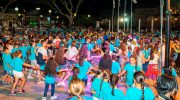
In Cyprus, music and dance often arrive in a young person’s life long before anyone calls them “heritage.” They appear in school assemblies, in family celebrations, and in the easy confidence of a village circle dance that seems to know its own steps. Youth initiatives across the island connect inherited traditions with contemporary expression, shaping identity and confidence while helping the next generation reinterpret culture in a society built at a crossroads. avia-discount A Cultural Education That Starts Early For many children, traditional rhythms and movements are first encountered casually, through school programs, local associations, or community gatherings, where participation matters more than perfection, and the goal is simply to join in. financialmirror-com Two learning paths tend to develop side by side. State-supported education introduces structure through music schools and organised dance instruction, prioritising technical skill and preservation of established forms. At the same time, community-based groups such as youth clubs, folklore associations, and informal workshops offer a more flexible approach that emphasises shared experience and learning by doing. Together, these routes allow young Cypriots to experience culture as both discipline and everyday practice, rather than choosing one and rejecting the other. Learning Beyond the Classroom Some of the strongest youth initiatives thrive outside formal education, because tradition in Cyprus is most alive when it sits inside social life instead…

Read more

Typical Workday Structure in Cyprus

Typical Workday Structure in Cyprus

Cyprus adheres to EU directives on working time while maintaining its own labor regulations. Full-time employment is legally defined as 40 hours per week, typically distributed as 8 hours per day across five working days. This standard forms the foundation for employment contracts and benefit calculations across the country. ceconomytoday-sigmalive-com The law sets a maximum limit of 48 hours per week, including overtime. This cap is calculated as an average over a four-month reference period to account for temporary workload increases. Employees working more than six consecutive hours must receive a rest break of at least 30 minutes. This break is not considered working time and typically is not paid. Workers are entitled to minimum rest periods between shifts. The daily rest requirement is 11 consecutive hours per 24-hour period. Weekly rest must be at least 24 consecutive hours, preferably on Sunday. These mandated breaks ensure employees have adequate recovery time. Public Sector Schedule Government offices maintain relatively consistent hours throughout the year. Operating days run from Monday to Friday, with flexible start times between 7:30 AM and 8:30 AM. Closing times fall between 3:00 PM and 4:00 PM, which means public servants typically work around 37.5 hours weekly. ccyprus-mail-com This schedule differs notably from private sector patterns. Public employees often have shorter Fridays compared to other weekdays. The earlier…

Read more
Eco-Tourism in Cyprus Protected Areas

Eco-Tourism in Cyprus Protected Areas

Eco-tourism in Cyprus has emerged as a significant alternative to traditional beach-centered tourism, with the Akamas Peninsula and Troodos National Forest Park serving as the island's two premier protected natural areas. These regions represent Cyprus's commitment to balancing environmental conservation with responsible tourism development. Together, they encompass diverse ecosystems ranging from coastal landscapes to mountain forests, each offering visitors opportunities to experience the island's biodiversity while supporting preservation efforts. musement Cyprus ranks among the top five European Union countries in terms of land area covered by the Natura 2000 network, with 28.8% of the island designated as protected territory. This extensive network includes 63 marine and terrestrial sites covering approximately 1,789 square kilometers. The Akamas Peninsula and Troodos National Forest Park stand as the largest and most visited of these protected areas, attracting both international travelers and local residents seeking natural experiences. Development of Protected Area Tourism in Cyprus The concept of protected areas in Cyprus developed gradually through the 20th century. Until 2000, the Akamas Peninsula remained under British military use as an exercise and firing range. Following the Treaty of Establishment, which allowed British forces use of the area for up to 70 days annually, the peninsula's ecological value became increasingly recognized. Environmental organizations, including the Green Party of Cyprus, Greenpeace, and Friends of the Earth, began advocating…

Read more