Explore Cyprus with Our Interactive Map

Explore our top stories and discover ideas worth your time.

Mediterranean Work Culture and Daily Life

Mediterranean Work Culture and Daily Life

Cyprus combines Mediterranean traditions with European business practices to create a work culture centered on relationships, balance, and quality of life. The standard work week runs 38 to 40 hours, but the rhythm of daily life follows patterns shaped by climate, family values, and ancient hospitality customs. Unsplash-com Work is important to Cypriots, yet it occupies a specific place in life rather than dominating it. Family gatherings, long meals, and social connections receive equal priority. This approach reflects a philosophy where professional success and personal wellbeing exist in harmony rather than competition. How Work Patterns Developed on the Island Cyprus sits at the crossroads of Europe, Asia, and Africa. Its position made it a vital trading hub for millennia. Ancient Phoenicians, Greeks, Romans, Byzantines, Venetians, Ottomans, and British all ruled Cyprus at different times. Each culture influenced how Cypriots approach work and daily routines. wikimedia-org The British colonial period from 1878 to 1960 introduced structured office hours and formal business practices. English became widely spoken in professional settings. After independence in 1960, Cyprus maintained these European business standards while preserving Mediterranean social customs. Climate shaped work patterns significantly. Summer temperatures can exceed 40 degrees Celsius. Historically, people worked early mornings when it was cooler, took long midday breaks during peak heat, then returned to work in the late afternoon. This…

Read more

Education and Academic Institutions

Education and Academic Institutions

Education in Cyprus is overseen by the Ministry of Education, Sports and Youth. The education system is divided into pre-primary education for ages 3 to 6, primary education for ages 6 to 12, secondary education for ages 12 to 18, and higher education for ages 18 and above. Full-time education is compulsory for all children aged between 5 and 15. Shutterstock-com State-provided schooling including higher education is paid for by taxes, making public education free at all levels for eligible students. The Cypriot education system follows the Bologna framework, meaning degrees from Cyprus are recognized across Europe and globally, offering students internationally accepted qualifications. The Three Levels of Schooling Pre-primary education begins at age 3 and continues until age 6, though it is not mandatory. Public kindergartens operate under the Ministry of Education and follow a structured curriculum preparing children for primary school. Private kindergartens also exist, often offering bilingual or English-language programs. Shutterstock-com Primary education lasts six years from ages 6 to 12. The curriculum includes Greek language, mathematics, natural sciences, history, geography, religious education, physical education, music, and art. English language instruction typically begins in the third grade. Primary schools operate as single-shift schools, with classes from morning through early afternoon. Secondary education divides into two cycles. Lower secondary education, called Gymnasio, covers three years from ages 12…

Read more
Omodos Medieval Architecture

Omodos Medieval Architecture

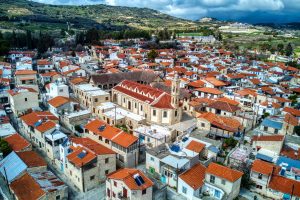
Omodos is a mountain village in the Limassol district of Cyprus, located 42 kilometers northwest of the city at an elevation of 810 meters. The village sits in the heart of the Krasochoria region, a wine-producing area in the Troodos foothills. wikimedia.org The village square, covering 3,000 square meters and dating to 1910, stands as one of the largest in Cyprus. The architectural character of Omodos creates what many describe as a living museum, where centuries of building traditions remain visible in everyday structures. This preservation has made the village a protected heritage site and a key destination for those interested in traditional Cypriot architecture. Historical Background The village likely came into existence at the end of the Byzantine period, sometime around the 12th or 13th century. According to historical records, two earlier settlements called Pano Koupetra and Kato Koupetra existed on the east bank of the Cha-potami river. After these settlements dissolved, residents established a new community around the Monastery of the Holy Cross, creating what became modern Omodos. Historical tradition claims that Isaac Comnenos, the Byzantine despot of Cyprus from 1185 to 1191, took refuge in Koupetra after his defeat by the English King Richard the Lionheart, confirming that settlements existed in this area by 1191. Medieval records document the village during the Frankish period when Cyprus was…

Read more