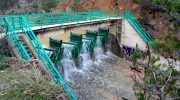
Cyprus faces one of Europe’s most severe water scarcity challenges, with dam levels hovering around 12 percent of capacity as of early 2026. The island’s 108 dams and reservoirs, built since the 1980s to capture winter rainfall, now hold just 35 million cubic meters compared to 75 million at the same time in 2025.
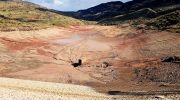
Climate change has accelerated drought cycles from once every 20 years to nearly every two years since 2007. The 2024-2025 hydrological year ranked among the driest since 1878, with only 312.5 millimeters of total rainfall. January 2025 recorded the lowest monthly rainfall in almost three decades.
This crisis has forced Cyprus to become heavily dependent on desalination, which now supplies approximately 70 percent of the island’s drinking water. The government has committed 196 million euros for water measures in 2026 alone, including 140 million euros specifically for purchasing desalinated water.
The Shift From Dams to Desalination Technology
Cyprus introduced large-scale desalination in 1997 with a 20,000 cubic meter per day reverse osmosis plant at Dhekelia. The facility was soon expanded to 40,000 cubic meters daily due to prevailing drought conditions. This marked a fundamental shift in Cyprus’s water strategy.
Prior to 1997, the island relied almost entirely on dam storage and groundwater extraction through boreholes. In 1991, Cyprus exploited 36.3 million cubic meters of water, with 34 percent from dams and 66 percent from abstraction sources. By 2005, total exploitation reached 73.3 million cubic meters, with 42 percent coming from desalination plants.
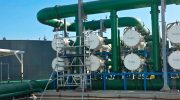
The severe drought of 2008 demonstrated the critical importance of desalination infrastructure. That year, total water exploitation was 62.5 million cubic meters, with 52 percent produced by desalination plants compared to just 24 percent from dams.
The crisis grew so severe that Cyprus imported 8 million cubic meters of water from Greece at a cost of 35 million euros for transportation alone, plus 4.4 million euros for the water itself and 1.6 million euros for port infrastructure. The total cost per cubic meter was approximately five times higher than desalination, clearly demonstrating that while expensive, desalination remained more economically viable than emergency water imports.
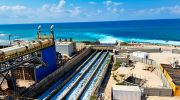
Cyprus currently operates five large permanent desalination plants located in Dhekelia, Larnaca, Vasilikos, Episkopi, and Paphos, along with 24 smaller units. These facilities have a combined capacity of approximately 235,000 cubic meters per day.
The island also ranks eighth in Europe for desalinated water production, contributing 8 percent of the continent’s total output. Spain leads Europe with 765 plants producing 5 million cubic meters daily, followed by Italy at 9 percent and Cyprus at 8 percent.
Emergency Expansion and Mobile Units
The water crisis intensified dramatically in 2024 and 2025, forcing Cyprus to implement emergency measures. In May 2025, 13 mobile desalination units arrived from the United Arab Emirates aboard the Princess Nabiha. The UAE provided a total of 14 units free of charge under a bilateral agreement, adding approximately 15,000 cubic meters of daily production capacity.
These mobile units were deployed across critical shortage areas, with 12 units installed at Moni in Limassol by the end of June 2025. Two additional units were placed at Garylli and the port area.

The Paphos region faced particularly acute shortages following the malfunction of the permanent desalination plant at Kouklia, which had previously produced 15,000 cubic meters daily. A temporary unit with 1,350 cubic meters per day capacity was installed at the same site.
A larger mobile unit in Kissonerga with 10,000 cubic meters capacity became operational by September 2025. Additional smaller units with a combined output of 2,000 cubic meters per day came online by July to meet peak summer demand. The Kouklia plant was projected to resume operation by August 2025, though until then, boreholes and treatment plants in Anarita and Kannaviou bore the water supply load.
The government aims to have nine new desalination plants operational by the end of 2026. Four mobile units were constructed within 2025, while two permanent plants are scheduled for completion within the next five years.
Cyprus is also exploring construction of two new permanent desalination plants in eastern Limassol and the Famagusta free area. Each project carries an estimated cost of approximately 80 million euros. However, both locations present significant challenges. Land ownership issues complicate construction in Limassol, while potential Famagusta sites are either protected areas or beaches, limiting viable options.
The Agriculture Crisis and Water Rationing
Farmers have borne the heaviest burden of water scarcity. The Water Development Department informed agricultural producers that irrigation water supply in 2025 would be cut by 50 percent compared to 2024.
In some provinces, farmers received 30 percent less water than the previous year. The ministry allocated only 60 million cubic meters for irrigation in 2025, though farmers actually require 106 million cubic meters annually. A 30 percent reduction in irrigation water was enforced across Paphos province, and golf courses received only 30 percent of their approved 2024 allocations.
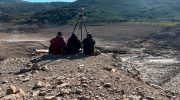
Farmers protested in Paphos in June 2024, warning that continued water restrictions would force them to abandon crops. Long-time farmers like Afxentis Kalogirou, who grows apples and seasonal crops including lettuce, tomatoes, and melons in southwestern Cyprus, expressed deep concern about the viability of agriculture under these conditions.
The Ministry of Agriculture scheduled meetings with farming organizations to discuss possible solutions, but the fundamental problem remains: insufficient water for both domestic supply and agricultural needs.

The government has launched a 1.17 billion euro national investment plan comprising 93 projects focused on integrated irrigation and water supply infrastructure. Of these, 33 projects deemed top priority are already under construction. However, these long-term infrastructure improvements cannot resolve the immediate crisis facing farmers who need water during the current growing season.
Environmental Concerns About Brine Discharge
The rapid expansion of desalination capacity has raised environmental concerns, particularly regarding brine disposal. Desalination plants discharge highly concentrated saltwater back into the sea, which can harm marine ecosystems if not properly managed.
Environmental concerns emerged in 2025 when authorities planned a mobile desalination unit at Mazotos. Charalambos Theopemptou, chairman of the House Environment Committee, cited the case of Dhekelia, where brine discharge from a desalination plant caused detectable damage to Posidonia oceanica seagrass meadows, the same species found at Mazotos.

Proper environmental management requires countermeasures such as long, perforated pipelines that disperse brine over wider areas, preventing concentrated salinity from harming marine life. Theopemptou warned that inadequate brine management could kill marine ecosystems.
He also expressed concern about the quality and rigor of environmental impact assessments for government-led desalination projects, noting that while legislative changes have been implemented to ensure proper training for those conducting studies and penalties for false information, shortcomings continue.
Community groups have also raised concerns about the increasing role of private actors in Cyprus’s water system. Since March 2025, a 3 million euro grant scheme has supported small private desalination units up to 1,500 cubic meters per day for hotels and local authorities.
Critics worry about consultation processes, environmental studies, and water allocation decisions. The Water Development Department responded that no desalination unit can set prices or independently dispose of water, as all units operate under national security plans.
Why Cyprus Needs a New Water Strategy
Cyprus’s water crisis reveals the limitations of relying primarily on desalination to address structural water scarcity. While desalination provides essential drinking water security, the current approach treats symptoms rather than underlying problems.
Climate projections suggest conditions will worsen, with studies estimating up to 29 billion euros in damages by 2050 across transport, energy, agriculture, livestock, and tourism without course correction. The island currently engineers urban infrastructure to waste rainfall that could supplement water supplies if captured and stored properly.

The government’s water management strategy demonstrates both the necessity and the costs of desalination in water-scarce environments. Cyprus has successfully maintained drinking water supply despite catastrophic drought conditions through aggressive expansion of desalination capacity.
However, this success comes at considerable financial expense, environmental risk from brine discharge, and ongoing vulnerability to energy costs.
The next phase of Cyprus’s water security depends on combining desalination with comprehensive demand management, infrastructure repairs to reduce losses, urban rainwater harvesting, and agricultural water efficiency improvements. Without these complementary measures, Cyprus will continue spending hundreds of millions of euros annually to manufacture water while natural rainfall flows untreated into the Mediterranean.