Makaronia tou fournou means pasta baked in the oven and is a common dish in Cyprus, often served as a main course with a salad, but in Cyprus, it is an essential dish during all celebrations.
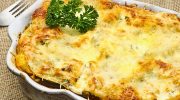
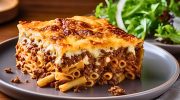
The dish consists of three distinct layers: tubular pasta at the bottom, spiced ground meat sauce in the middle, and creamy béchamel on top. Pastitsio takes its name from the Italian pasticcio, a traditional casserole dish with pasta or pie crust that can be made with meat, fish, or pasta.
The pasta used is typically bucatini or other long tubular varieties similar to macaroni. The entire assembly gets baked until the top develops a golden-brown crust. The use of halloumi and local spices gives makaronia tou fournou a distinctly Cypriot character.
Italian Roots and Cypriot Adaptation
The dish evolved from Italian pasta bakes that reached Cyprus through Mediterranean trade routes and centuries of cultural exchange. The Italian word pasticcio itself comes from Latin pastīcium, which means pie.
Greek communities adapted this concept into pastitsio, which then traveled to Cyprus, where it underwent further transformation. The Cypriot version developed its own identity through specific ingredient choices and preparation methods. Unlike the Greek version that typically uses beef or veal, pork is typically favored over beef, veal, or lamb in makaronia tou fournou, although it is often made with a mixture of pork and beef or veal.
The addition of halloumi cheese, a uniquely Cypriot ingredient, marked the most significant departure from mainland Greek versions. The Cyprus version has cinnamon as its main spice, which gives the dish its characteristic warm, aromatic quality.
The Elements That Make It Distinctive
The main differences between makaronia tou fournou and pastitsio are the addition of dry mint in the pasta and the meat sauce, and the use of halloumi, a traditional Cypriot cheese that is sprinkled on top of the dish to make a gratin.
The meat sauce differs from typical Greek versions by containing less tomato or sometimes omitting it entirely, relying instead on the natural juices from the meat and the richness from added wine. Some recipes include fresh tomatoes while others use only tomato paste or none at all. The béchamel layer proves crucial to the dish’s structure. If we do not add the cream our pasta will not stick together but will spread in the plate during serving.
The sauce gets enriched with egg yolks and cheese, creating a thicker, more substantial topping than standard French béchamel. Traditional preparation involves mixing some béchamel into the meat layer as well, which helps bind the ingredients and adds moisture throughout the dish.
Sunday Lunches and Celebration Food
In Cyprus, pastitsio is a cherished part of festive gatherings, Sunday lunches, and holiday celebrations. The dish became so integral to Cypriot celebrations that no wedding, baptism, or major religious holiday feels complete without it. Platters of makaronia tou fournou filled the tables at traditional village weddings alongside other staples.
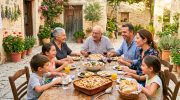
The time-intensive preparation makes it suitable for occasions when families gather and share cooking duties. Women in the family typically prepare large quantities the day before events, allowing the dish to rest overnight and develop deeper flavors.
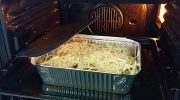
For a wedding of 200 people, we use a wood-fired oven that takes 25 baking dishes at once. This communal cooking tradition reinforced the dish’s association with celebration and togetherness. The practice of preparing makaronia tou fournou became a ritual in itself, with multiple generations working together in kitchens to assemble the layers.
Regional Variations and Personal Touches
Different families and regions developed their own approaches to makaronia tou fournou while maintaining core elements. Some cooks add beef stock to the pasta while boiling for extra flavor. Others incorporate fresh parsley and oregano into the meat sauce alongside the standard mint and cinnamon. Makaronia tou fournou can also be made with dry anari cheese, a traditional Cypriot cheese that provides a different flavor profile than halloumi.
The amount of cinnamon varies considerably, with some families using just a pinch and others adding enough to create noticeable warmth. Wine selection for the meat sauce differs by household, with red wine being most common, though some prefer white. The proportion of béchamel to meat also varies.
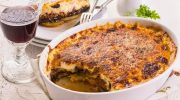
Some versions use generous amounts of cream sauce that nearly drowns the other layers, while others prefer thinner coverage that allows the meat to dominate. These variations mean that no two family recipes taste identical, despite following the same basic structure.
Modern Preparation and Serving
Contemporary cooks have adapted makaronia tou fournou to fit busy schedules while respecting traditional methods. The dish freezes well before baking, allowing families to prepare it weeks in advance for upcoming celebrations. Some restaurants offer individual portions in smaller baking dishes, making the traditionally large-format dish accessible for everyday dining.
Instead of lasagna pasta, in Cyprus, penne is used at the bottom, minced pork dipped in tomato sauce and herbs in the middle, and béchamel sauce on top, though bucatini remains more traditional than penne.
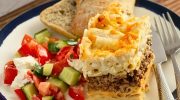
Tavernas across Cyprus feature makaronia tou fournou on their regular menus, not just during special occasions. The standard accompaniment remains a simple village salad with tomatoes, cucumbers, onions, and feta dressed in olive oil and lemon.
Many establishments serve it as part of meze spreads, offering smaller portions alongside other traditional dishes. The dish appears equally at casual family Sunday lunches and formal holiday dinners, maintaining its versatility across different social settings.
Connection to Cypriot Identity
Makaronia tou fournou represents how Cyprus absorbed Mediterranean influences while creating something uniquely local. The Italian foundation, Greek adaptation, and distinctly Cypriot modifications demonstrate the island’s position as a cultural crossroads. The dish embodies Cypriot values of hospitality, family connection, and celebration through food. Its presence at every major life event, from births to weddings to religious holidays, makes it more than just a recipe.
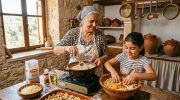
It functions as an edible tradition that connects generations. Grandmothers teach granddaughters the proper consistency for béchamel. Fathers pass down their preferred spice ratios. The act of making makaronia tou fournou together reinforces family bonds and cultural continuity.
The dish’s enduring popularity, despite the availability of countless international cuisines, shows how Cypriots maintain connections to their heritage through everyday cooking rather than treating traditions as museum pieces.