Each September, the ancient harbor of Pafos becomes something rare: a place where opera, history, and landscape converge without competing for attention. The Pafos Aphrodite Festival transforms the space in front of a medieval castle into an open-air opera stage, offering full productions in a setting shaped by sea air, stone walls, and night sky. What makes the festival distinctive is not only its musical ambition, but how naturally it belongs to its surroundings.
- When Opera Leaves the Opera House
- A Cultural Decision, Not an Accident
- A Castle That Becomes Part of the Performance
- What Sets the Festival Apart
- Opera and the Logic of Aphrodite
- How the Festival Has Evolved
- Why the Festival Matters Today
- Attending the Festival
- Why the Pafos Aphrodite Festival Endures
When Opera Leaves the Opera House
The Pafos Aphrodite Festival is Cyprus’s leading international opera event, held annually in late August or early September in the coastal city of Pafos. Performances take place outdoors, directly in front of Pafos Medieval Castle, using the historic harbor as both venue and atmosphere.
Rather than recreating the formality of a traditional opera house, the festival embraces openness. Music is performed under the sky, with the sea close by and the castle standing as a silent witness. The experience feels ceremonial, but not enclosed, allowing opera to exist in dialogue with place rather than behind walls.
A Cultural Decision, Not an Accident
The festival was established in 1998, with its first performance staged in 1999. Its creation was a deliberate attempt to reposition Pafos as more than a seasonal beach destination. Local cultural institutions and authorities sought a flagship event that could attract international attention while extending the island’s cultural calendar beyond summer.

The ambition was clear from the outset. The inaugural production was Verdi’s Aida, presented by the Bolshoi Theatre of Moscow. This opening choice immediately signalled that the festival would operate at an international level rather than as a regional experiment.
Over the years, the festival developed a stable identity, hosting respected opera companies and building a loyal audience. After a pause between 2020 and 2023 due to the pandemic and restructuring, it returned in 2024 with La Traviata and continued in 2025 with Carmen, establishing a renewed artistic model and stronger local collaboration.
A Castle That Becomes Part of the Performance
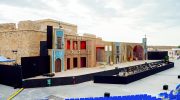
The setting is central to the festival’s impact. Performances take place in the square directly in front of Pafos Medieval Castle, a structure shaped by Byzantine, Lusignan, Venetian, and Ottoman phases of construction.

The castle is not treated as a decorative backdrop. Its walls, towers, and textures are integrated into lighting design and stage composition, creating depth that no indoor set could replicate. Stone absorbs and reflects light differently than stage panels, and the result is a visual presence that feels grounded rather than theatrical.
The proximity of the harbor adds another layer. The faint movement of water, the openness of the horizon, and the gradual cooling of the evening contribute to an atmosphere that evolves throughout the performance.
What Sets the Festival Apart
Several elements distinguish the Pafos Aphrodite Festival from other European opera events, yet none of them feel artificial or imposed. The festival’s identity grows naturally from its location, its scale, and its approach to performance.
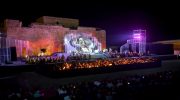
Full opera productions are staged outdoors by the sea, with the medieval castle forming a permanent architectural frame rather than a temporary backdrop. Performances are limited to only a few evenings each year, which preserves a sense of occasion and anticipation. The timing in late summer allows audiences to enjoy warm nights without the intensity of midsummer heat, while the involvement of both international companies and local orchestral forces creates a balance between global prestige and Cypriot participation.
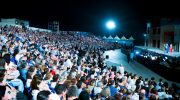
Despite its international profile, the festival remains deliberately intimate. Temporary seating is arranged so that the audience stays visually and acoustically connected to the stage, and the open harbor setting prevents the experience from feeling enclosed or formal. The result is an atmosphere that feels ceremonial yet accessible, where opera becomes part of the landscape rather than separate from it.
Opera and the Logic of Aphrodite
The festival’s name reflects more than a mythological reference. Pafos is one of the most important sites associated with Aphrodite, the ancient Greek goddess of love and beauty, who, according to legend, emerged from the sea near this coast. For centuries, the region served as a major center of her worship, and her presence remains embedded in local identity and storytelling.

Opera, as a genre, is deeply rooted in human emotion, exploring love, jealousy, sacrifice, desire, and loss. By invoking Aphrodite, the festival links these operatic narratives to the island’s most enduring mythic figure. The connection feels conceptually coherent rather than symbolic, aligning the emotional intensity of opera with the mythological and historical layers of the place.
How the Festival Has Evolved
In its early years, the festival relied heavily on major foreign opera houses that could deliver complete productions, including orchestras, choruses, and staging. This approach ensured a high artistic standard but required complex logistics and limited local involvement.
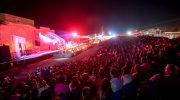
From 2024 onward, the festival shifted toward a more collaborative model. International companies now work alongside the Cyprus Symphony Orchestra, integrating local musicians into large-scale productions while maintaining global artistic quality. This transition strengthened the festival’s connection to Cyprus’s cultural ecosystem, transforming it from a primarily imported event into a shared national cultural project.
Repertoire choices continue to favour well-known works by composers such as Verdi, Puccini, Mozart, Bizet, and Rossini. This accessibility invites both experienced opera audiences and first-time attendees, reinforcing the festival’s role as an entry point into operatic culture rather than an exclusive specialist gathering.
Why the Festival Matters Today
Today, the Pafos Aphrodite Festival functions as a cultural anchor for the region. It attracts visitors interested in music, history, and atmosphere rather than purely seasonal leisure, supporting a form of cultural tourism that adds depth to Pafos’s identity.

For local audiences, the festival provides access to world-class opera without leaving the island. For visitors, it offers an experience that cannot be separated from its setting, where performance and place are inseparable. The festival also extends the tourism season into early autumn, contributing to the local economy during a period that would otherwise be quieter.
Attending the Festival
Tickets are available to the public and are typically sold in advance, with popular productions selling out quickly. Performances take place in the evening, as daylight fades and the harbor gradually shifts from a casual seaside space into a ceremonial cultural venue.
Dress is generally smart casual, with light clothing recommended due to warm night temperatures. Comfortable footwear is advisable, as the harbor area includes stone surfaces and uneven ground. Subtitles are projected in Greek and English, and occasionally in other languages, making performances accessible to international audiences.
Why the Pafos Aphrodite Festival Endures
The Pafos Aphrodite Festival endures because it does not impose culture on its surroundings. Instead, it allows music, history, and landscape to coexist, each reinforcing the other without dominance.
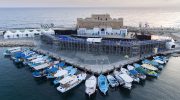
By using ancient space without overpowering it, the festival demonstrates how heritage can remain active rather than preserved at a distance. It shows that Cyprus is not only an island of ruins and beaches, but a living cultural landscape where old stones continue to resonate with contemporary voices.
In that balance between continuity and performance lies the festival’s lasting strength.