Explore Cyprus with Our Interactive Map

Explore our top stories and discover ideas worth your time.

Limassol Art Gallery

Limassol Art Gallery

vThe Limassol Municipal Art Gallery stands as one of the most significant cultural institutions in Cyprus. This gallery houses over 600 works of modern Cypriot art, with pieces that span painting, sculpture, pottery, and mixed media. Located on the seafront of Limassol, the gallery offers visitors a comprehensive view of how Cypriot art developed throughout the 20th century and continues to evolve today. The collection represents the artistic journey of Cyprus from early naturalistic trends to contemporary approaches. The gallery features both the foundational works that shaped Cypriot modern art and the innovative pieces created by emerging artists who continue to push boundaries. Historical Background The story of the Limassol Municipal Art Gallery begins with a beautiful building designed by German-Jewish architect Benjamin Ginsburg in 1938. The structure reflects European modernism, particularly the influence of the Bauhaus movement, which was unusual for Cyprus at that time. Its clean lines and functional design made it one of the first modernist buildings on the island. The building originally served as a private residence for the Pavlidis family. It remained in private hands until 1984, when the family donated it to the municipality of Limassol. The donation was officially announced on January 30, 1984. Four years of preparation followed before the gallery opened its doors to the public on June 26, 1988, under…

Read more
Dasoudi Beach Limassol

Dasoudi Beach Limassol

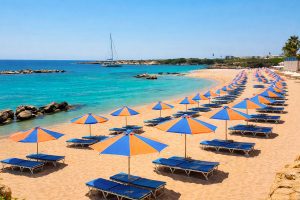
Dasoudi Beach extends one kilometer along the Limassol coastline in Germasogeia, approximately 3.5 kilometers east of the city center. The beach is the only one in Cyprus which, despite proximity to the city center, boasts rich greenery that reaches all the way down to the sandy coast. The name Dasoudi translates from Greek as little forest, referring to the park's ambiance created by dense eucalyptus and pine groves. This urban beach combines standard Mediterranean beach facilities with unusual additions including an Olympic-size swimming pool and a forested park that provides natural shade and scenic walking paths just meters from the waterline. Historical Background Dasoudi Park was established in the mid-20th century as part of a greening initiative in Limassol. City planners recognized the need for public recreational space along the rapidly developing tourist corridor east of downtown. Eucalyptus trees were planted specifically to reinforce sandy dunes and provide shade during hot summer days. These Australian imports adapted well to Mediterranean conditions, growing quickly to create the forested atmosphere that defines Dasoudi today. The park and beach developed together rather than sequentially, with infrastructure planned to integrate both elements. Walking paths wind through eucalyptus, pine, and acacia groves parallel to the shoreline, creating a buffer zone between urban development and the beach itself. This design allows visitors to transition gradually from…

Read more
Kition Temples Phoenician Hellenistic Period

Kition Temples Phoenician Hellenistic Period

Kition, located beneath modern Larnaca on Cyprus's southeastern coast, served as a major Bronze Age settlement before the Phoenicians arrived. The site contains five successive temples dated from the late 13th to the late 11th century BC, built during the Late Bronze Age when Mycenaean Achaeans inhabited the city. These early temples were connected to copper smelting workshops, revealing an unusual integration of industrial and religious activities. The copper industry was central to Cyprus's prosperity, and scholars believe this placement suggests either worship of a deity related to copper production or a ritual significance attached to metallurgy itself. Around 1000 BC, the religious part of the city was abandoned, though life continued in other areas. This abandonment created a gap in the archaeological record until the Phoenicians revitalized the site two centuries later. Historical Background The Phoenicians arrived at Kition near the end of the 9th century BC, first as traders and later as permanent settlers. Around 850 BC, they built a large temple dedicated to Astarte on the foundations of an earlier Mycenaean temple. This temple became the most important religious building in the city and stayed in use for more than five centuries. The Temple of Astarte was a major architectural achievement. The rectangular building measured 35 by 22 meters, with walls made of large ashlar blocks, some…

Read more