Located in the southeastern corner of Cyprus near the town that shares its name, Paralimni Lake stands as one of the island’s eight remaining natural wetlands. This 350-hectare seasonal wetland hosts an extraordinary variety of bird species and rare reptiles despite severe threats from development and poor management. The name Paralimni translates to “by the lake,” a reminder that this wetland once defined the entire region’s identity.
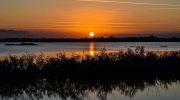
Paralimni Lake occupies a natural depression between the villages of Paralimni, Sotira, and Deryneia in the Famagusta district. The basin collects rainwater runoff from surrounding areas, primarily through the Plati torrent flowing from the east. During winter and early spring, water accumulates in this shallow pan, creating crucial wetland habitat. By summer, the lake typically dries out completely, leaving exposed mudflats and sparse vegetation.
This seasonal pattern might seem problematic, but Mediterranean ecosystems have evolved to function perfectly with such cycles. The wet winter months support migratory birds, while the dry summer period allows different species to thrive. In drought years, the lake may barely collect any water at all. In particularly wet seasons, it can retain moisture for longer periods, sometimes extending bird habitat availability into early summer.
Historical records show that in 1893, locals cut drainage channels to reduce humidity around the growing town. These channels dried much of the lake permanently, shrinking its original extent. Today, the lake depends entirely on natural rainfall for water, with no permanent streams feeding it. Climate patterns in this corner of Cyprus produce hot, arid summers and mild winters with modest rainfall, making water a precious seasonal resource.
Bird Species and Migration Patterns
At least 186 different bird species have been recorded at Paralimni Lake since systematic observation began. The site serves two vital functions: a breeding ground for resident species and a stopover for birds traveling between Europe, Africa, and Asia. Winter and early spring bring the highest diversity, when water levels peak and migratory routes intersect with local breeding activity.
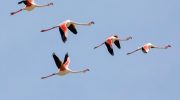
Greater Flamingos represent the lake’s most spectacular visitors. These elegant pink birds overwinter here, feeding in the shallow waters and creating unforgettable scenes against Cyprus’s blue skies. Their presence alone attracts photographers and nature enthusiasts from across the island. Flamingos require specific water depths and food sources that Paralimni’s seasonal patterns provide during peak winter months.
The Spur-winged Lapwing breeds here in significant numbers, making Paralimni one of Cyprus’s top five breeding sites for this striking black and white wading bird. Locals call it Pellokaterina, or Crazy Katherine, after the loud alarm calls it makes when defending its nest. These birds lay eggs directly on the ground, making them vulnerable to disturbance from vehicles, dogs, and human foot traffic.
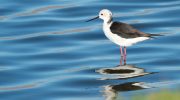
Black-winged Stilts wade through shallow waters on impossibly long pink legs, probing mud for invertebrates. Kentish Plovers, small and easily overlooked, nest along the lake’s margins. Black Francolins, game birds prized by hunters, trumpet their distinctive calls across the wetland at dawn. The lake also supports Little Grebes, Eurasian Coots, Eurasian Moorhens, Squacco Herons, Western Marsh Harriers, European Bee-eaters, Great Spotted Cuckoos, and Little Terns.
In 2023, a Diederik Cuckoo appeared at the lake, marking only the second recorded sighting of this African species in Cyprus. Such rare observations highlight the site’s importance as a waypoint for birds whose migration routes occasionally bring them to unexpected locations. The diversity of species reflects the varied habitats within the wetland, from open water to mudflats to vegetated margins.
The Cyprus Grass Snake
Paralimni Lake serves as the primary habitat for Cyprus’s most threatened reptile, the Cyprus Grass Snake. This endemic subspecies exists nowhere else on Earth except a few locations at the foot of the Troodos Mountains and in this wetland. First documented in 1787, the snake now faces extinction due to habitat loss and human disturbance.
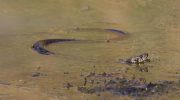
The scientific name Natrix natrix cypriaca identifies it as a subspecies of the European grass snake. Despite the name, it behaves more like a water snake, earning the local name Nerophido. These snakes swim expertly through the lake’s waters, hiding among aquatic vegetation and rocks. They hunt amphibians, small fish, and invertebrates that thrive in seasonal wetland conditions.
Adults reach about one meter in length, with females growing larger than males. The subspecies displays three distinct color patterns: gray with white-yellow markings, solid black, and black with pale white spots. The solid black form appears only in Troodos populations. The snakes are completely harmless to humans. When threatened, they release a foul-smelling liquid as defense rather than bite.
Wetland Plants and Halophytes
The vegetation around Paralimni Lake consists primarily of halophyte species, plants adapted to saline conditions common in coastal and wetland environments. These hardy species tolerate salt concentrations that would kill most ordinary plants. Salt marsh vegetation dominates areas where water lingers longest, creating dense stands that provide shelter for birds and invertebrates.
Riparian plants grow along the lake’s irregular margins where fresh rainwater mixes with slightly brackish conditions. These species fall under European Union habitat protection directives, recognized for their role in wetland ecosystems. The native scrub surrounding the lake reflects Cyprus’s semi-arid Mediterranean climate, with drought-resistant species that remain green through long summer months.
The wetland also supports a rich variety of dragonfly species. These insects depend on water for their larval stages and represent an important food source for many birds. The presence of multiple dragonfly species indicates relatively healthy water quality despite the seasonal nature of the lake. Aquatic invertebrates, algae, and microscopic organisms form the base of a complex food web that sustains larger animals.
Legal Protection Without Real Management
BirdLife International designated Paralimni Lake as an Important Bird and Biodiversity Area in 2004. Five years later, it gained legal protection as a Natura 2000 site under European Union directives. The designation actually covers the site twice, once for birds under the Birds Directive and once for the Cyprus Grass Snake under the Habitats Directive. This double protection should guarantee strong conservation measures.
Reality tells a different story. Despite these protections, Paralimni Lake remains one of the most degraded Natura 2000 sites in Cyprus. A shooting range operates within the protected area without proper environmental permits. Hunters discharge lead shot into and around the wetland, causing both disturbance and pollution. Tests have revealed serious lead contamination, with poisoned flamingos found dead on multiple occasions.
In 2012, the European Court of Justice convicted Cyprus for failing to protect Paralimni Lake and the Cyprus Grass Snake. The court specifically cited the shooting range and lack of protective measures. Promises to relocate the facility have never materialized. An earthen bank built to contain shotgun pellets has proven inadequate, as the site’s management plan confirms.
Residential development surrounds and encroaches into the wetland. Houses built near or within the lake boundaries create constant disturbance. Property owners sometimes drain water to reduce mosquito populations, directly harming wildlife that depends on seasonal flooding. A model airplane track once operated within the protected zone and could resume operations at any time since no restoration has occurred.
Uncontrolled access allows vehicles and unleashed dogs to destroy ground-nesting bird eggs. Poaching continues despite protection laws, with even iconic species like flamingos occasionally shot. Standard hunting distance restrictions from residential areas are routinely ignored. The combination of legal hunting, illegal poaching, lead contamination, development pressure, and lack of management creates a perfect storm of threats.
Visiting Paralimni Lake
The lake sits just west of Paralimni town in the Famagusta district. Visitors can park behind the Super Action store and Lidl supermarket, the closest access point to flamingo viewing areas. A dusty road runs parallel to the lake from the Super Action side, allowing car access for those unable to walk long distances. Plans exist for a bird hide, though construction depends on local municipality decisions.
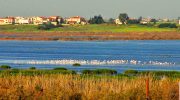
Winter and early spring offer the best viewing opportunities when water levels peak and migratory species arrive. Early morning and late afternoon provide optimal light for photography and peak bird activity. The lake typically begins drying by May, with species diversity declining as water disappears. However, the Sotira Pools on the lake’s western side hold water longer and support birds for extended periods.
The site remains largely undeveloped for tourism, lacking extensive facilities or marked trails. This situation reflects both the conservation challenges and the missed opportunity to create a well-managed nature destination. Visitors should bring their own water, sun protection, and respect wildlife by maintaining distance from nesting areas. Binoculars or cameras with telephoto lenses allow good views without causing disturbance.
Paralimni Lake represents both tremendous ecological value and squandered potential. With over 186 recorded bird species, an endemic snake found almost nowhere else, and designation as a twice-protected Natura 2000 site, it should be a showcase of conservation success. Instead, it exemplifies the challenges of protecting natural areas when development pressure, inadequate enforcement, and competing interests collide. The wetland’s future depends on whether Cyprus can transform paper protections into real management, relocate incompatible activities, and engage local communities in stewarding this irreplaceable natural heritage.