Kamares ware is luxury pottery made in Minoan Crete that reached Cyprus nearly 4,000 years ago, proving the island was already tied into long-distance Mediterranean exchange. Thin “eggshell” vessels and high-control firing techniques turned these cups and jugs into prestige objects, appearing mainly in elite burials and high-status contexts rather than everyday homes. This article explains how Kamares travelled through Cypriot ports, what it signalled about copper-era trade, and how imported styles helped reshape local ceramic traditions over time.
Aegean Luxury Arrives in Cyprus
During the early second millennium BCE, Cyprus was not an isolated island on the edge of history. Its copper resources made it valuable to societies that lacked metal of their own, especially Minoan Crete. At the same time, improvements in shipbuilding and navigation allowed traders to move goods across open sea routes with increasing confidence.
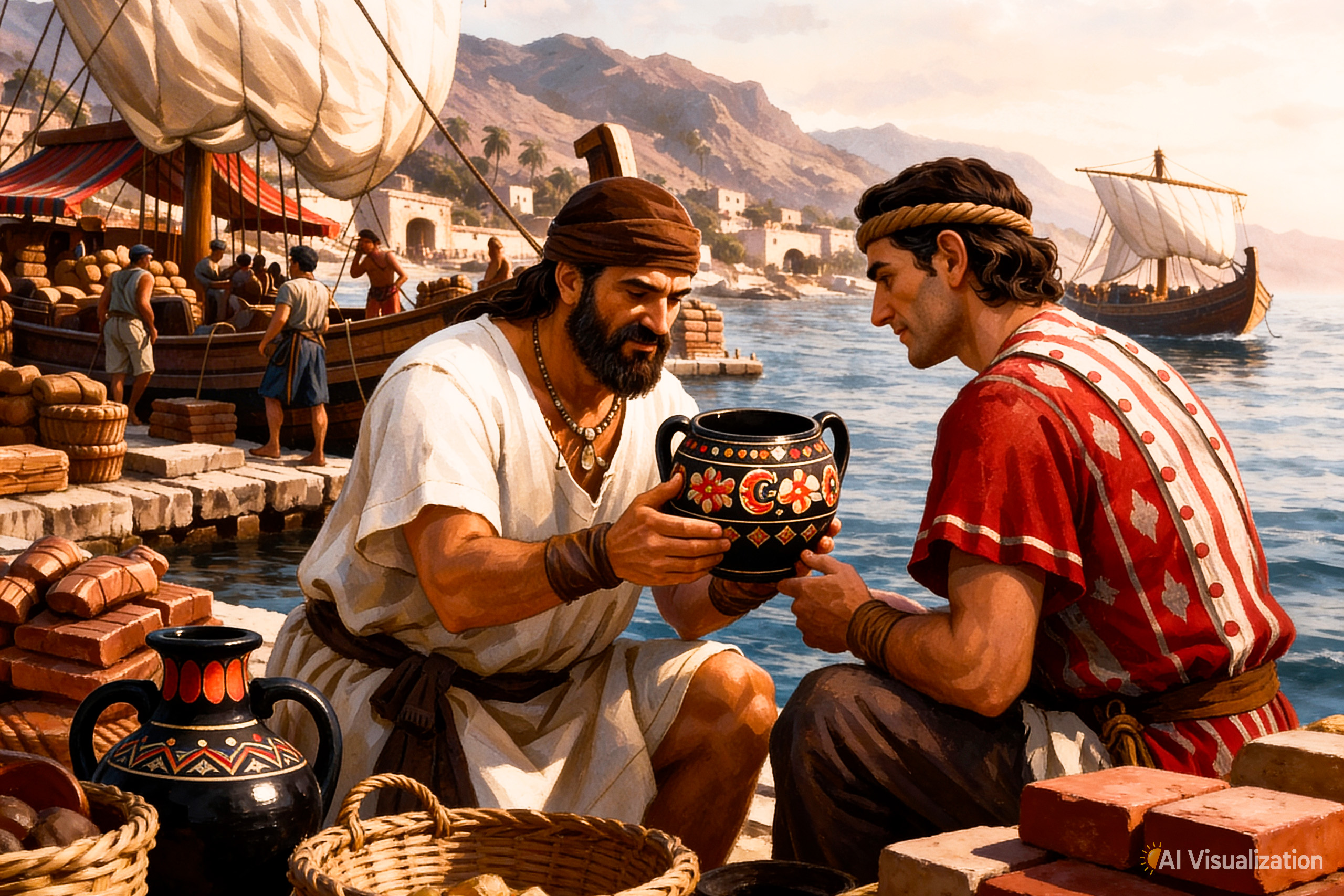
Kamares ware belongs to this moment of expansion. Produced in Crete during the Middle Minoan period, these vessels reached Cyprus through maritime exchange, arriving mainly at coastal centres that were already developing into hubs of trade and redistribution.
Early Routes Across Open Water
Kamares ware was never intended for ordinary households. The vessels are thin, light, and carefully finished, often decorated with white, red, and orange motifs on a dark background. Many examples are so delicate that they are described as “eggshell ware,” with walls only a few millimetres thick.
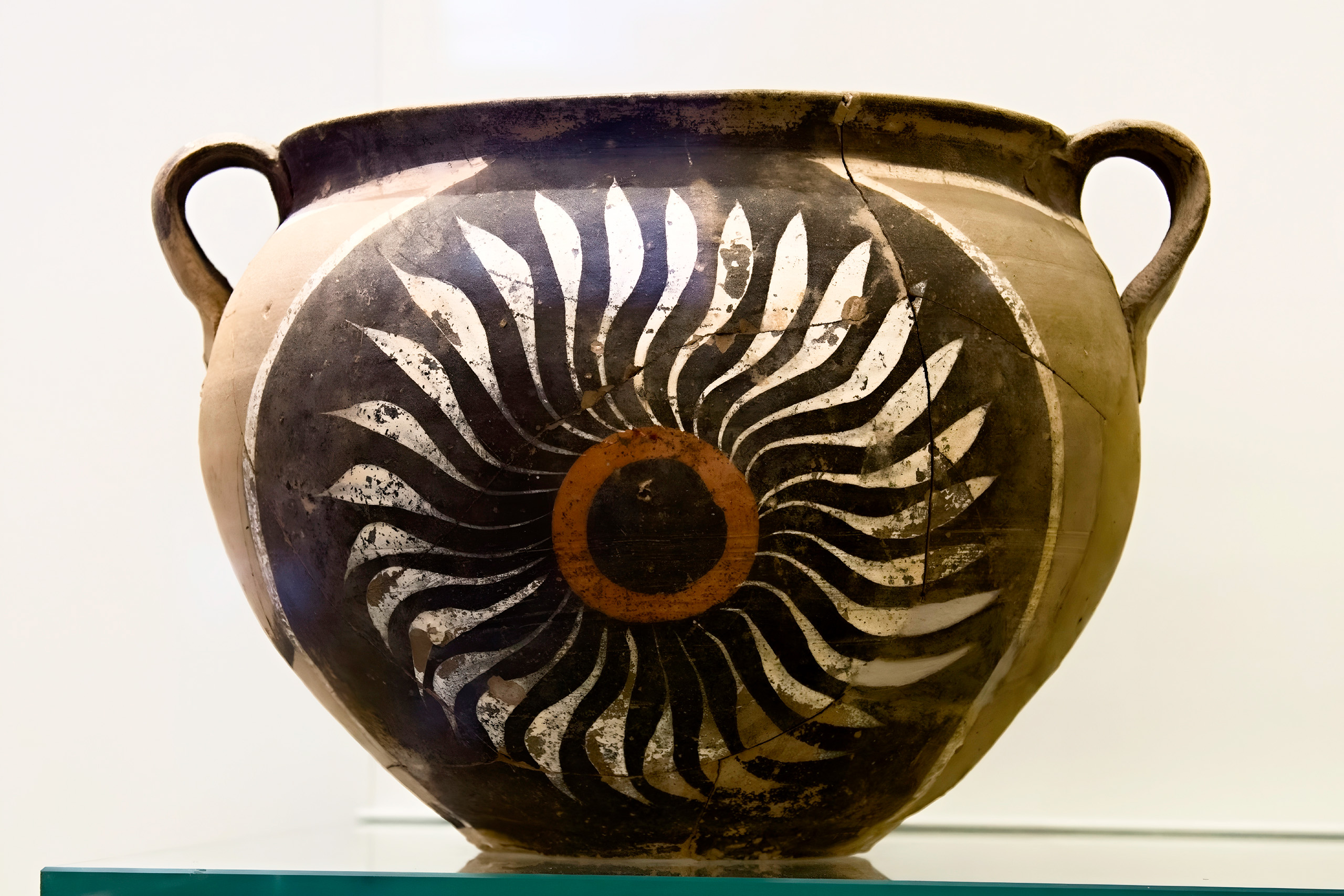
This level of craftsmanship required specialised potters, fine clay preparation, and precise control of kiln conditions. The result was pottery that functioned as a luxury object. In Cyprus, Kamares ware appears in elite burials and high-status contexts, where it signalled wealth, connections, and access to distant networks rather than simple utility.
Cyprus as a Gateway, Not a Destination
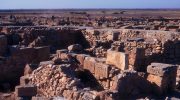
The most important Kamares finds in Cyprus come from areas that were already well positioned for maritime exchange. Sites such as Hala Sultan Tekke and Kition were closely linked to sheltered anchorages and lagoons that made ship traffic possible.
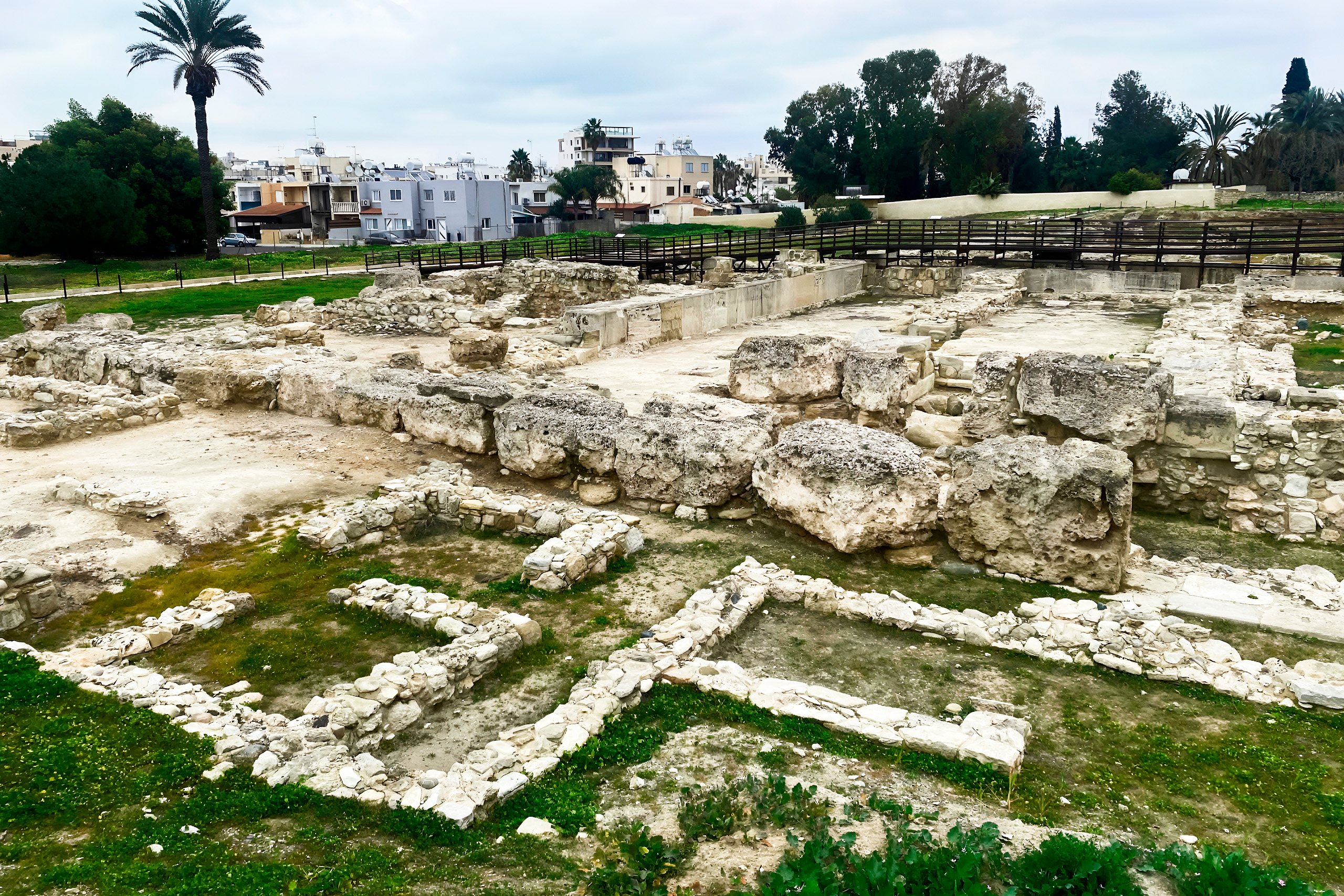
At these locations, Kamares vessels likely arrived alongside other prestige goods and were exchanged for Cypriot copper. Rather than remaining confined to coastal settlements, imported pottery probably moved inland through established local networks, eventually reaching sanctuaries and burial grounds where it acquired additional symbolic value as an offering rather than a traded commodity.
Elite Burials, Not Kitchen Shelves
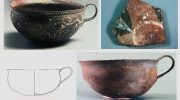
One of the most telling discoveries comes from a burial often referred to as the “Tomb of the Seafarer,” where a small Kamares cup was placed alongside other non-local objects. The selection of grave goods suggests a person whose identity was shaped by movement and exchange, someone directly involved in maritime trade rather than merely benefiting from it.
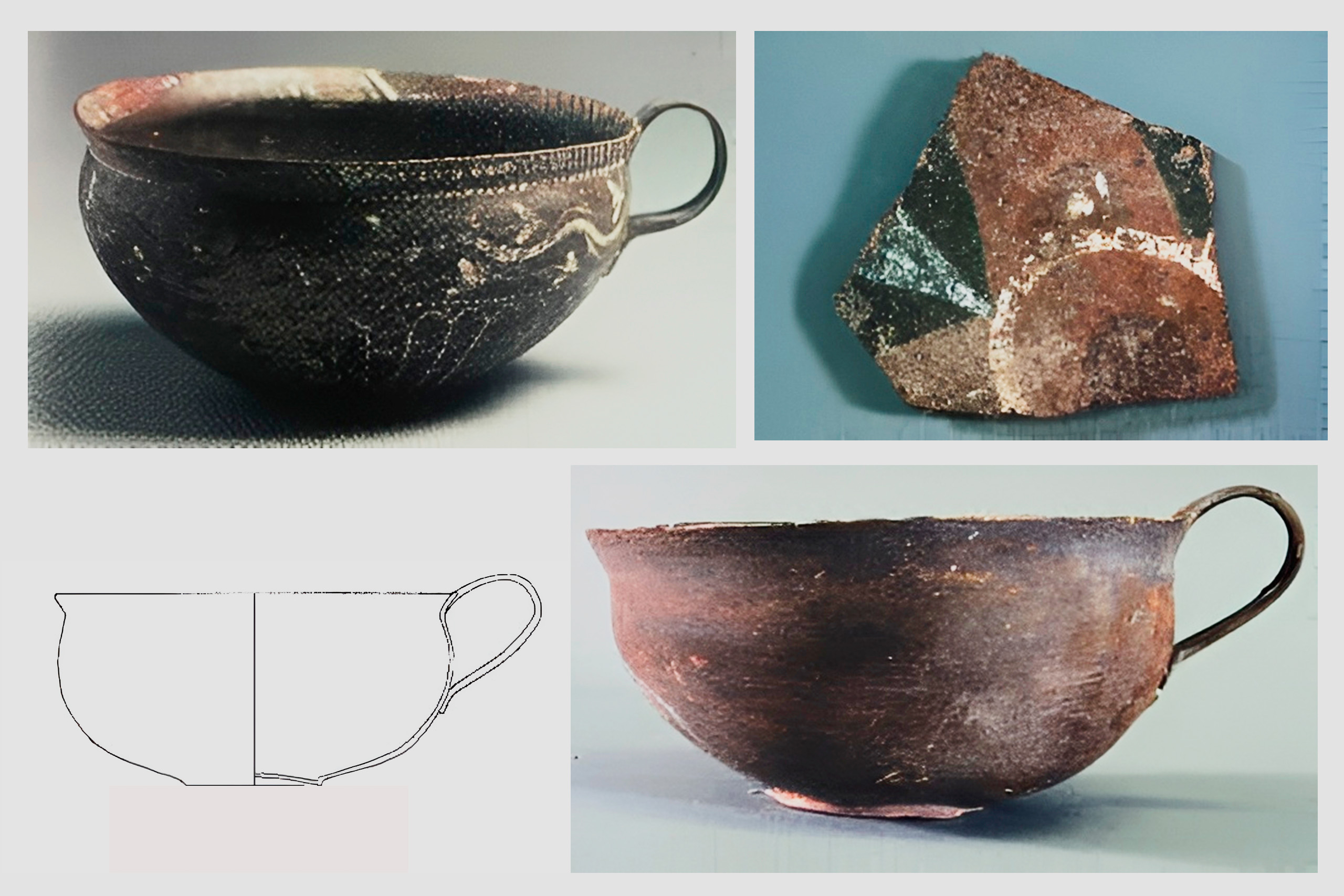
Finds of this kind reveal that Cypriots were not passive recipients of foreign luxuries. They participated actively in the circulation of materials, technologies, and ideas, navigating the same sea routes that carried copper outward and prestige goods inward.
Technology That Matched the Metal Age
The technical sophistication behind Kamares ware aligns closely with broader developments of the Bronze Age. Achieving the distinctive dark background and sharply defined painted designs required careful manipulation of firing conditions, including precise control over oxygen levels within the kiln.
This understanding of heat, timing, and chemical transformation closely parallels the skills required in copper smelting. In Cyprus, where metallurgical knowledge was already well established, Kamares pottery would have been immediately recognisable as the product of comparable expertise. The vessels reflected a shared technological language that linked ceramic production to metalworking, reinforcing their association with skill, innovation, and status.
Ports That Handled Foreign Goods
Although Kamares ware itself remained an imported product, its impact on Cypriot material culture extended well beyond its physical presence. Over time, local potters began to adopt wheel-made techniques and experiment with painted decoration inspired by Aegean models.
These influences were not copied mechanically. Instead, they were selectively adapted to suit local tastes, resources, and traditions. The result was a gradual transformation of Cypriot ceramics, producing hybrid forms that blended external inspiration with indigenous identity. This process reflects Cyprus’s broader cultural position as a meeting point where ideas were absorbed, reshaped, and made local rather than imposed from outside.
Seeing Kamares Ware Today
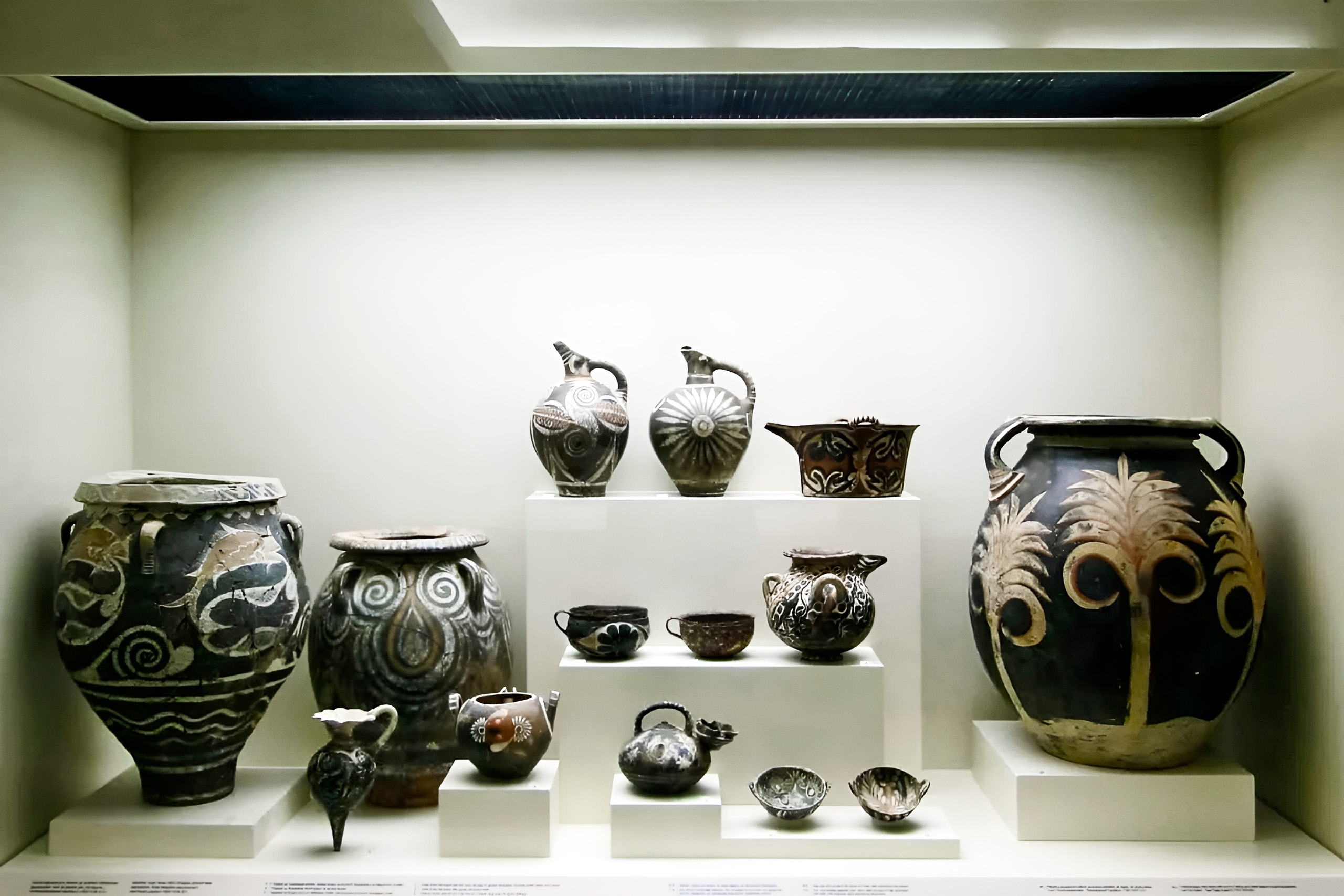
Today, examples of Kamares ware and later Aegean-influenced ceramics can be viewed in museums around the Larnaca region. Displayed alongside local pottery from the same periods, these vessels reveal their exceptional thinness, precision, and visual balance in ways that photographs rarely convey.
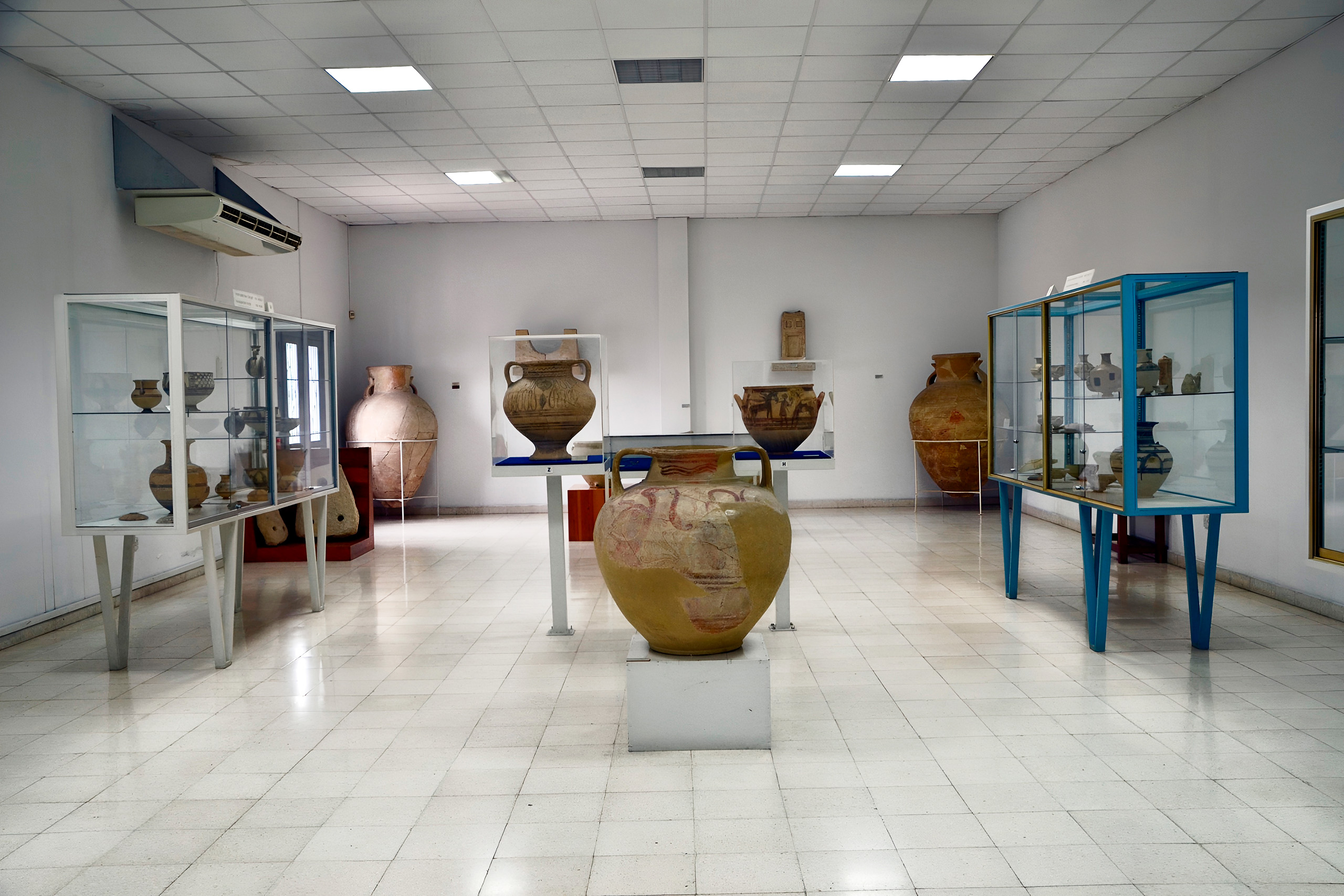
Museum contexts also restore a sense of scale and rarity. Seen among everyday wares, Kamares vessels stand out immediately, helping modern viewers understand how striking and valuable they would have appeared within Bronze Age Cyprus.
What Kamares Proves About Cyprus
Kamares ware remains important because it makes early Mediterranean connectivity tangible. These vessels provide clear physical evidence that Cyprus was already integrated into long-distance trade networks centuries before the Late Bronze Age expansion for which the island is more widely known.
They demonstrate how technology, taste, and exchange travelled together across the sea, and how Cyprus functioned not as a peripheral recipient but as an active participant in those movements. In a world without written contracts or modern infrastructure, a fragile ceramic cup could still cross hundreds of kilometres and arrive as a marker of trust, prestige, and connection.
Understanding Kamares ware helps explain how Cyprus came to occupy its later historical role: not an isolated island on the margins, but a central contributor to the shared economic and cultural life of the ancient Mediterranean.