Explore Cyprus with Our Interactive Map

Explore our top stories and discover ideas worth your time.

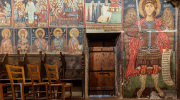
Archangel Michael Frescoes Pedoulas

Archangel Michael Frescoes Pedoulas

The Church of Archangel Michael in Pedoulas holds one of Cyprus’s most complete late-medieval fresco cycles, painted in 1474 and signed by the artist Minas. Inside a small timber-roofed mountain church, the images link theology to everyday life, while subtle details, including Western armour in key scenes, reflect the pressures of Latin rule on Orthodox communities. tripadvisor This article explains how the church was built for the Troodos climate, how the fresco program is structured to be “read,” and why its art remains a rare record of identity, patronage, and survival. A Church Built for Snow and Silence Pedoulas sits in the Marathasa Valley at an elevation of around 1,100 meters, a landscape shaped by cold winters, heavy snowfall, and isolation from the coast. The church's architecture reflects this reality. Its steep timber roof was designed to protect the stone walls from moisture, while the interior was kept small and enclosed. This was never meant to be a monumental cathedral. It was a village church, built to last and to shelter, meaning rather than spectacle. en.wikipedia.org That contrast between a plain exterior and a richly painted interior is deliberate. In the Troodos region, spiritual investment went inward. Walls became books, teaching theology and collective memory to communities that did not rely on written texts. The frescoes were not decoration. They…

Read more

Cyprus Public Bus Transport

Cyprus Public Bus Transport

Cyprus closed its last passenger railway in 1952, and the final narrow gauge system shut down in 1974. Since then, discussions about establishing modern rail connections between major cities have surfaced periodically, particularly as traffic congestion worsens. In October 2024, studies were still underway for potential railway development. However, no concrete plans have materialized, leaving buses as the sole option for public ground transportation. Tripadvisor-com This absence of rail infrastructure places unique pressure on the bus system. Unlike cities where metro systems handle bulk passenger movement, Cyprus relies exclusively on road transport to connect urban centers, rural villages, and tourist destinations. Understanding the Four Types of Bus Services Cyprus operates four distinct categories of bus service, each serving a specific purpose. Airport transfer buses connect all major towns to Larnaca and Paphos airports. These services run frequently and provide tourists and residents with reliable links to international travel hubs. Adult fares typically range from €10 to €16 depending on the destination. Cyprus-Alive-com Interurban buses link major towns daily with frequent routes. These services form the backbone of inter-city travel, operating through companies like InterCity Buses. Routes connect Nicosia, Limassol, Larnaca, Paphos, and the free Famagusta area throughout the day. In-Cyprus-com Urban buses operate within towns, connecting different neighborhoods and running frequently during daytime hours. In tourist areas, summer services extend…

Read more
Traditional Cypriot Baskets and Handwoven Village Crafts

Traditional Cypriot Baskets and Handwoven Village Crafts

Cyprus developed distinctive basket weaving and textile traditions that stretch back to ancient times. These crafts include water reed baskets from marshy regions, colorful Fythkiotika woven fabrics, and intricate Lefkaritika lace work. Each village specialized in particular techniques using locally available materials like reeds, cotton, and silk. trskinfo-ru The crafts served essential practical purposes in daily life while demonstrating artistic skill passed through generations. From storage vessels to dowry items, these handmade goods connected families to their heritage and provided economic livelihood in rural communities. Historical Background Basket weaving dates to Neolithic times, with techniques remaining essentially unchanged over millennia. Archaeological evidence shows woven items existed since the earliest settlements, with the craft spreading across all cultures worldwide. In Cyprus, basketry developed around two main centers. Larnaca and Akrotiri had naturally marshy landscapes perfect for growing water reeds, rushes, and bamboo used in basket construction. The Salt Lake and marshes attracted settlers to Akrotiri specifically because these materials enabled basket production that became central to village economy. vkcyprus-com Historical sources from 6 BCE document famous Cypriot weavers including Akisas and Elikon. Textile production flourished during Byzantine times when precious Cypriot silk and woolen fabrics earned reputations for exceptional quality throughout Europe. The craft reached its peak under Lusignan dynasty rule from 1192 to 1489. Italian writer Giovanni Boccaccio mentioned Cypriot…

Read more