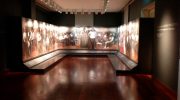
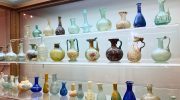
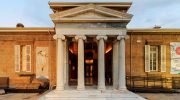
Most people think of museums as dusty repositories of old things, but Cyprus’s archaeological museums are different – they’re time machines that transform scattered ruins into coherent human stories. From Stone Age tools to sunken Roman ships, these institutions preserve not just artifacts but memory itself, showing how an island at the crossroads of three continents became a meeting place of cultures, faiths, and civilizations. Stepping inside, visitors encounter objects once held by real people whose lives weren’t so different from the present day.
Guardians of an Island’s Memory
Cyprus’s archaeological museums form a network across the island, each one telling the story of its region while contributing to a larger narrative of continuity and change. These aren’t just buildings with display cases – they’re active archaeological institutions involved in excavations, conservation, research, and education. They preserve artifacts spanning over 11,000 years of human presence, from prehistoric farming villages to early Christian basilicas.
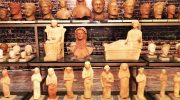
Rather than overwhelming visitors with monumental sculpture and temple columns alone, Cypriot museums emphasize daily life. Displays include pottery and cooking tools, jewelry and amulets, farming equipment and fishing gear, religious symbols and children’s toys. This human-centered approach makes ancient life feel familiar rather than remote, showing that people across millennia shared the same basic needs, hopes, and fears we experience today.
How Cyprus Learned to Protect Its Past
Archaeological museums in Cyprus were born from necessity and resistance. During the 19th century, when European explorers and British colonial administrators controlled the island, excavations yielded such extraordinary artifacts that a serious problem emerged: how could Cyprus prevent its past from being scattered to foreign collections?

Many important finds were indeed removed from the island and taken to museums in London, Paris, and Berlin. This cultural extraction sparked a local movement to safeguard heritage and assert that Cyprus’s past belonged to Cypriots. The founding of the Cyprus Museum in Nicosia in 1882 marked a turning point – archaeology became a national responsibility rather than a colonial hobby or foreign academic pursuit.
As excavations expanded across the island, regional museums were established so discoveries could remain close to their original landscapes and communities. Instead of concentrating all history in the capital, Cyprus developed a distributed system tied to specific cities, ports, and ancient settlements. Larnaca got a museum reflecting its identity as ancient Kition, a major Phoenician port. Limassol developed collections from Kourion, Amathus, and surrounding agricultural villages. Kyrenia built an entire museum around a single spectacular find – an ancient shipwreck.
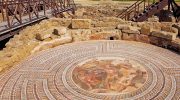
Over time, these museums evolved from simple storage facilities into sophisticated interpreters of identity, using artifacts to tell stories about how prehistoric farmers, Bronze Age traders, Greek city-kingdoms, Roman citizens, and early Christians all shaped the island. They became producers of knowledge, not just presenters of it – conducting research, publishing discoveries, training archaeologists, and deciding how Cyprus’s past should be understood and remembered.
What Makes Cyprus’s Museums Special
Cypriot archaeological museums share several defining characteristics that set them apart from typical antiquities collections. First, they emphasize continuity – displays span from prehistory through late antiquity, showing how cultures layered upon each other rather than replacing what came before. It’s clear how Phoenician traders merged with Greek settlers, how Roman conquest didn’t erase local traditions, and how Christian beliefs absorbed and transformed pagan practices.

Second, each museum reflects regional identity. The Larnaca District Archaeological Museum emphasizes maritime trade and Phoenician settlement because ancient Kition was a port city where cultures mixed. The Limassol District Archaeological Museum focuses on farming, domestic life, and southern Cyprus’s city-kingdoms. This regional approach means visiting multiple museums reveals how different parts of the island developed distinct characters while remaining recognizably Cypriot.
Third, the museums themselves occupy diverse buildings that become part of the story. Some are housed in modern minimalist structures emphasizing light and space. Others occupy Ottoman mansions, medieval fortifications, or repurposed colonial buildings. The Famagusta Canbulat Museum, for example, presents Ottoman-period archaeology within a historic bastion, making the building itself an artifact. This architectural variety reinforces the idea that modern Cyprus stands atop countless historical layers.
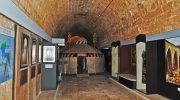
Behind public exhibits lie vast storage rooms holding far more objects than visitors ever see – hundreds of thousands of pottery sherds, tools, figurines, and fragments awaiting study, conservation, or future display. Museum archaeologists oversee excavations, decide what gets exhibited, conduct scientific analysis, and publish findings. This makes museums active participants in creating knowledge about the past, not passive warehouses of old things.
Surprising Museum Stories
- Older Than Pyramids – The Cyprus Museum contains artifacts predating Egypt’s pyramids, including stone tools and carved figurines from Neolithic villages over 9,000 years old. These objects prove Cyprus has been continuously inhabited since the dawn of Mediterranean civilization.
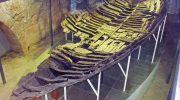
- A Ship Indoors – The Kyrenia Shipwreck Museum houses a complete 4th-century BC Greek merchant ship recovered from the seabed, reconstructed inside the museum. Visitors can see the original wooden hull, wine amphorae, navigation tools, and cargo remains, transforming archaeology from abstract ruins into a tangible story of ancient seafaring.
- Farmers as Archaeologists – Many museum objects were found by farmers plowing fields or digging wells, not by professional excavations. This accidental discovery process means ordinary Cypriots have always been participants in archaeology, connecting modern communities directly to ancient ones buried beneath their feet.
- Ancient Fingerprints – Some pottery preserves the fingerprints of ancient makers pressed into wet clay thousands of years ago. These marks make the past suddenly personal – evidence of individual humans, their hands working just like a modern potter’s hands.
- Private Heroes – The Pierides Archaeological Collection, one of Cyprus’s most important private collections, helped establish the principle that artifacts should stay on the island. Private collectors became allies in heritage preservation, demonstrating that protecting the past wasn’t just a government responsibility.
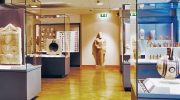
- Fossils Meet Tools – Museums like Ayia Napa’s Thalassa Municipal Museum display ancient fossils alongside human artifacts, showing how Cyprus’s natural history and human history intertwine. The sea that shaped the island’s geology also determined how people lived, traded, and survived.
Beyond Display Cases
Cypriot museums group artifacts to tell stories about occupation, belief, trade, and regional identity rather than just arranging objects chronologically by type. Fishing hooks might be displayed with model boats and amphora fragments to illustrate ancient maritime commerce. Religious sections show how Aphrodite figurines, fertility symbols, and votive offerings link mythology to daily spiritual practice.
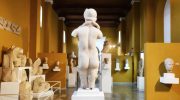
Many museums emphasize how Cyprus absorbed influences while maintaining local character. Imported Egyptian scarabs appear alongside locally-made pottery. Phoenician inscriptions share space with Greek dedications. Roman statues stand near early Christian crosses. This layering demonstrates that Cyprus was never passively colonized – it actively synthesized foreign ideas into something uniquely its own.
Conservation labs behind the scenes use advanced science to preserve fragile materials. Chemical stabilization protects corroding metal, climate control prevents organic materials from deteriorating, and digital scanning creates permanent records of artifacts too delicate for display. X-rays reveal hidden details inside sealed vessels or corroded objects, adding layers of information invisible to the naked eye.
Museums also make ethical choices about what to display and how. Human remains, for example, are treated with respect – some museums display skeletal material to teach about ancient health and burial practices, while others keep such remains in storage out of reverence. Sacred objects are presented with explanations of their religious significance rather than as mere curiosities. These decisions shape public memory and influence how visitors understand the past.
Museums in Modern Cyprus
Archaeological museums have become central to Cypriot identity and play multiple roles in contemporary life. They appear in school curricula, introducing young Cypriots to archaeology as a living discipline that connects them to their heritage. Field trips to museums are standard educational experiences, encouraging children to see artifacts as part of their own story rather than abstract historical objects.
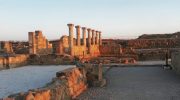
Tourism depends heavily on these institutions. The Cyprus Museum and Paphos Archaeological Park draw hundreds of thousands of visitors annually, making archaeology economically important beyond its cultural value. International scholars travel to Cyprus specifically to study museum collections, generating research that enhances the island’s academic reputation.
Museums also serve a subtle political function in a divided island. By preserving shared history from before modern conflicts, they offer neutral ground where all Cypriots can claim common heritage. A Bronze Age vessel or Roman mosaic belongs to the island itself, transcending contemporary divisions.
Modern Cypriot artists and designers draw inspiration from museum collections, adapting ancient patterns and forms into contemporary work. Traditional crafts displayed at places like the Ethnographic Museum of Lefkara show direct continuity with archaeological material – lacework and silverwork techniques echo patterns found on Bronze Age pottery, demonstrating how skills persist across millennia.
Museums support ongoing excavations across the island, meaning new discoveries constantly enter collections. What guests see today might be completely different in five years as new finds are cleaned, studied, and displayed. This dynamic quality keeps museums relevant and alive rather than static.
Experiencing Cyprus’s Archaeological Museums
- Cyprus Museum (Nicosia) – The island’s principal archaeological institution offers the most comprehensive journey through Cypriot history, from Neolithic villages to early Christian basilicas. Highlights include terracotta figurines showing goddess worship evolution, bronze tools demonstrating metalworking sophistication, and marble statues from classical sanctuaries. Plan at least two hours for a thorough visit. The chronological layout creates a clear narrative of continuity and change.
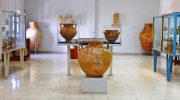
- Larnaca District Archaeological Museum – This museum reflects ancient Kition’s identity as a major Phoenician port and Mediterranean crossroads. Expect imported pottery proving extensive trade networks, ritual objects from coastal temples, and burial goods showing cross-cultural interaction. The collections emphasize how Cyprus connected distant civilizations through maritime commerce.
- Limassol District Archaeological Museum – Focused on southern Cyprus’s city-kingdoms, this museum presents farming tools, household pottery, industrial equipment, and religious artifacts from Kourion, Amathus, and surrounding villages. The emphasis on domestic life and settlement continuity shows how communities adapted through Greek, Roman, and Christian eras while maintaining local traditions.
- Kyrenia Shipwreck Museum – One of the world’s most famous maritime museums preserves a 4th-century BC Greek merchant ship in stunning detail. Visitors can see the reconstructed wooden hull, amphorae for wine and oil, navigation tools, and cargo remains. The experience transforms abstract maritime archaeology into a tangible story of ancient seafaring, showing exactly how vessels were built and trade actually worked.
- Ayia Napa Thalassa Municipal Museum – This unique institution bridges archaeology and natural history, focusing on marine archaeology, coastal settlement, fossils, and human interaction with the sea. It highlights how geography made the Mediterranean central to Cypriot survival, trade, and mythology, showing the island’s identity as fundamentally maritime.
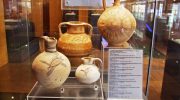
- Pierides Archaeological Collection – One of Cyprus’s most important private collections demonstrates early heritage preservation efforts. Holdings include prehistoric figurines, pottery spanning multiple periods, sculpture, jewelry, and seals. The collection’s existence helped establish national preservation policies and influenced how Cyprus protects its archaeological heritage.
Why Museums Matter
Cyprus’s archaeological museums turn scattered ruins and isolated finds into coherent narratives that explain how the island developed its distinctive character. They preserve not just objects but the knowledge and memory embedded within them, showing patterns of settlement, trade routes, religious beliefs, and technological innovations across thousands of years.
These institutions also assert cultural sovereignty. By keeping artifacts on the island and controlling their interpretation, Cyprus maintains ownership of its own story. In a place that has been conquered, colonized, and divided, museums offer continuity and shared identity that transcends political boundaries.
Walking through a Cypriot archaeological museum means encountering tools, toys, jewelry, ships, and symbols once held by real people whose daily lives – cooking meals, raising children, praying to gods, conducting business – weren’t fundamentally different from modern life. The objects bridge time, making ancient humans feel immediate and familiar rather than distant and exotic. Museums remind us that history isn’t abstract – it’s the accumulated experience of countless individuals whose choices, struggles, and creativity shaped the world we inherit.