In the village of Kouklia, about 14 kilometers east of Paphos, stand the remains of what was once the most famous shrine dedicated to Aphrodite in the ancient world. For more than 1,600 years, pilgrims traveled from across the Mediterranean to worship at Palaepaphos, the place where the goddess of love was believed to have risen from the sea. Today, the site is a UNESCO World Heritage monument and one of the most important archaeological locations in Cyprus.
The Sanctuary of Aphrodite at Palaepaphos was founded around 1200 BC during the Late Bronze Age. It remained in continuous use until 391 AD, when the Roman Emperor Theodosius I banned all pagan religions.
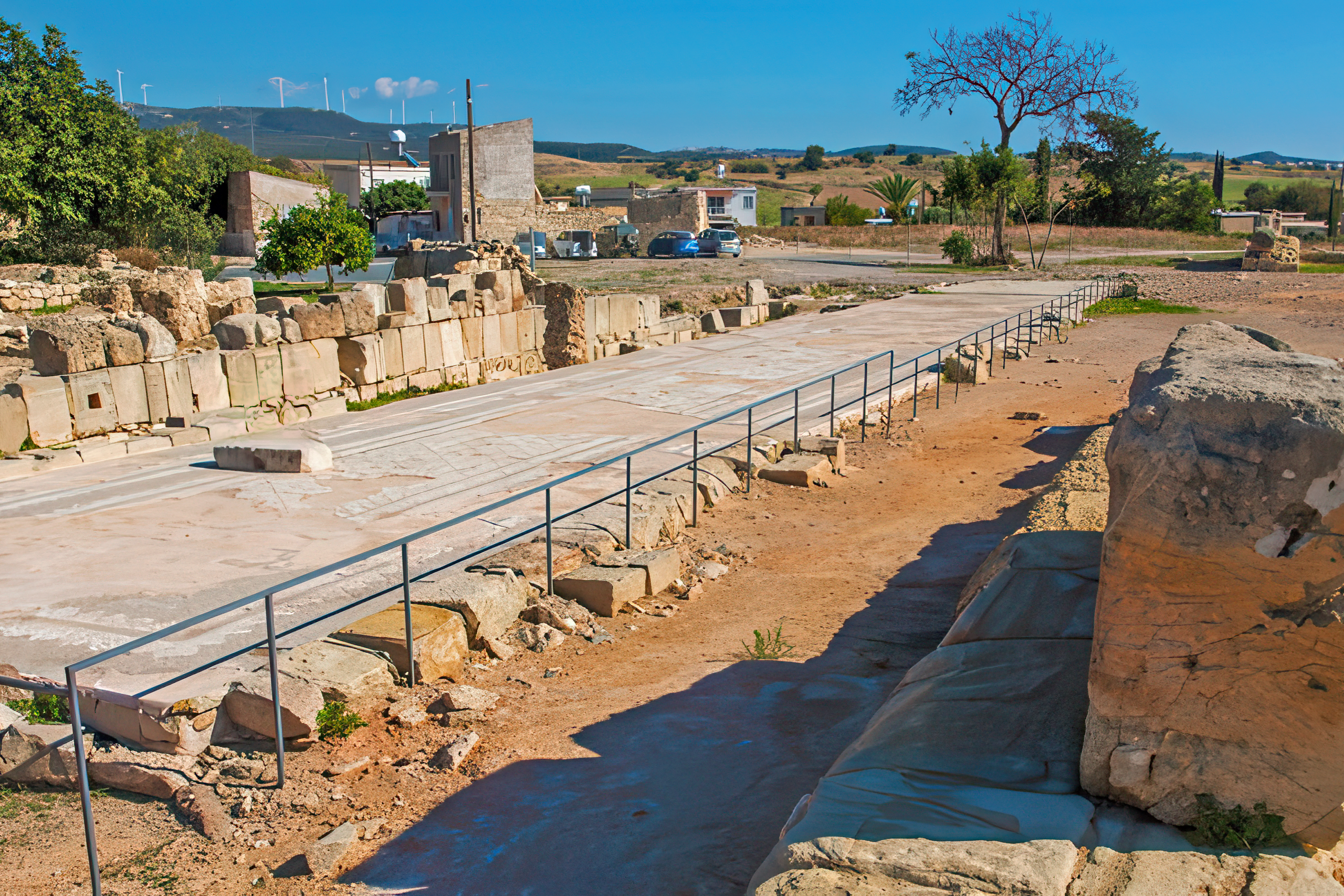
Palaepaphos was among the most powerful city-kingdoms of ancient Cyprus and became the first site on the island to be added to the UNESCO World Heritage List in 1980. The sanctuary functioned as the main center of Aphrodite worship across the Aegean world, attracting visitors from Greece, Rome, Egypt, and other parts of the eastern Mediterranean.
Unlike typical Greek and Roman temples, the sanctuary followed a very different architectural approach. Instead of a roofed building with columns and a statue, it featured an open-air layout influenced by Near Eastern traditions. Aphrodite was not depicted in human form but represented by a sacred conical stone, a practice that sets this sanctuary apart from almost all other major cult sites of the classical era.
Historical Background
Two competing legends explain the sanctuary’s foundation. One tradition holds that Agapenor, King of Tegea in the Peloponnese, founded both the city and the sanctuary after being driven to Cyprus by storms following the Trojan War. Another legend credits Kinyras, a local king from the 12th century BC, as the founder and first High Priest.
Archaeological evidence suggests the site’s religious significance predates both legends. Female figurines and fertility charms found in the immediate vicinity date to the early third millennium BC. Cypriots worshipped a fertility goddess as early as the Chalcolithic period (3900-2500 BC), and this indigenous cult likely evolved into the worship of Aphrodite when Greek settlers arrived in the Late Bronze Age.
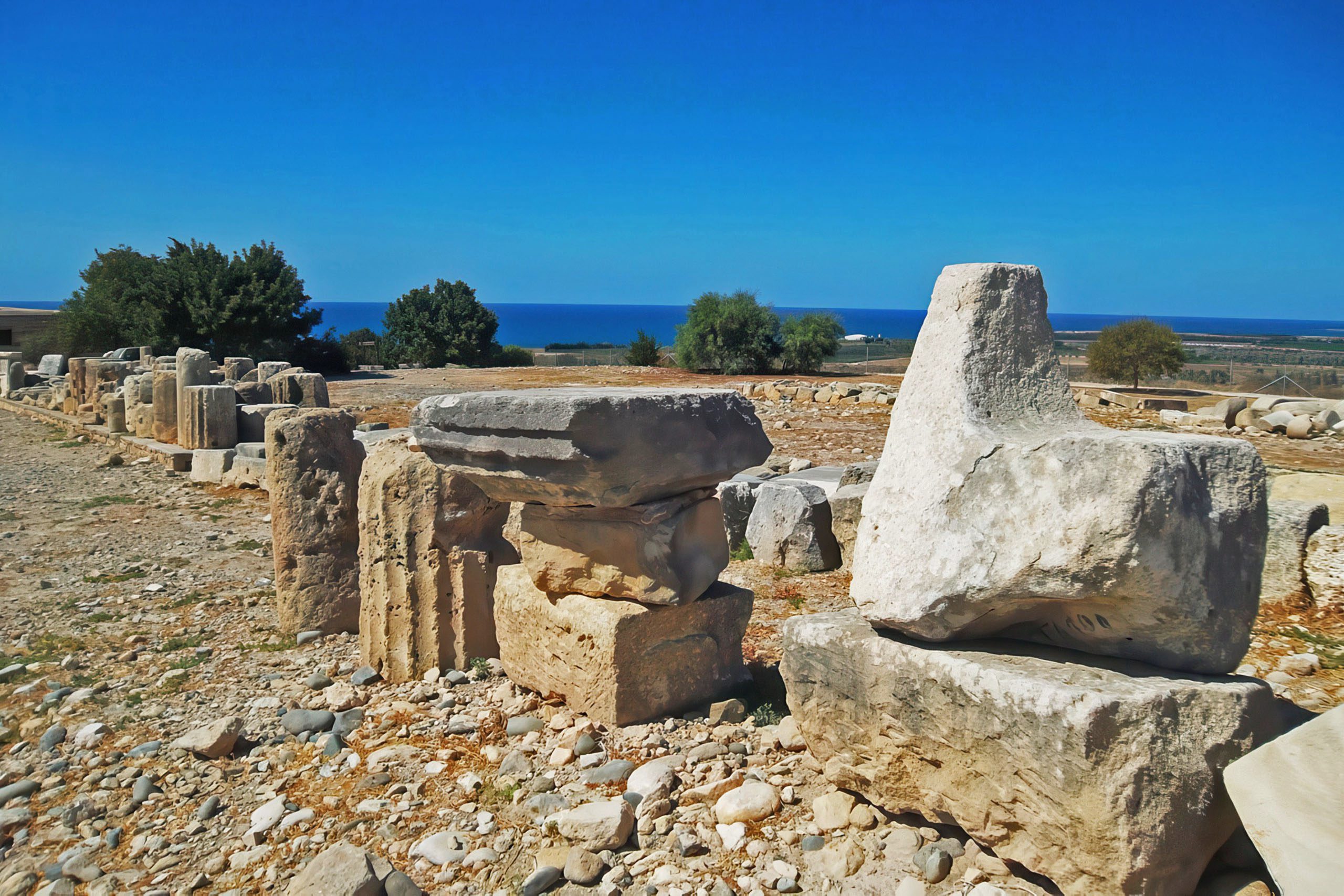
Homer referenced the shrine in the Odyssey (8.362), mentioning “the grove and altar of Aphrodite at Paphos”, which confirms the sanctuary was already famous by the 8th century BC. By the 6th century BC, Aphrodite was regularly called “the Paphian,” linking her identity permanently to this location.
The sanctuary’s importance grew substantially under Roman rule. The shrine was destroyed by an earthquake but was rebuilt by Emperor Vespasian. Future Emperor Titus visited in 69 AD while traveling to Egypt and consulted the oracle of Aphrodite, who told him he had a great future ahead. The Roman reconstruction, dated after an earthquake in 76/77 AD, preserved the original layout while expanding facilities to accommodate the massive crowds of pilgrims.
The Sacred Conical Stone
The most distinctive element of the sanctuary was its cult object. The Roman historian Tacitus described it as “a circular mass that is broader at the base and rises like a turning post to a narrow top,” noting that the image was not human in form. Other ancient sources referred to it as “a white pyramid of unknown material.”
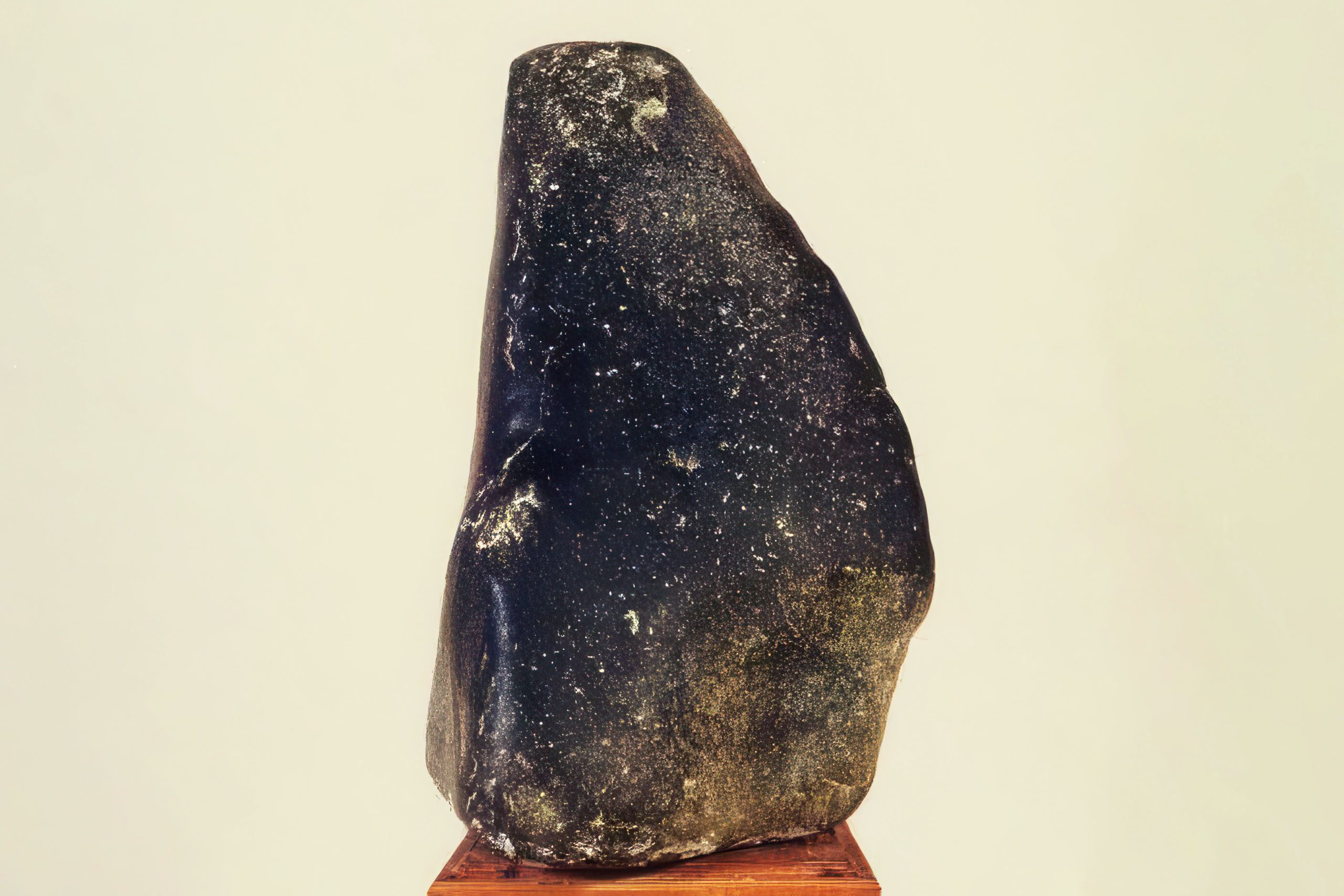
This conical stone, made of black basalt or gabbro, is now exhibited at the Kouklia Museum. Although the stone appears black today, ancient writers described it as white, which suggests its surface may have changed over time. Some scholars have proposed that it could be a meteorite, a theory that might explain both its sacred status and the uncertainty surrounding its material, though no proof confirms this idea.
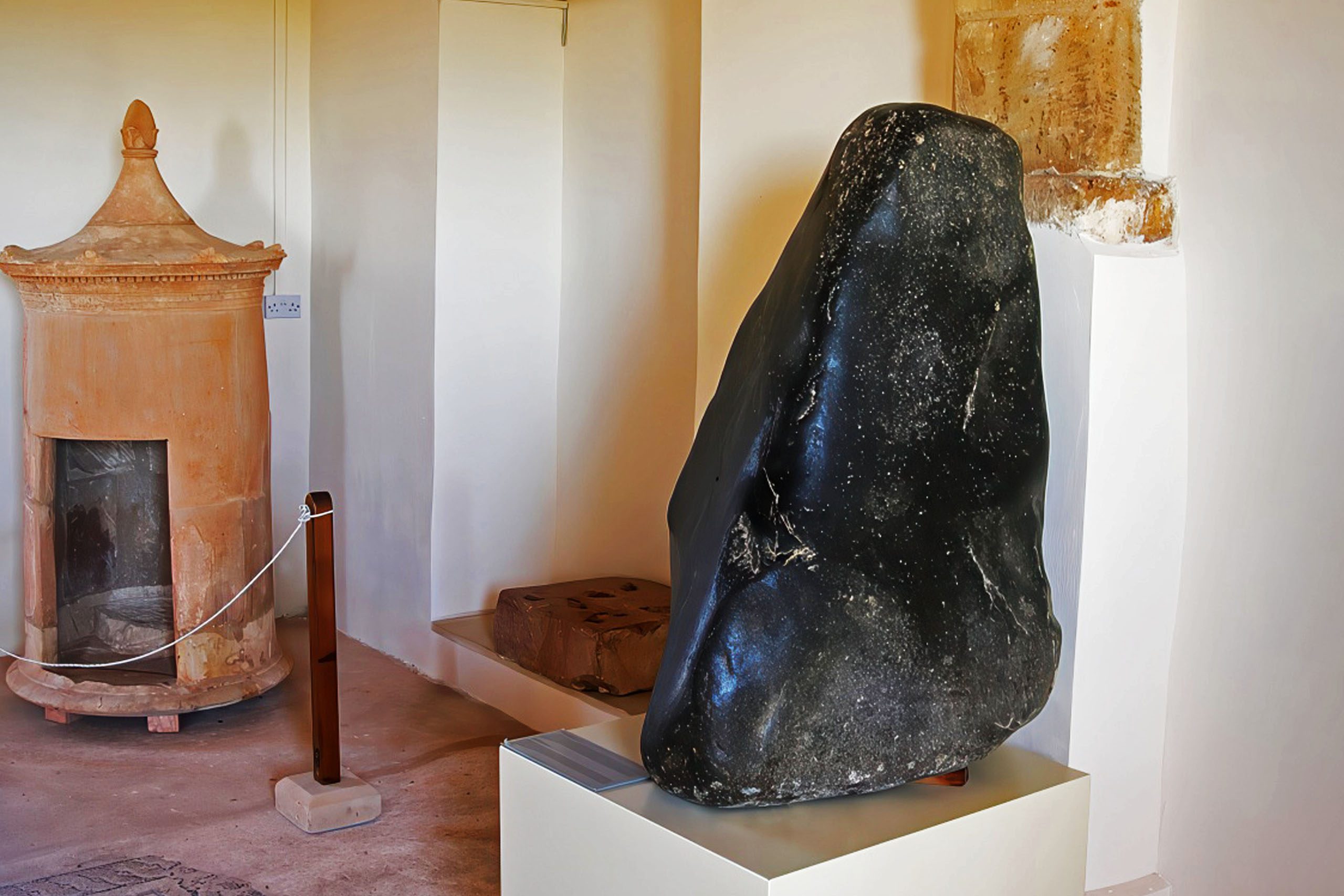
The stone was so closely associated with the sanctuary that it appeared on many Roman coins minted in Cyprus, especially during the reigns of Vespasian and Septimius Severus. These coins depict the conical object set within the temple complex and provide archaeologists with valuable clues about the original appearance of the sanctuary.
Architecture and Layout
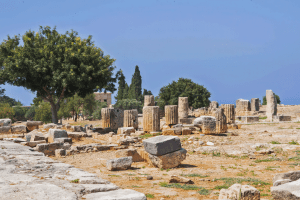
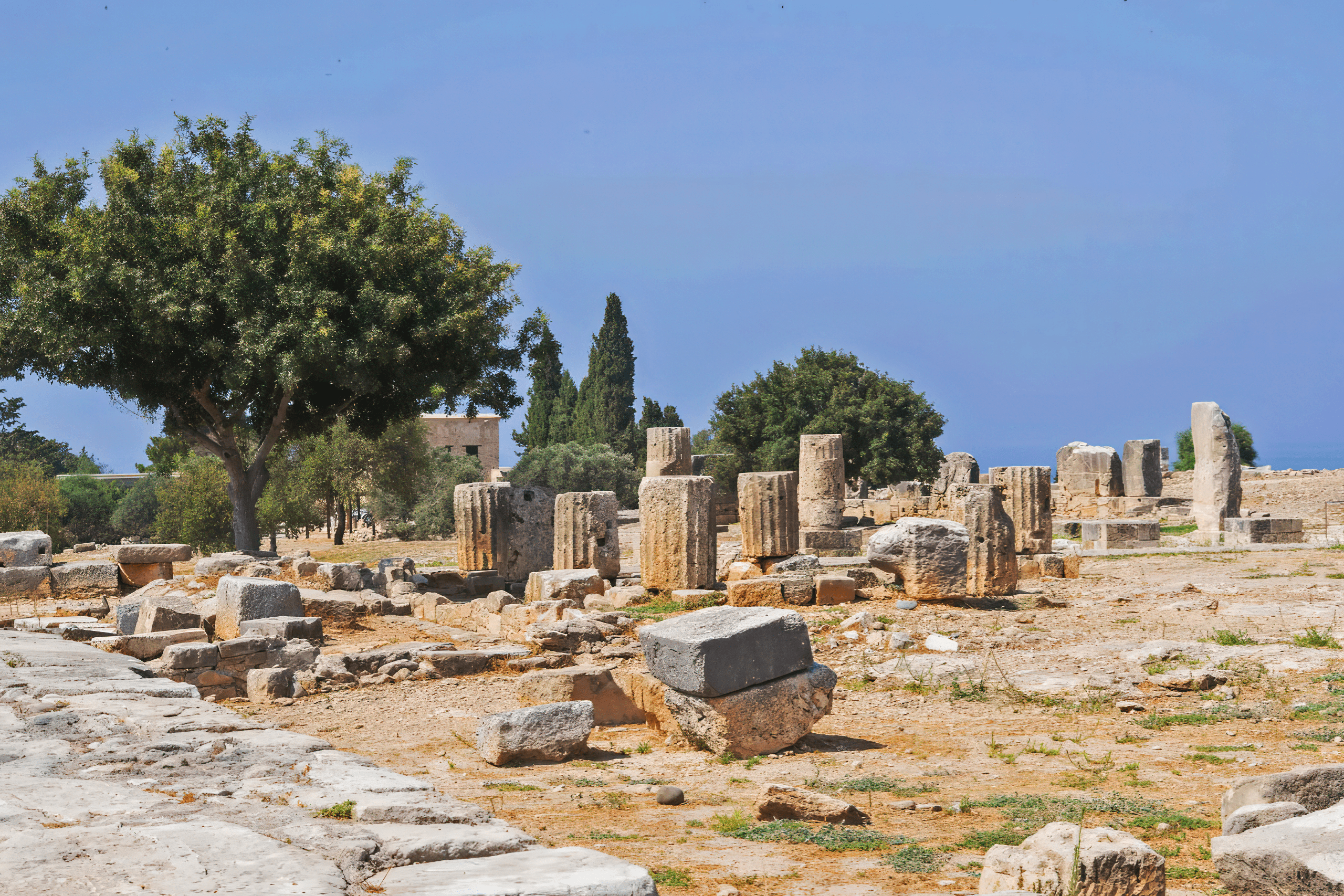
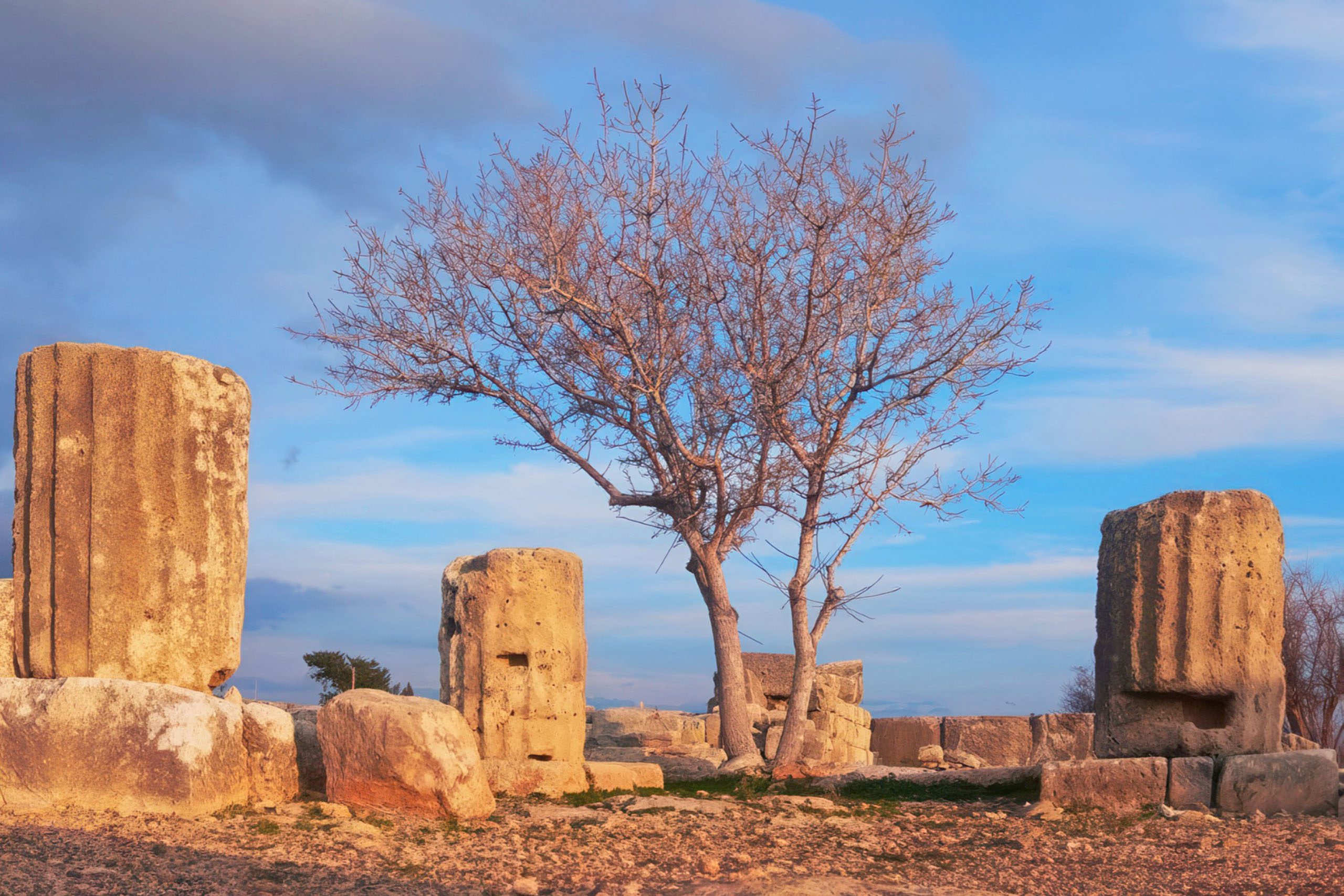
The original sanctuary consisted of an enclosed courtyard built with megalithic stones from the Late Bronze Age. A thick stone wall, still partially standing today, formed the core of the complex.
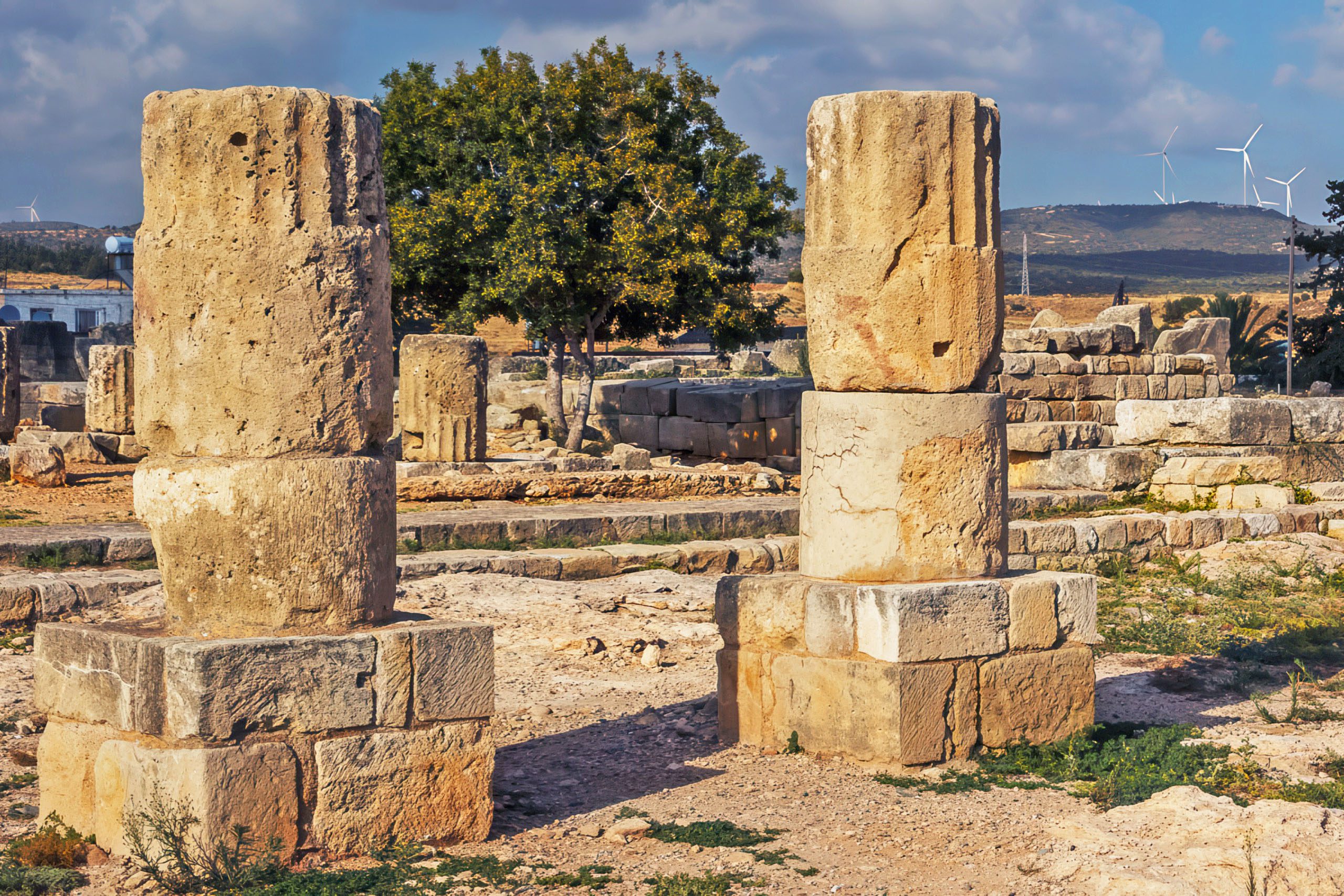
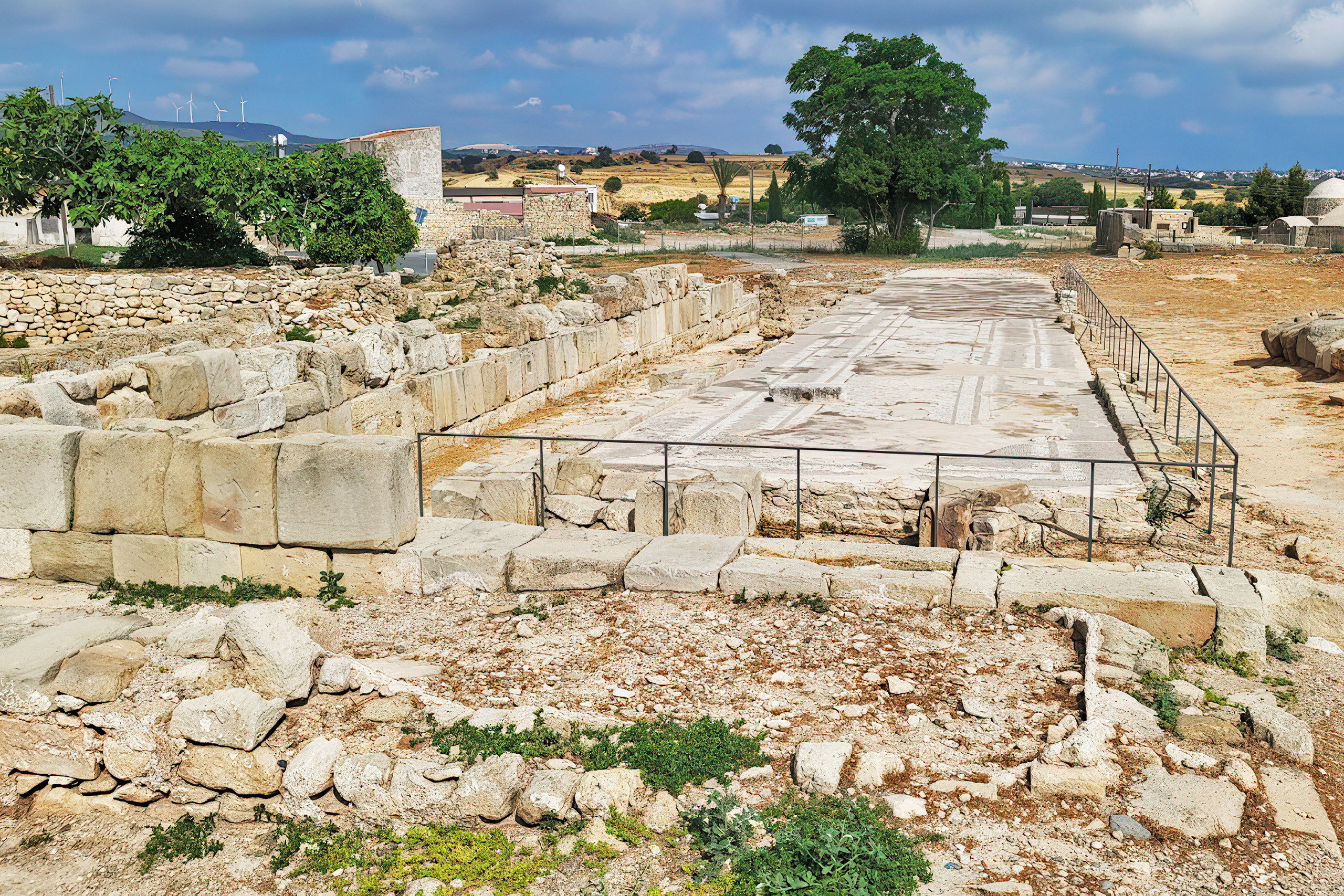
The Roman-era sanctuary, constructed after the 1st century AD, measured approximately 79 by 67 meters. It featured a large open courtyard surrounded by stoas (covered walkways) on the north and south sides. The eastern side contained the main entrance flanked by rectangular rooms whose exact purpose remains unclear. A monumental stairway connected the newer Roman sanctuary to the older Bronze Age shrine.
The sanctuary’s location was strategic. The site would have been very close to the original harbor of ancient Paphos. What is now dry land would have been the lagoon of the original harbor. This coastal position reinforced Aphrodite’s connection to the sea and made the sanctuary easily accessible to pilgrims arriving by ship.
Religious Practices and Festivals
The sanctuary was administered by a hereditary priesthood known as the Cinyradae, who claimed descent from the legendary King Kinyras. Their authority was extensive, although inscriptions indicate that their power was balanced by a senate and a public assembly. The sanctuary also housed an oracle where visitors sought divine advice.
Each spring, festivals dedicated to Aphrodite and Adonis attracted participants from across Cyprus. Men and women formed separate processions, decorated with garlands, and traveled along the Sacred Way from New Paphos to Palaepaphos. The journey covered about 100 stadia, roughly 18 kilometers, and concluded with games and competitions in music and poetry.
Pilgrims who came to worship received specific tokens in return for their offerings. For each contribution, visitors were given a small phallic figurine and a pellet of salt, symbols of the goddess’s fertility and her emergence from the sea.
The Sanctuary’s Decline and Later History
The sanctuary’s religious function ended abruptly in the late 4th century AD. When Emperor Theodosius I outlawed all pagan religions in 391 AD, the sanctuary fell into ruins. Shortly before Theodosius’s law, a wealthy Roman built a private villa adjacent to the ancient shrine, doing some damage.
From Byzantine times onward, local villagers used the ruins as a quarry for building materials. Virtually every old building in Kouklia incorporates a stone or two from one of the most important shrines in the ancient world.
The sanctuary was first excavated in 1887 by the Cyprus Exploration Fund, with some finds going to the British Museum. It was explored by the British Kouklia Expedition in 1950-55 and has been excavated by a Swiss-German expedition since 1996. Excavations continue on the sanctuary, the surrounding city, and the necropolis of Palaepaphos.
Visiting the Site
The archaeological site at Kouklia is open to visitors throughout the year. The on-site museum, located within part of the medieval Lusignan manor, displays artifacts uncovered during excavations. These include the well known black conical stone, fine white slip pottery from the Late Bronze Age, and a range of cult related objects. An audiovisual presentation, available in Greek and English for an additional fee, offers helpful historical background.
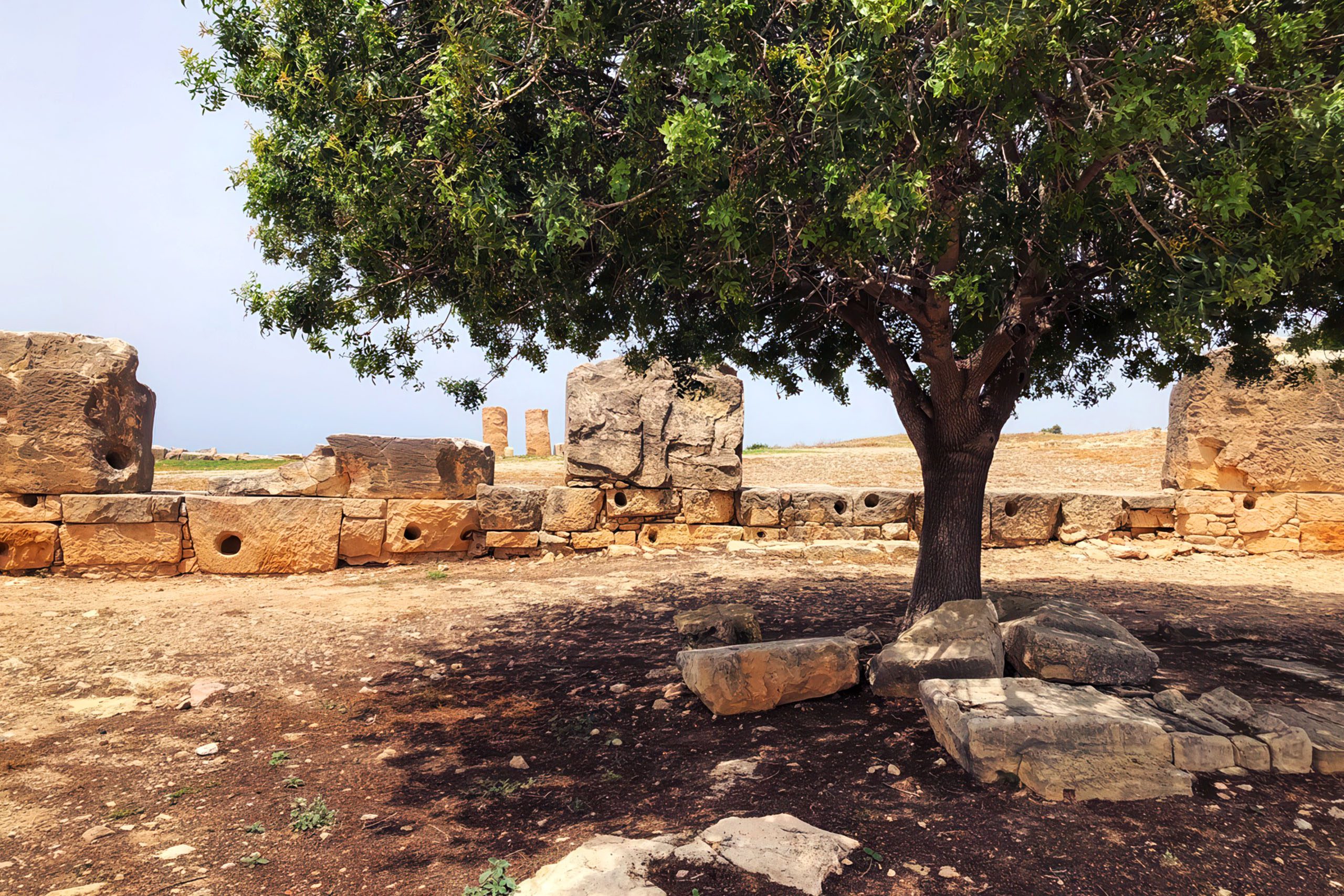
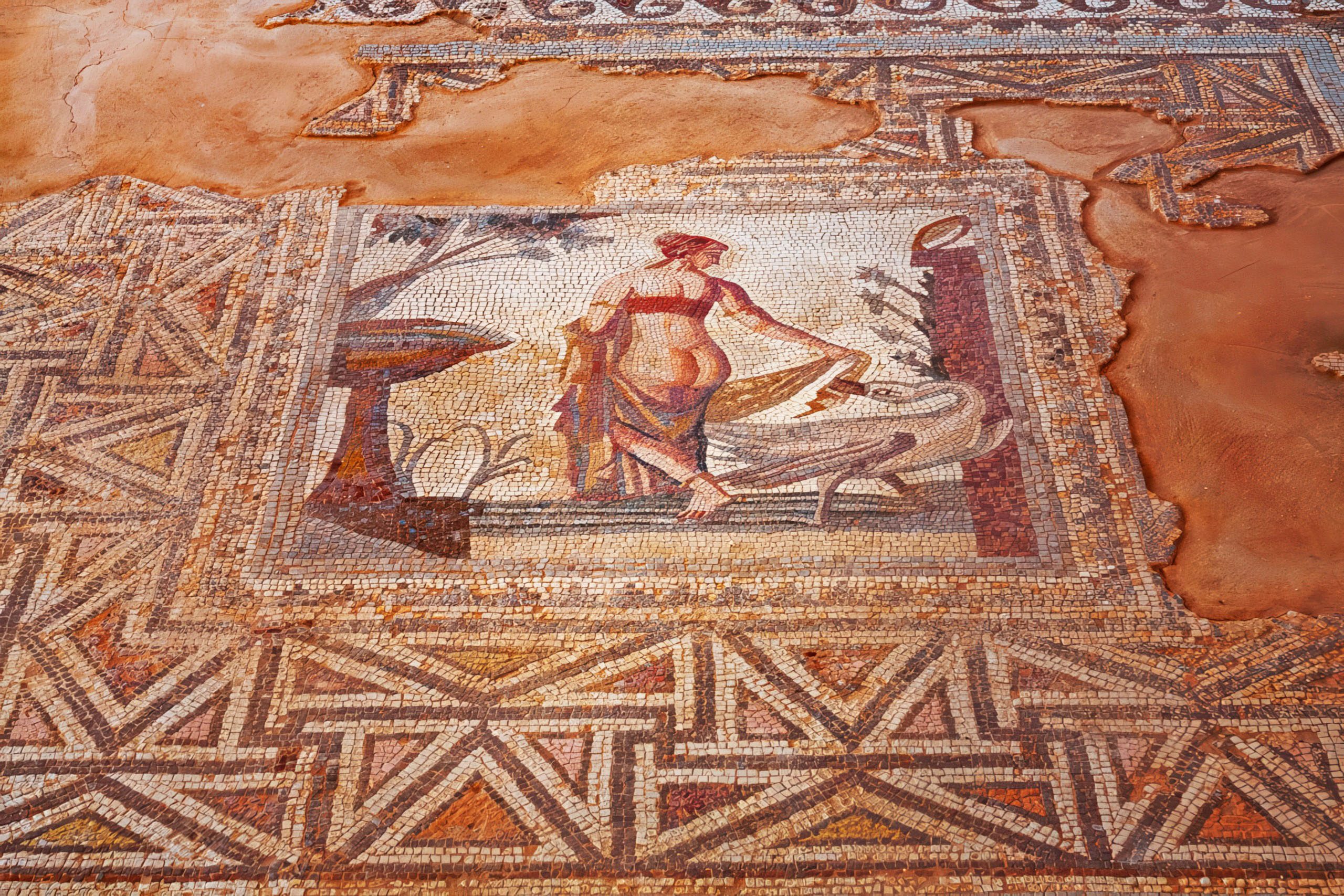
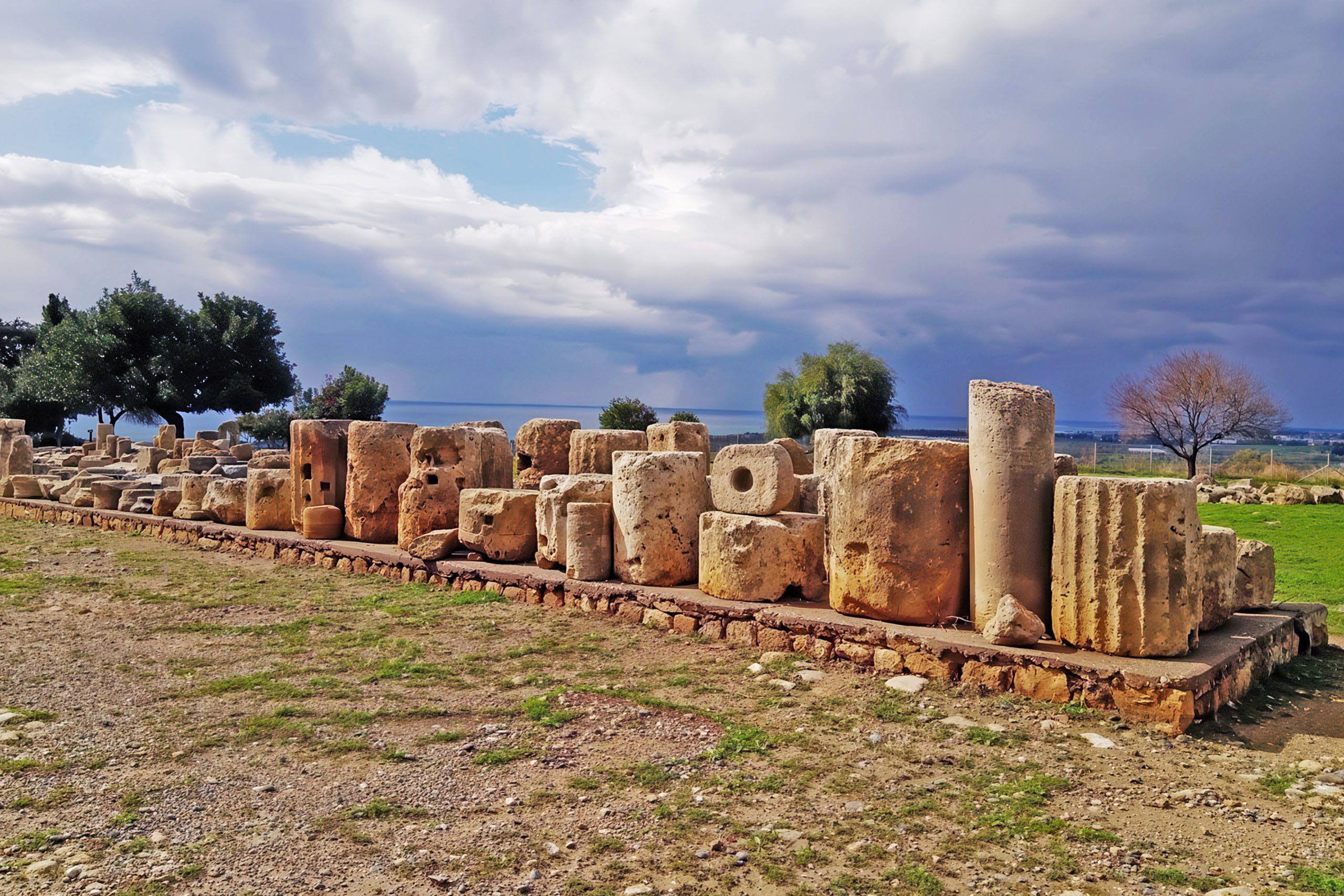
The visible remains include the large foundation walls of the sanctuary, sections of the Roman period reconstruction, and parts of a Roman villa with surviving mosaic floor fragments. The medieval manor house, built with stones taken from the ancient sanctuary, adds another historical layer to this complex site.
Why the Sanctuary Matters Today
The Sanctuary of Aphrodite at Palaepaphos represents a unique meeting point of Bronze Age Near Eastern religion, Greek mythology, and Roman imperial cult practices. Its 1,600 years of continuous use give archaeologists an unmatched record of how religious traditions developed across different civilizations and political systems.
The sanctuary also shows how ancient Cyprus acted as a cultural bridge between East and West. The combination of a local fertility cult with Greek religious practices created something entirely new. The site’s architecture, rituals, and cult object all reflect this blending of traditions.
Today, the sanctuary remains a powerful symbol of Cyprus’s ancient prestige and cultural importance. That emperors consulted its oracle and pilgrims traveled from across the Mediterranean highlights the island’s significance in the classical world. The site connects modern Cypriots to a time when Cyprus was central, rather than peripheral, to the religious and cultural life of the region.