Nea Paphos emerged as one of the most strategically important harbor cities in the ancient Mediterranean. Founded in the late 4th century BC on the southwest coast of Cyprus, this planned city replaced the older settlement of Palaipaphos and quickly became the island’s capital.
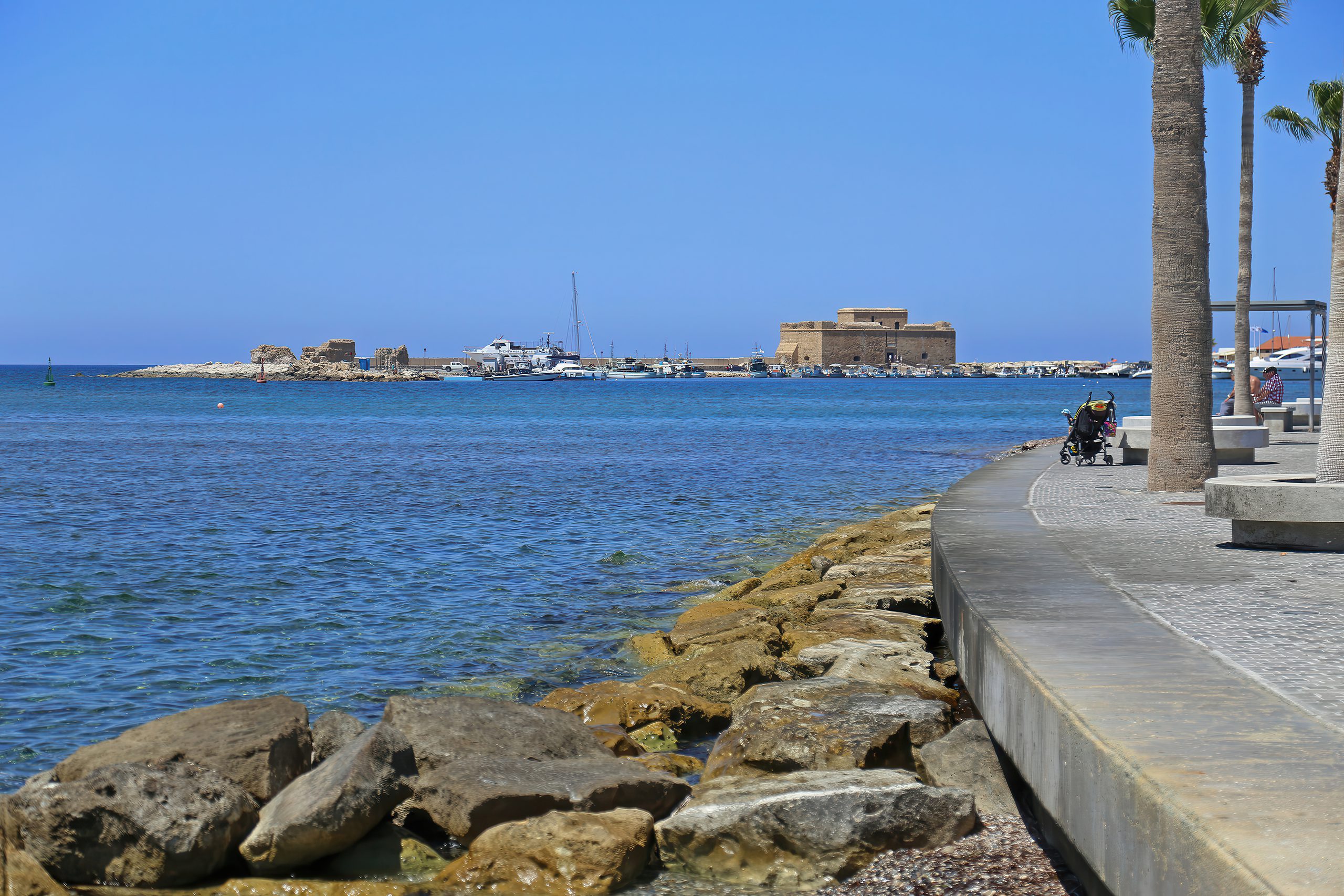
The harbor served dual purposes as both a major naval base and a thriving commercial port, connecting Egypt with the broader Mediterranean world. Today, the archaeological remains spread across 100 hectares near modern Kato Paphos, offering a window into ancient maritime power.
Historical Background
King Nikokles, the last monarch of Palaipaphos, founded Nea Paphos around 320 BC. After Alexander the Great’s death, Cyprus fell under Ptolemaic Egyptian control in 294 BC, where it remained for over 250 years. The site offered exceptional advantages.
The city occupied a peninsula between two hills, with a natural bay providing shelter from storms. Strabo reported that the harbor offered protection from winds in all directions. Nearby forests supplied abundant cedar wood for shipbuilding, while the location sat on the critical maritime route between Rhodes and Alexandria.
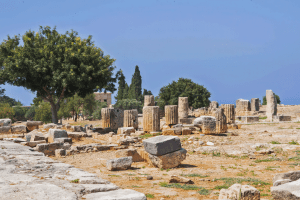
Urban planners designed Nea Paphos according to the Hippodamian grid system, heavily influenced by Alexandria. Regular streets intersected at right angles, creating rectangular blocks called insulae. Defensive walls separated the urban area from the mainland, while public buildings faced the large harbor. The city included a theater built into Fabrika Hill, a standard feature of Greek cities.
Archaeological Discoveries
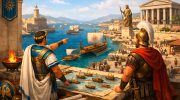
Cyprus served as the main base for the Ptolemaic navy outside Alexandria for nearly 200 years. The island provided timber for building warships, and Nea Paphos developed into a major shipbuilding center.
Ptolemy II Philadelphos, who ruled from 284 to 246 BC, commissioned two very large ships built at Paphos by naval architect Pyrgoteles, son of Zoes. The king honored this achievement by erecting a statue to Pyrgoteles in the Temple of Aphrodite at Palaipaphos.
The navy’s importance increased dramatically after the Ptolemies lost control of Syria and Phoenicia around 200 BC, and again after 145 BC when they evacuated their Aegean bases. Recent archaeological investigations suggest the harbor complex included careenage docks where workers maintained military vessels.
These fortified facilities may have been constructed in the 2nd century BC when Paphos became the seat of the strategos, the general who governed Cyprus.
Engineering an Artificial Port
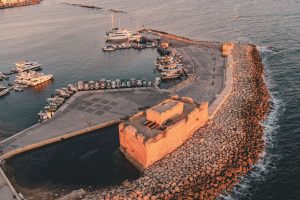
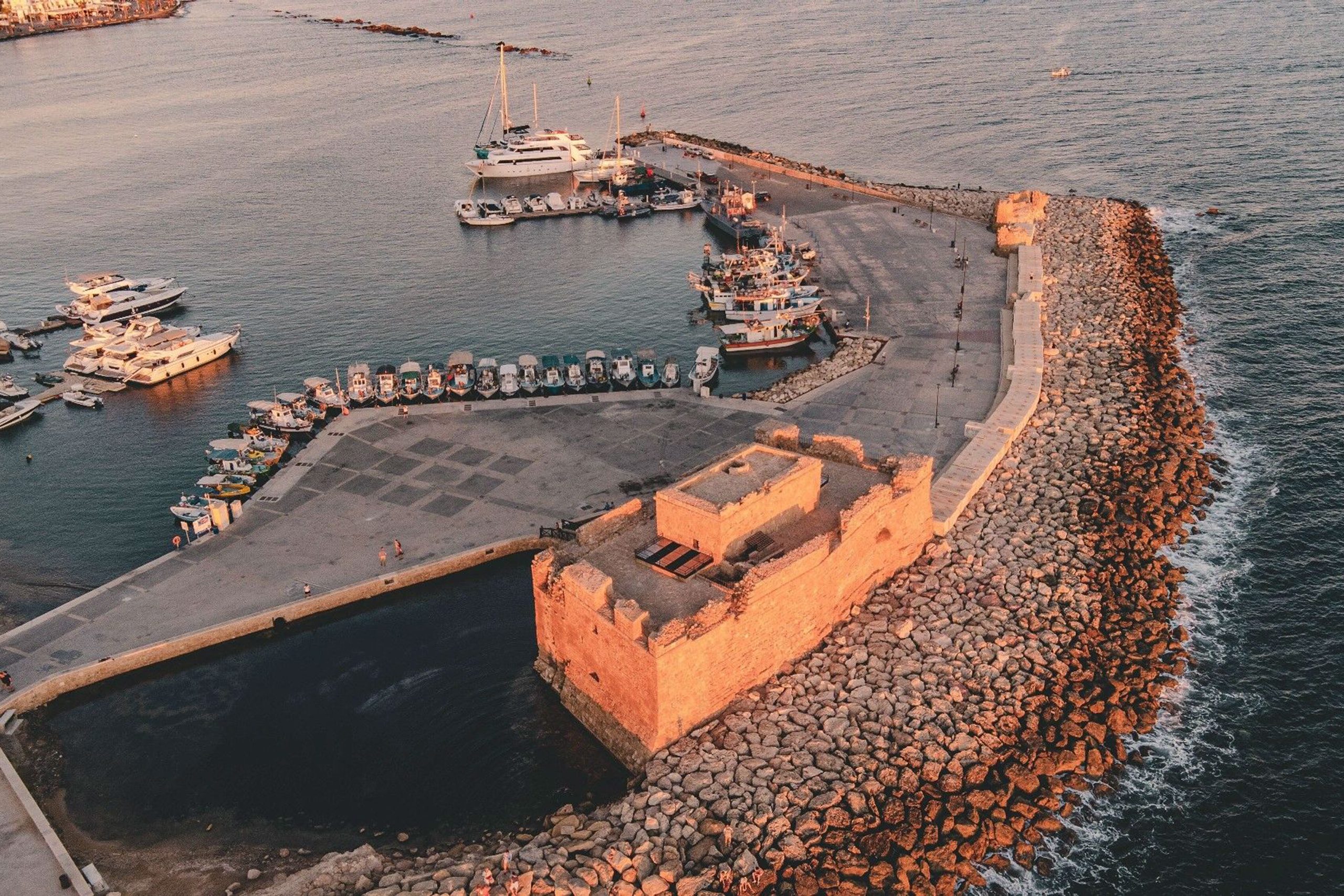
The ancient harbor remains in use today by small craft. The port was largely artificial, constructed with two massive breakwaters projecting into the sea.
The eastern arm extended 350 meters, while the western arm reached 170 meters. These stone barriers created a protected basin where ships could anchor regardless of weather.
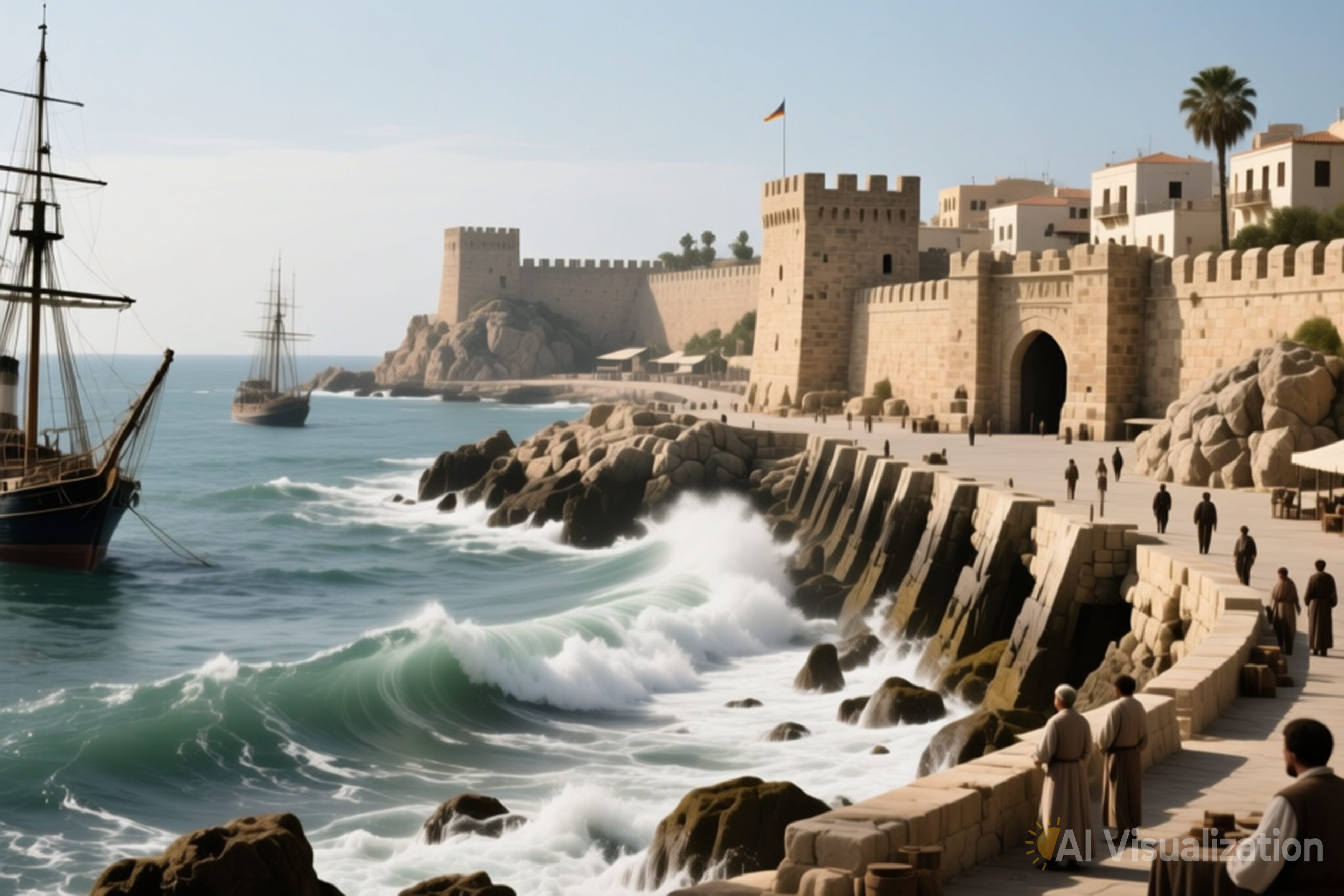
City walls, traceable along most of their circuit, demonstrate sophisticated military engineering. The northwest section features artificially scarped cliffs as a defensive barrier. At this point stood the northwest gate with foundations cut into bedrock.
Ships approaching from sea accessed the city via a rock-cut bridge that sloped outward from the gate for approximately 36 meters. Towers flanked the gate, and additional sally ports allowed tactical movements. Defensive towers positioned at regular intervals ringed the entire perimeter.
Rise to Political and Economic Power
By the early 2nd century BC, Nea Paphos had been designated Cyprus’s capital, replacing Salamis. The strategos made his headquarters at Paphos. The city maintained its own council and assembly and retained the privilege of minting coins.
The Paphian mint became the most important on Cyprus and remained the only one issuing coins during Roman times. Excavations revealed a hoard of 2,484 silver Ptolemaic tetradrachmas, with the majority minted at Paphos, plus molds for casting coin blanks.
The harbor handled extensive commercial traffic. Ships loaded with Cypriot timber and copper departed for the mainland, particularly Alexandria. Agricultural products including olives, grapes, and grains also moved through the port, along with pottery and textiles.
The population reflected the port’s cosmopolitan character. Greek-speaking settlers, Macedonian officials, Ptolemaic administrators, mercenary garrisons, sailors, merchants, and religious pilgrims all passed through the city.
From Ptolemaic Outpost to Roman Province
Rome annexed Cyprus in 58 BC under dramatic circumstances. The Roman Senate seized the island and confiscated the property of Ptolemy of Cyprus, younger brother of Egypt’s ruler. Despite guarantees of safety, Ptolemy committed suicide rather than accept Roman terms.
His fortune brought Rome 7,000 talents at auction. Julius Caesar and Mark Antony briefly restored the island to Egypt, but the Battle of Actium in 30 BC sealed Cyprus’s fate as Roman territory.
From 22 BC, Cyprus became a senatorial province governed by a proconsul based in Nea Paphos. The most famous governor was Sergius Paulus, whom Paul, Barnabas, and John Mark converted to Christianity in 45 AD according to Acts of the Apostles.
Despite political changes, Nea Paphos retained its capital status throughout the Roman period. The harbor’s strategic location and infrastructure ensured continued importance.
Harbor City Under Roman Rule
The Roman period brought extensive new construction, though earthquakes destroyed much of the earlier Hellenistic city. The harbor functioned as a major port for trading ships carrying grain and Eastern goods. Roman extraction of copper intensified, and Cyprus developed ceramic production for export.
However, Rome’s Mediterranean dominance meant the port served commercial shipping more than military fleets.
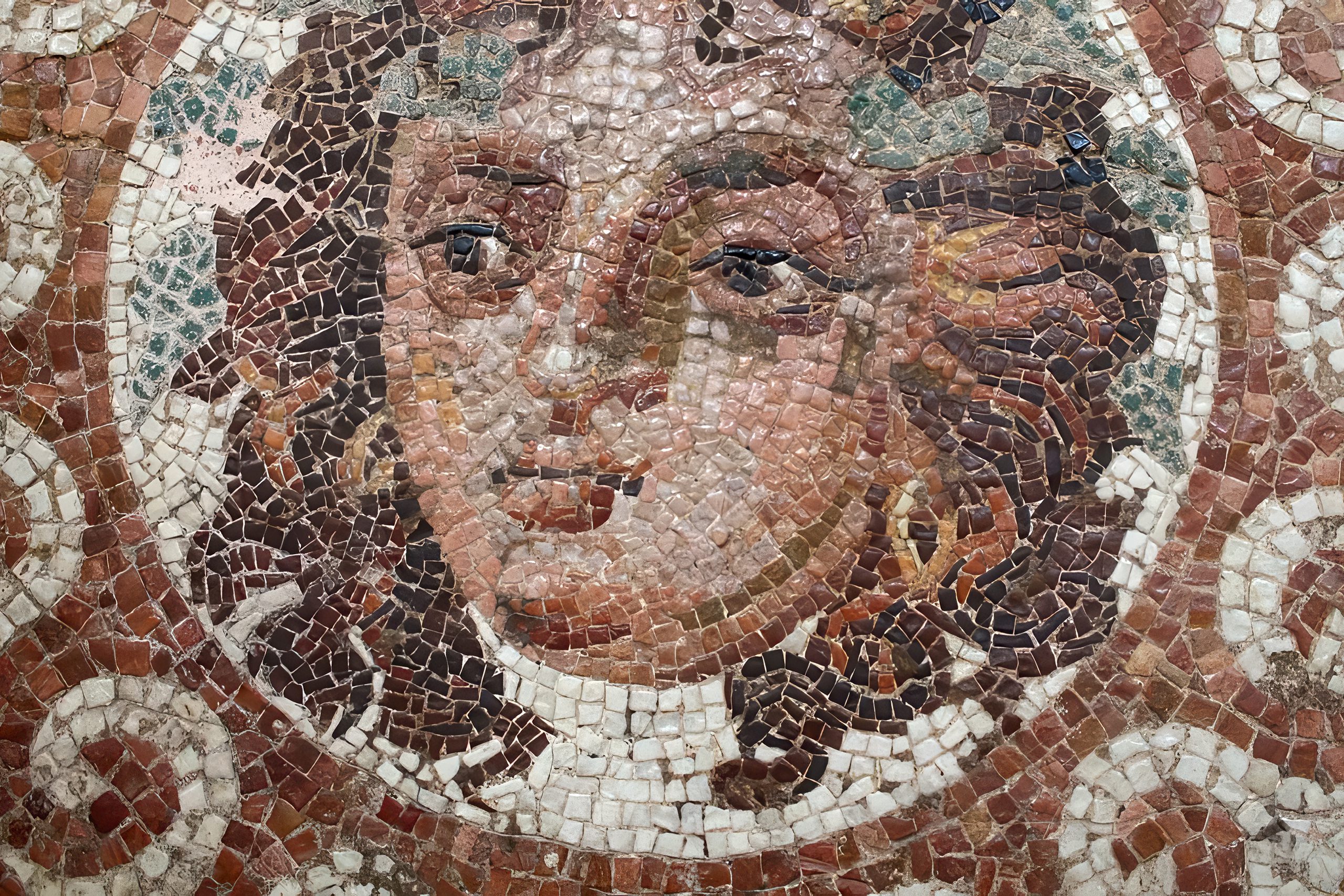
Wealthy Roman families built spectacular villas near the harbor. The House of Dionysos, constructed in the late 2nd century AD, covered approximately 2,000 square meters with 556 square meters of elaborate mosaic floors. The Villa of Theseus, presumably home to the Roman governor, was even larger.
These residences reflected prosperity from maritime commerce. Public facilities included an odeon, agora, and various temples. An interesting find beneath the House of Dionysos revealed a pebble mosaic depicting Scylla, demonstrating artistic continuity from Hellenistic into Roman times.
When Nature Struck the Harbor
Earthquakes in 332 and 342 AD devastated the city and harbor facilities. Paphos lost its capital status to Salamis in the 4th century. Though Byzantine authorities rebuilt portions, the city never recovered its glory.
The harbor also faced progressive silting. Sediment deposits accumulated over centuries, making it difficult for larger vessels to enter.
Christianity transformed the city during the Byzantine era. The seven-aisled Basilica of Chrysopolitissa, Cyprus’s largest early Christian church, was built in the 4th century. Limeniotissa basilica was dedicated to the Virgin Mary as Our Lady of the Harbor.
Arab raids in the 7th century further weakened the port, though Paphos survived. Medieval Frankish rule brought structures like the Castle of Forty Columns, but the harbor served only local fishing boats and small trading vessels.
The harbor languished through the Ottoman period. In 1908, British engineers deepened it, providing renewed functionality, though large vessels still cannot enter. After independence, Cyprus developed tourism and Paphos Harbor transformed into an attraction.
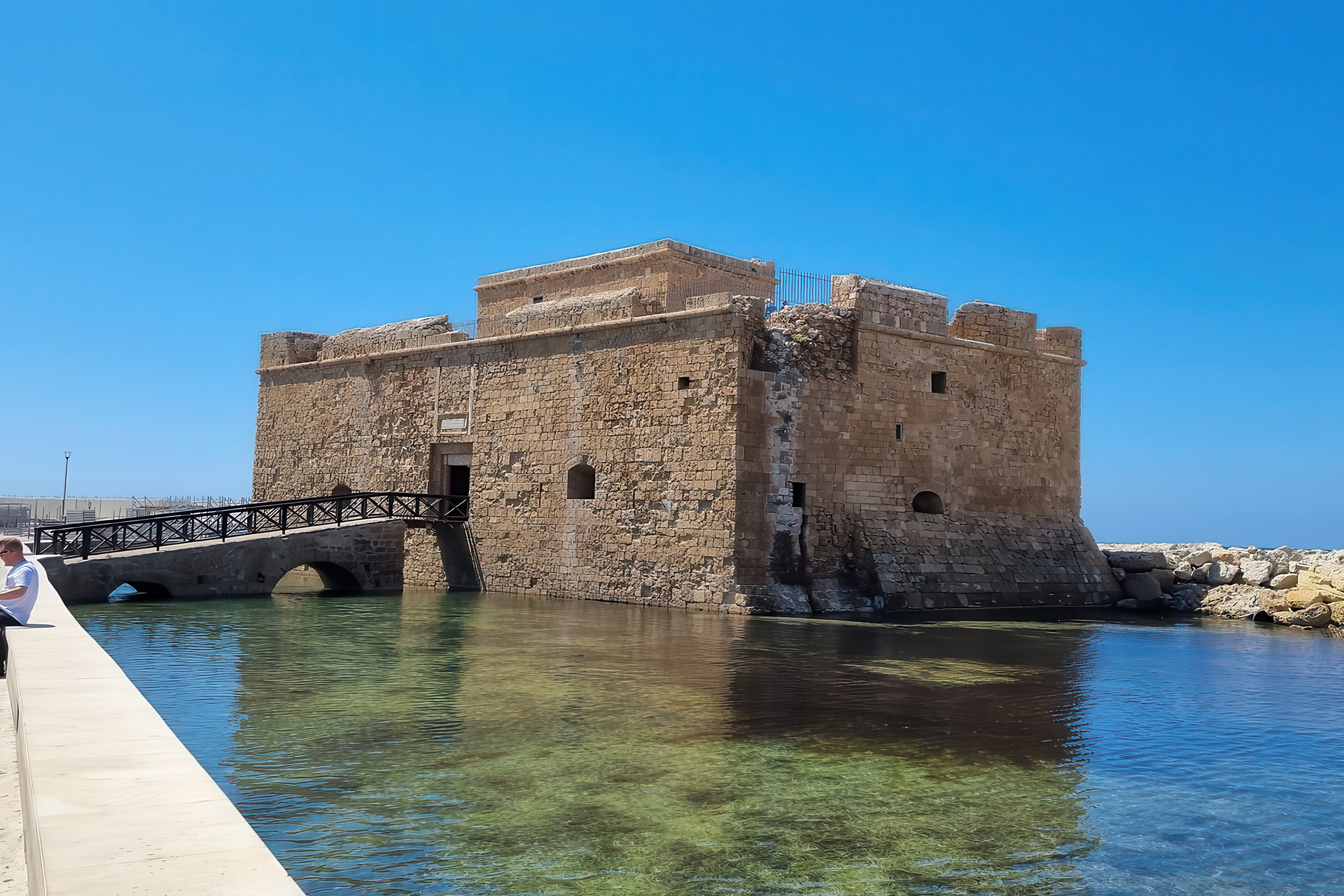
The waterfront promenade extends nearly seven kilometers, lined with cafes, restaurants, and shops. Medieval Paphos Castle sits at the harbor entrance. The British also built a lighthouse in 1888 on Paphos Point, continuing the harbor’s tradition as a navigational landmark.
Excavating the Ptolemaic Legacy
Professional excavations began in 1933 but received limited attention for decades. The breakthrough came in the 1960s with the accidental discovery of spectacular mosaics in the House of Dionysos. Work expanded through the 1970s, revealing defensive walls, gates, public buildings, and residences.
The archaeological park now covers 950,000 square meters.
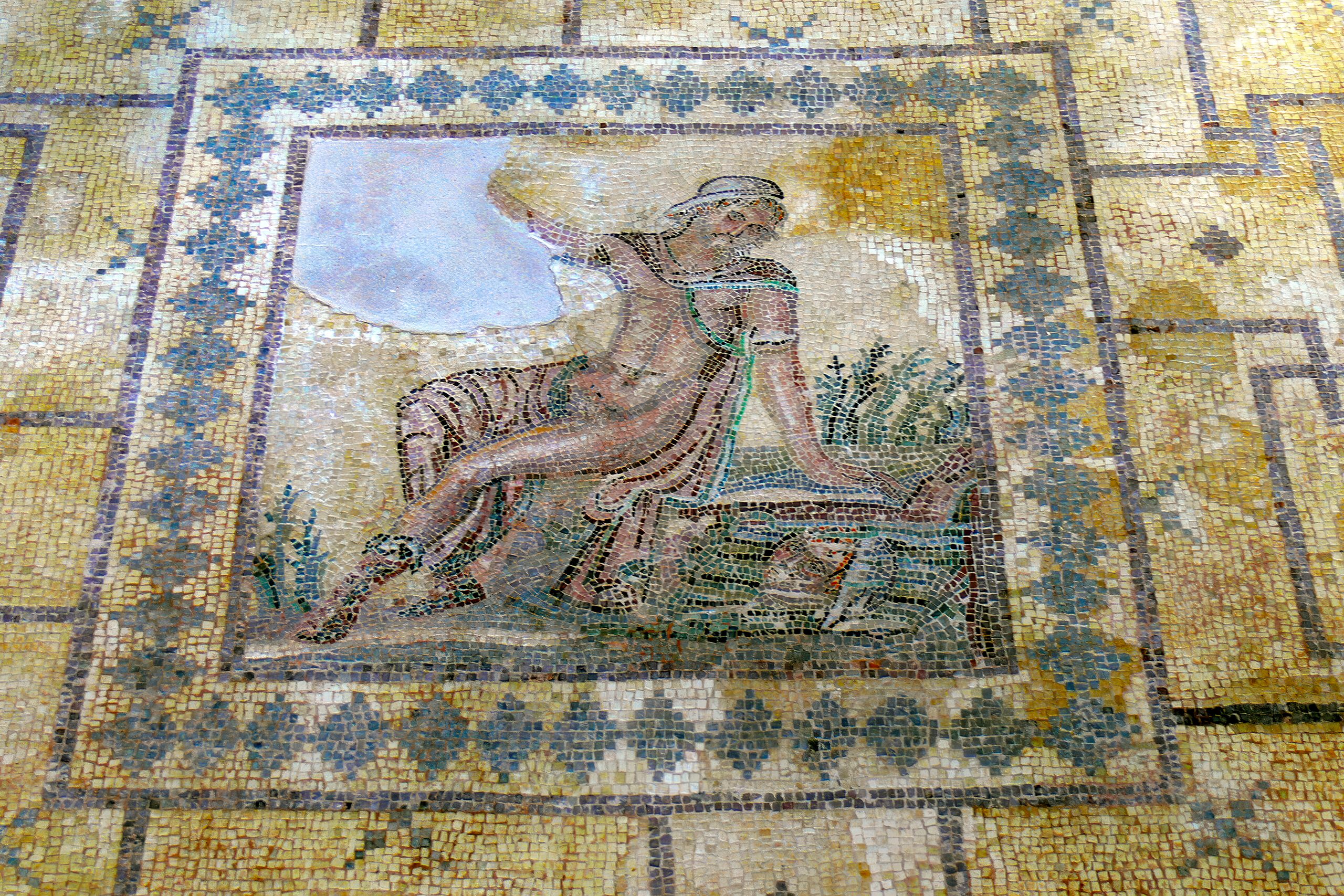
In 1980, UNESCO designated Paphos and its Necropolis as a World Heritage Site. The site encompasses Nea Paphos and Palaipaphos, 15 kilometers apart, with monuments from Hellenistic, Roman, early Christian, Byzantine, and medieval periods.
The Getty Conservation Institute has partnered with Cyprus’s Department of Antiquities since 1988, initially on the Orpheus mosaic and later on comprehensive conservation planning.
A Harbor That Changed History
Nea Paphos Harbor demonstrates the strategic importance of naval power in the ancient world. For the Ptolemies, Cyprus and its harbors provided essential bases for projecting power across the eastern Mediterranean.
The shipyards built some of antiquity’s largest warships while the fortified port protected Egypt’s northwestern frontier. The transition from Ptolemaic naval base to Roman provincial capital to Christian Byzantine city shows how harbor cities adapted to changing circumstances.
Though earthquakes, silting, and raids eventually diminished its importance, the harbor left an indelible mark on Mediterranean history.
Today, visitors along the modern promenade can still see ancient breakwaters and imagine the days when Ptolemaic warships and merchant vessels crowded the basin, when sailors loaded copper and timber bound for Alexandria, and when this Cyprus harbor connected the ancient world.