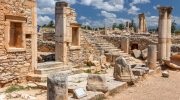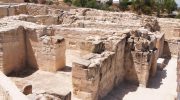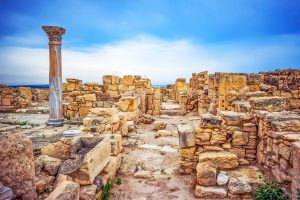
Perched on the southern cliffs of ancient Kourion near modern Limassol, the House of Eustolios stands as one of Cyprus’s most fascinating archaeological sites. This late 4th-century complex blends Roman luxury with early Christian devotion, creating a unique window into a transformative period in Mediterranean history.
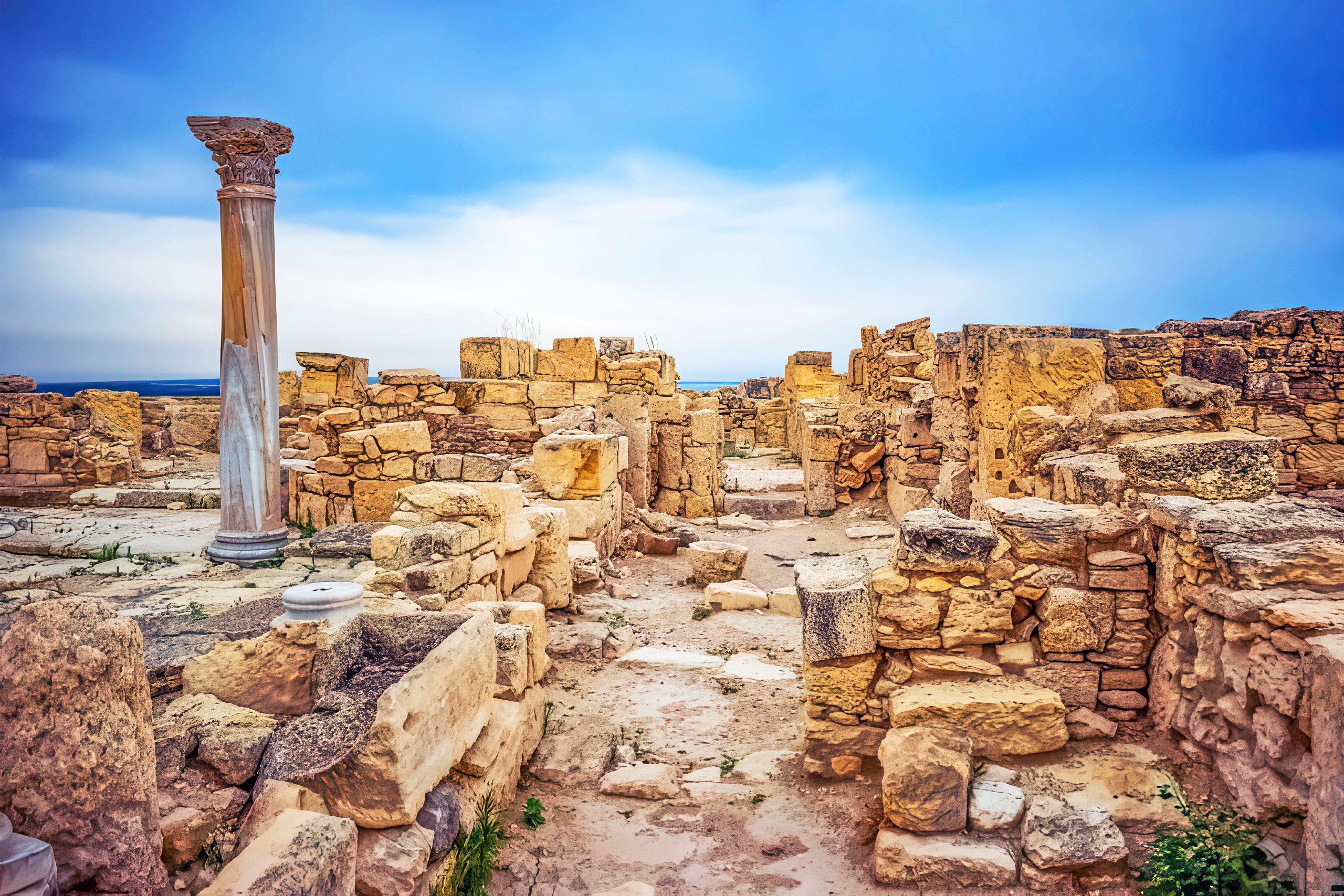
Originally built as a private villa, the structure evolved into a public recreation center that served Kourion’s citizens for over two centuries.
Historical Background
The House of Eustolios rose from the ruins of catastrophe. In 365 AD, a massive earthquake devastated the eastern Mediterranean, striking Kourion with particular force. The ancient city, which had thrived as one of Cyprus’s major kingdoms since the 13th century BC, lay in rubble. Buildings collapsed, infrastructure crumbled, and the population struggled to survive among the wreckage.
Twenty-five years after the disaster, Kourion remained in a dismal state. Into this scene returned Eustolios, a wealthy Christian citizen who had been away from his hometown. Shocked by the continued suffering of his fellow citizens, he made a remarkable decision. Rather than simply rebuild for himself, Eustolios constructed an elaborate complex on the ruins of an earlier Roman villa and donated the entire facility for public use.
The timing proved significant. Emperor Theodosius I had just made Christianity the official religion of the Roman Empire in 380 AD. Eustolios embraced this change wholeheartedly, dedicating his entire complex to Christ and filling it with Christian symbols and inscriptions. His generosity provided Kourion with not just a building but a statement of faith and community solidarity during uncertain times.
A Complex Designed for Public Life
The House of Eustolios contained more than thirty rooms arranged around courtyards and bathing facilities. Visitors entered from the west through a rectangular forecourt into a vestibule where a welcoming mosaic inscription greeted them with the words, “Enter for the good luck of the house.” This personal touch set the tone for the entire complex, which mixed public service with intimate architectural details.
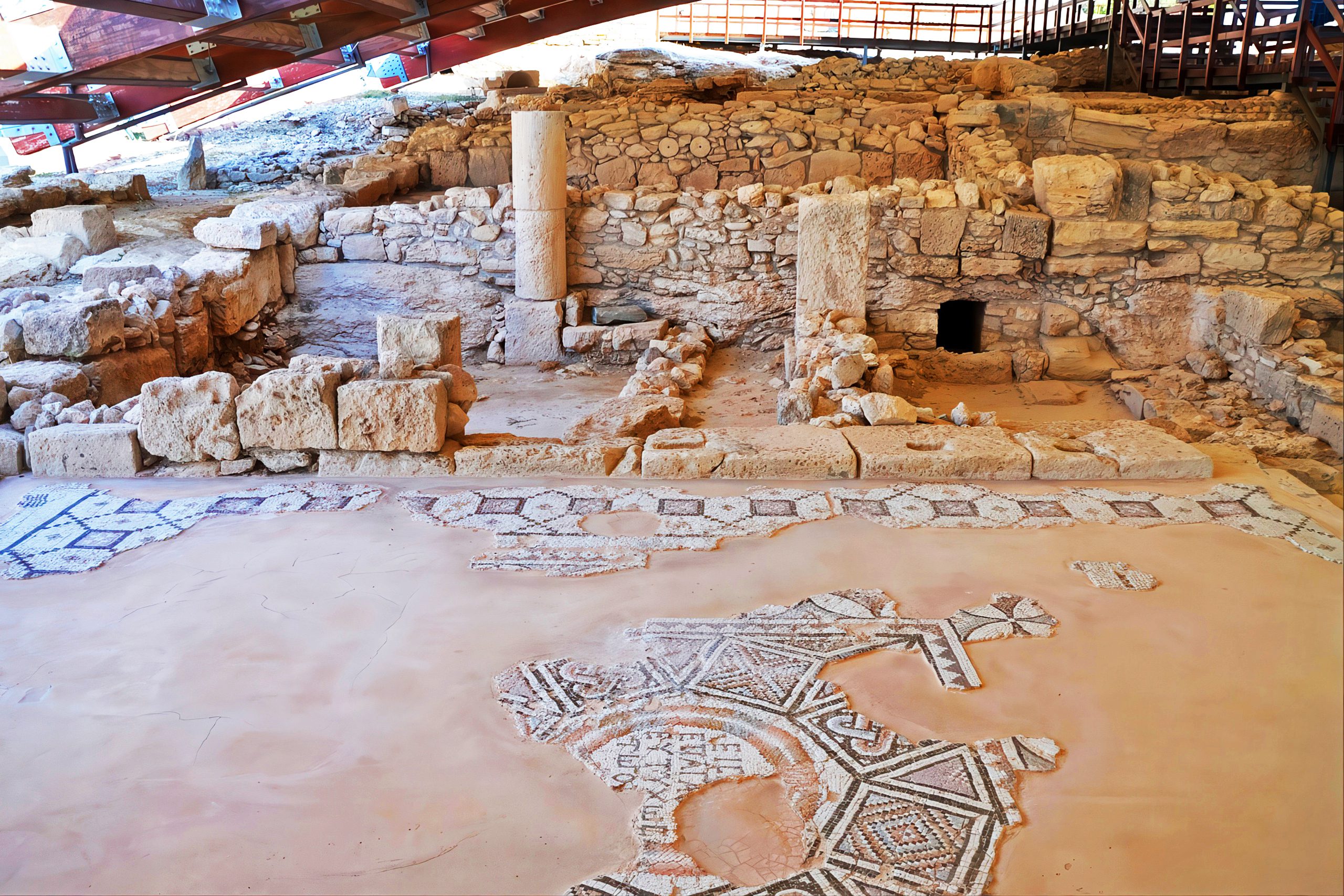
The centerpiece was a peristyle courtyard on the southern side, arranged around a central pool. Covered walkways with elaborate columns surrounded this space, their floors decorated with stunning mosaics. This courtyard served as the social heart of the complex where citizens gathered, conversed, and conducted business. The design borrowed heavily from traditional Roman villa architecture but adapted it for community use rather than private enjoyment.
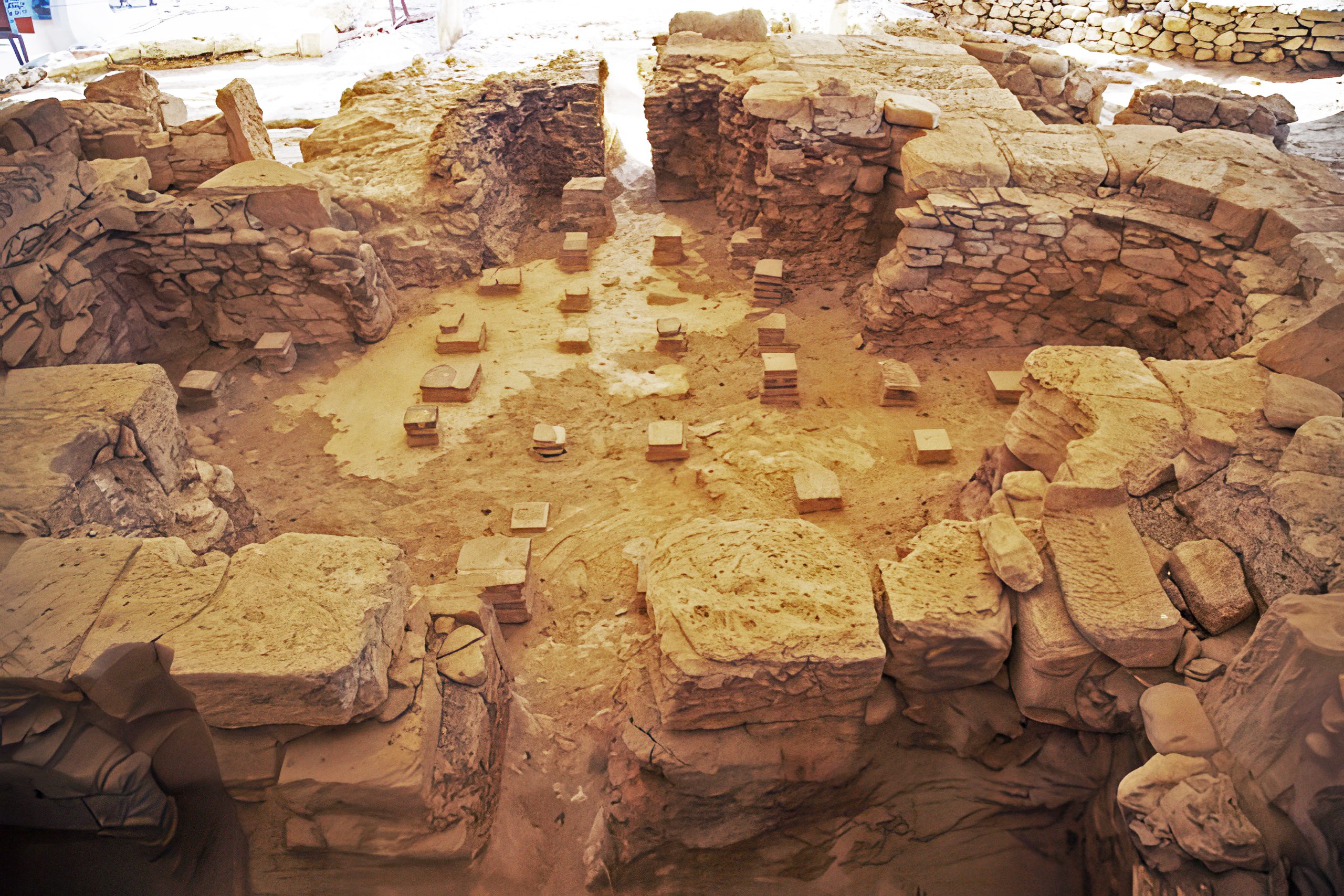
Adjacent to the residential sections, Eustolios constructed a full bathing establishment in the classic Roman style. The baths included all the standard rooms: a frigidarium for cold bathing, a tepidarium for warm water, and a caldarium for hot baths. Dressing rooms called apodyteria allowed visitors to prepare for bathing, while the hypocaust heating system beneath the floors maintained different temperatures throughout the complex. This sophisticated engineering used underground furnaces to circulate hot air, demonstrating the continued mastery of Roman construction techniques in the late 4th century.
The Mosaics Tell a Story
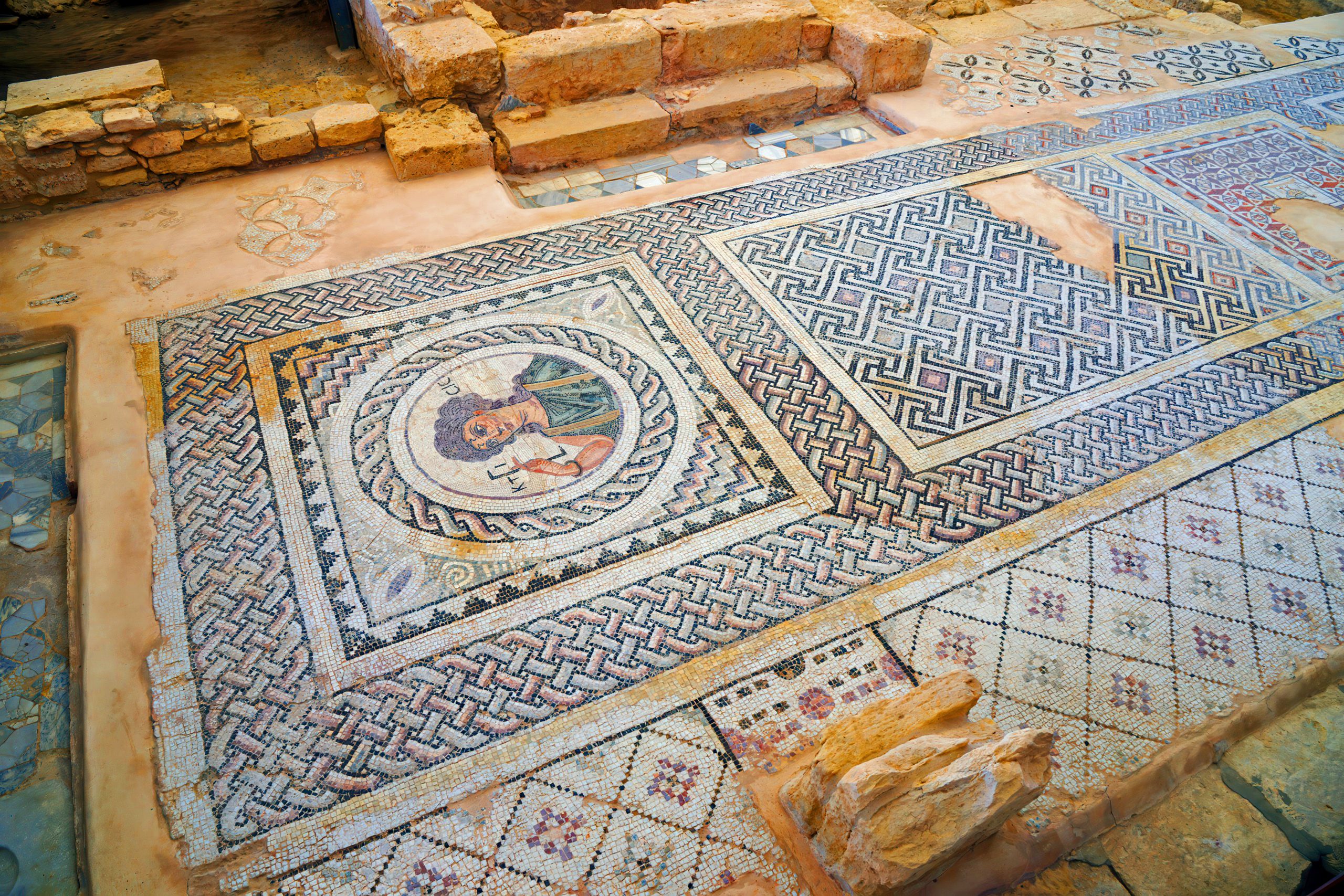
The mosaic floors of the House of Eustolios rank among the finest preserved examples of early Christian art in Cyprus. Created in the 5th century AD, these intricate works combine traditional Roman craftsmanship with new Christian iconography. The mosaics covered floors throughout the complex, from the grand courtyards to the intimate private chambers, each space receiving careful artistic attention.
One of the most significant mosaics depicts Ktisis, a personification of Creation or Foundation. This figure appears in the frigidarium of the bath complex, shown as a woman holding an architect’s measuring rod. The image carries layered meaning. On one level, Ktisis represents the act of construction itself, symbolizing Eustolios’s donation and the physical building of the complex. On a deeper level, she evokes the concept of creation from early Christian philosophy, bridging pagan artistic traditions with Christian theology.
Christian symbols appear throughout the mosaics in various forms. Fish, one of the earliest Christian emblems, swim across several floors. Birds including grey geese, guinea hens, falcons, partridges, and pheasants populate the designs. These creatures carried symbolic weight in early Christian thought, representing souls, the Holy Spirit, and divine providence. The mosaics avoid direct depictions of Christ or biblical scenes, instead using symbolic language that educated Christians would recognize.
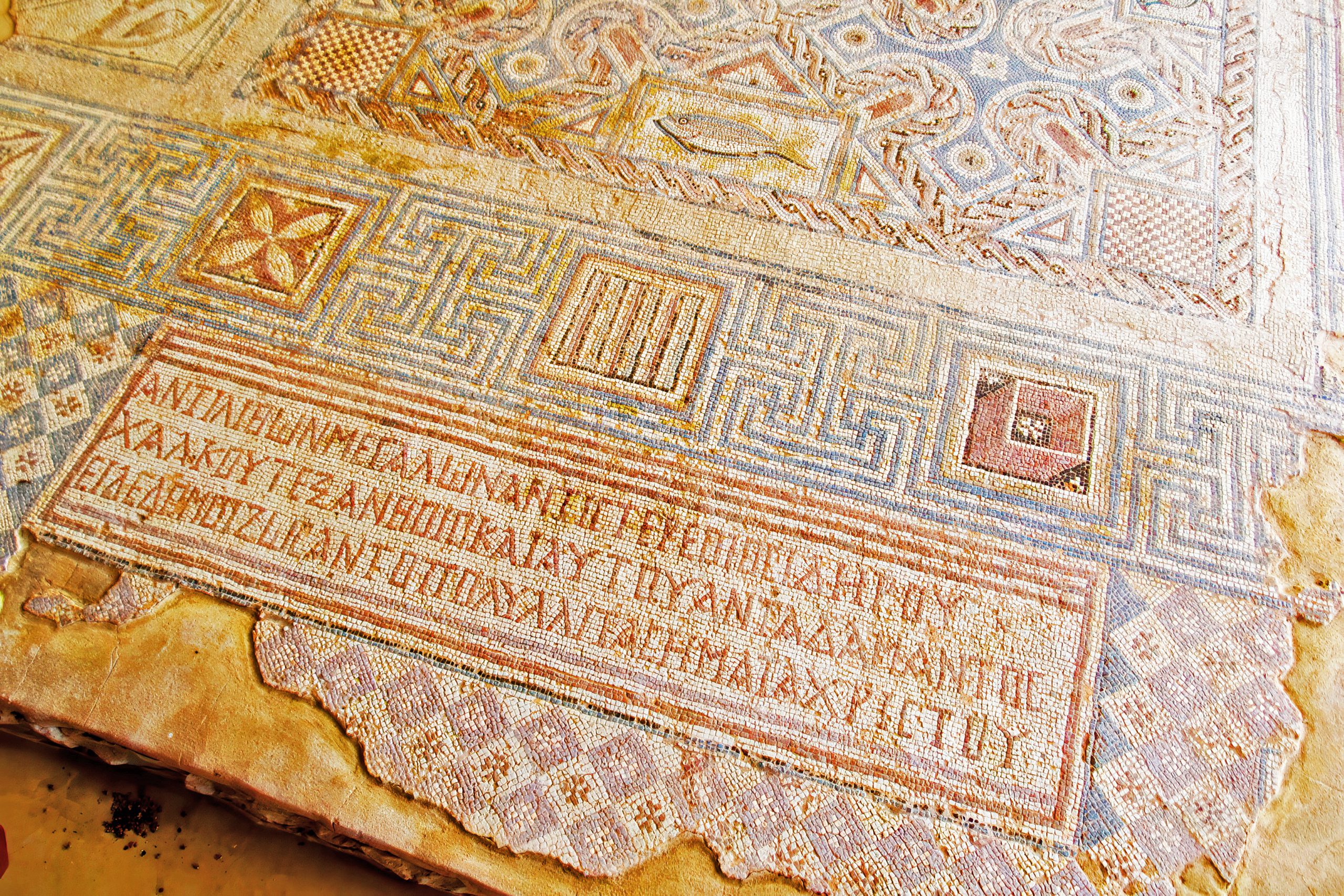
Multiple inscriptions in Greek provide context for the complex. An inscription in the eastern portico identifies Eustolios as the builder and explains his motivation: to alleviate the suffering of Kourion’s population. Another inscription declares, “This house is girt by the much venerated signs of Christ.” Yet another reads, “The Sisters Reverence, Prudence and Piety tend the Platform and this fragrant Hall.” These texts transform the mosaics from mere decoration into proclamations of faith and social responsibility.
One inscription references Apollo, the former patron deity of Kourion, whose sanctuary stood nearby. This mention has sparked scholarly debate. Some see it as evidence of gradual religious transition, showing tolerance between pagans and Christians. Others argue it simply acknowledges the city’s past without endorsing pagan worship. The coexistence of Apollo’s name with explicit Christian declarations creates a fascinating snapshot of religious change in action.
Advanced Infrastructure
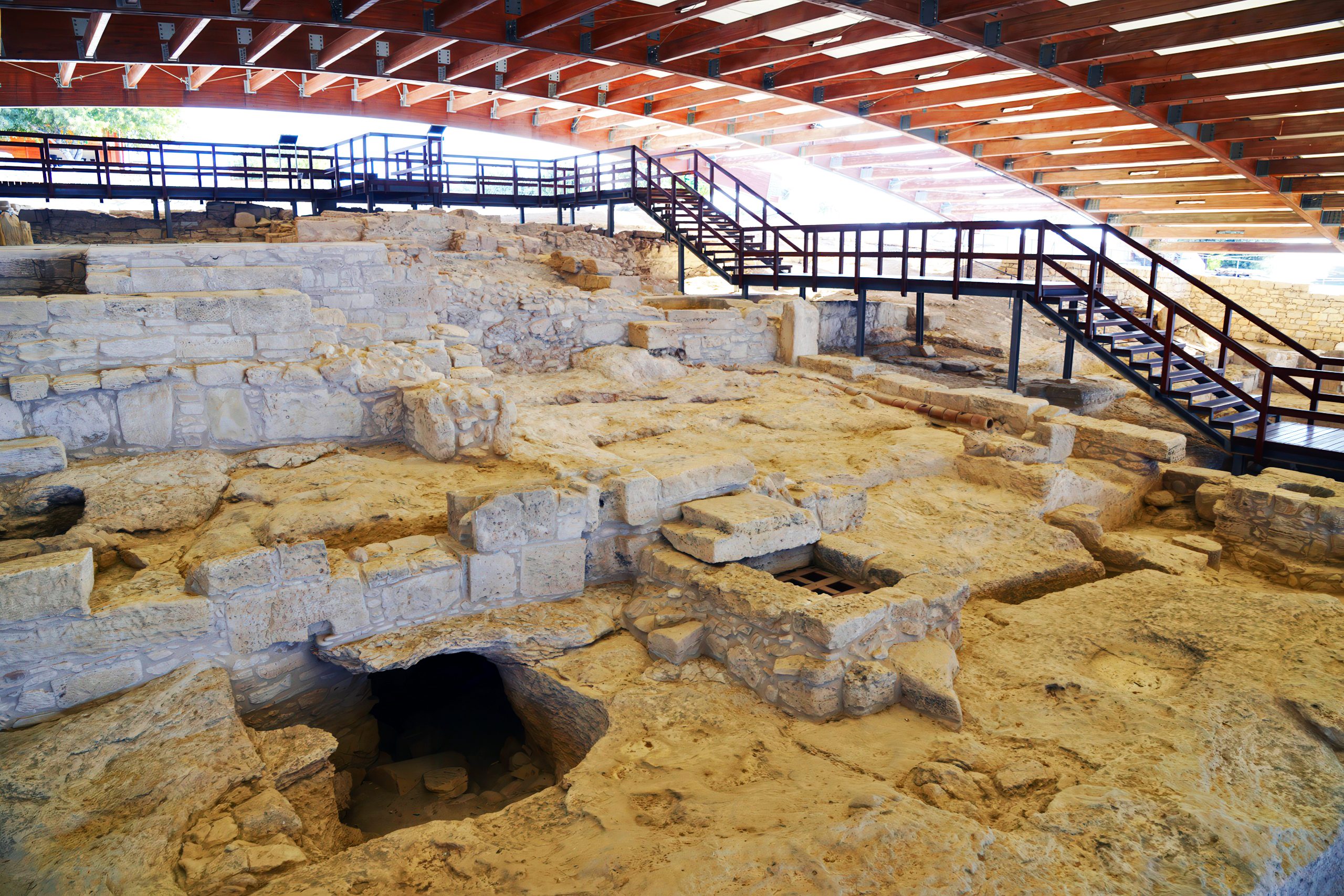
The House of Eustolios showcased the most sophisticated plumbing system yet discovered in Kourion. An extensive network of reservoirs, cisterns, terracotta pipes, and water channels ran beneath the floors and through the walls. During the building’s active use, all this infrastructure remained hidden under tiles and mosaics, visible only to maintenance workers. Modern excavations have exposed these systems, revealing engineering that rivals much later innovations.
The drainage and sewage system demonstrated remarkable environmental consciousness. Gray water from washing was reused in the latrine facilities, a concept that modern green architects have only recently rediscovered. Hot water for the baths flowed through underground pipes heated by furnaces, allowing precise temperature control in different rooms. Cold water came from the city’s supply, which itself relied on aqueducts bringing water from distant mountain springs.
The hypocaust heating system deserves special attention. Workers constructed a raised floor supported by small brick pillars, creating an air gap of several feet. Furnaces at one end burned constantly, sending hot air and smoke through this gap and up through channels in the walls. Clay tiles covered the floor above, retaining heat while remaining comfortable to walk on. This system allowed the caldarium to reach temperatures suitable for hot bathing while keeping the tepidarium merely warm.
Discovery and Preservation
The House of Eustolios served Kourion’s population until the mid-7th century. Arab raids that began around 647 AD led to the complex’s destruction and abandonment. Along with the rest of ancient Kourion, the site lay buried and forgotten for over a thousand years. Sand, soil, and vegetation covered the ruins while local populations gradually forgot the city had ever existed.
Modern archaeological interest began in 1934 when professors George McFadden, Bert Hodge Hill, and John Daniel led a University of Pennsylvania expedition to Cyprus. Their team spent the next two decades methodically excavating Kourion, with work continuing through 1954. The House of Eustolios emerged from these excavations around 1938, revealing its spectacular mosaics to the world for the first time in over a millennium.
Preservation efforts have protected the site from further deterioration. The entire floor area now sits under a protective covering that shields the excavations and mosaics from weather damage while allowing visitors to view them. Elevated walkways let people examine the rooms, mosaics, and bath facilities from above without disturbing the ancient surfaces. This arrangement provides excellent photography opportunities as visitors look down on the excavated areas.
Visiting the Site Today
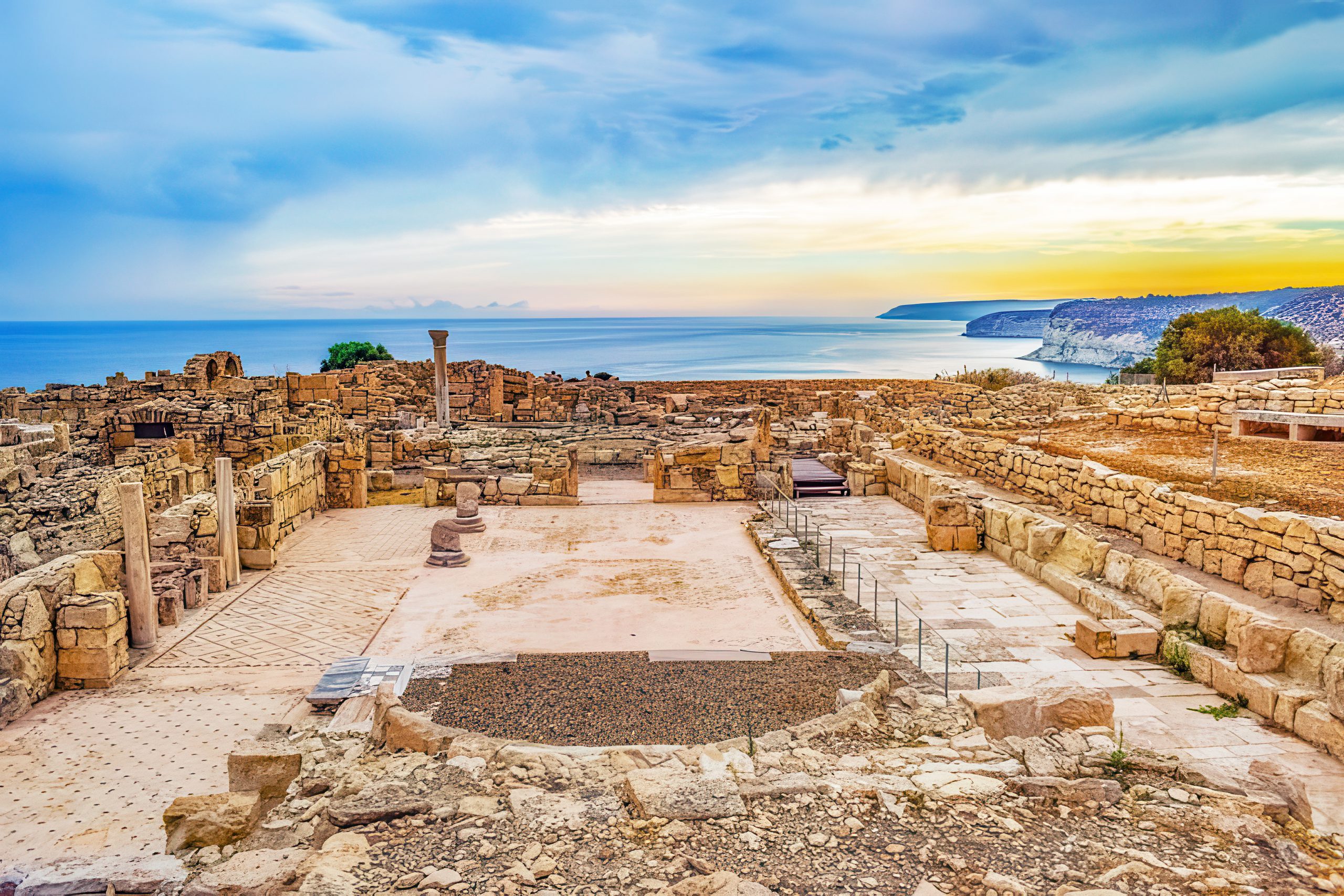
The House of Eustolios sits adjacent to Kourion’s famous Roman theatre, making both sites easy to visit together. The archaeological complex occupies a commanding position on cliffs overlooking the Mediterranean Sea. Visitors enjoy stunning coastal views that ancient residents would have seen daily. The elevated location provides natural ventilation that would have kept the complex comfortable during Cyprus’s hot summer months.
The site lies about 19 kilometers west of Limassol near the village of Episkopi. Public transportation serves the area through bus line 16 from Limassol, while drivers can take the A1 highway toward Paphos and exit at Episkopi following signs to Kourion. The location within the British Overseas Territory of Akrotiri adds an unusual modern element to visiting this ancient site.
The House of Eustolios represents a remarkable intersection of disaster response, personal generosity, engineering skill, and religious transformation. Eustolios took the resources at his disposal and created something that benefited his entire community. His decision to dedicate the complex to Christ while maintaining connections to Kourion’s pagan past reflects the complicated reality of religious change in the late Roman Empire. The mosaics and inscriptions he commissioned speak across fifteen centuries, telling us about faith, civic responsibility, and the rebuilding of community after catastrophe.