For over 3,000 years, Cyprus was home to powerful independent city-kingdoms that controlled trade routes, mined copper, and blended Greek, Phoenician, and local cultures into something uniquely Cypriot. These ancient cities left behind spectacular ruins – theaters still hosting performances, mosaic-floored villas, and temple foundations – that tell the story of a small island that punched far above its weight in the ancient world.
A Patchwork of Powerful Cities
Unlike many ancient lands ruled by a single king or empire, Cyprus developed as a collection of independent city-kingdoms. Each coastal city controlled its surrounding territory, built its own temples and palaces, minted its own coins, and conducted its own diplomacy with the great powers of Egypt, Persia, and Greece.
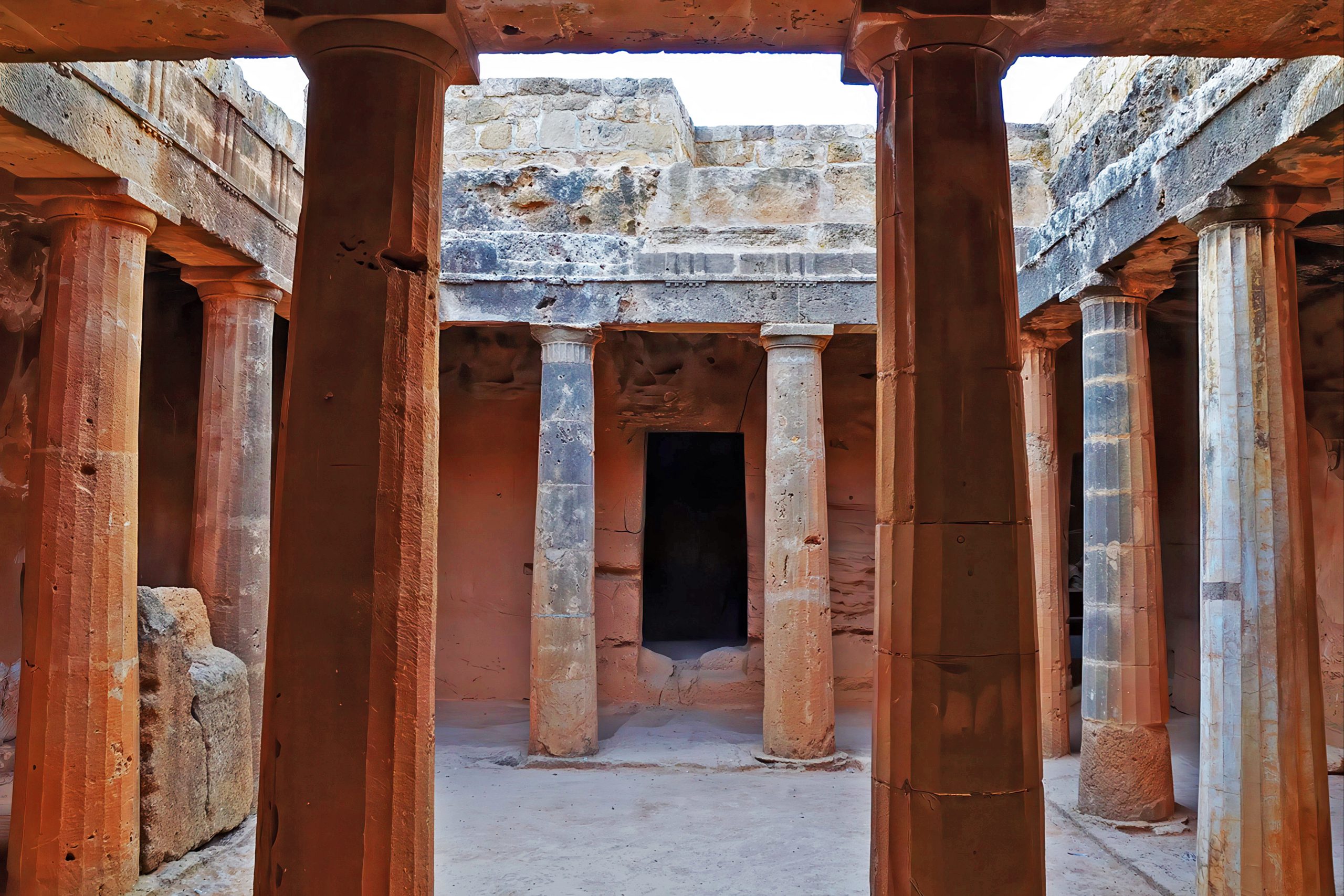
At its height during the Iron Age (around 1000-300 BC), Cyprus had about a dozen of these city-kingdoms. Names like Kourion, Kition, Salamis, and Paphos appeared in ancient texts and on diplomatic correspondence. Some were founded by Greek colonists, others by Phoenician traders, but all developed distinctly Cypriot identities that blended Eastern and Western influences in architecture, religion, and daily life.
From Bronze Age Towns to Iron Age Kingdoms
Cyprus’s city-kingdoms emerged from earlier Bronze Age settlements that had grown wealthy from copper mining and Mediterranean trade. By 1600-1050 BC, the island had become a crucial hub connecting the civilizations of the Near East, Egypt, and the Aegean world. Prosperous hilltop towns and ports dotted the coastline.
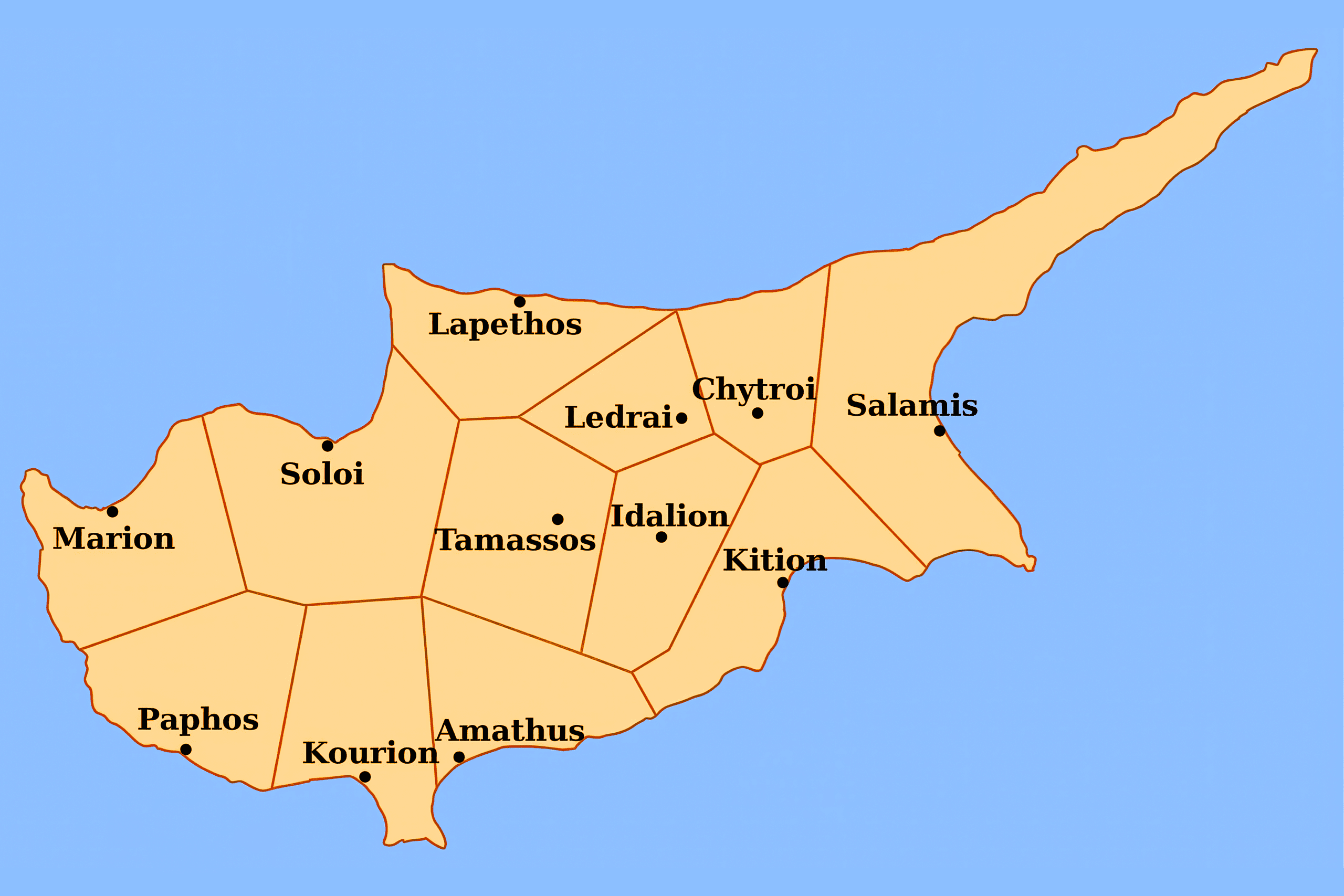
Around 1200 BC, the entire eastern Mediterranean experienced upheaval – the mysterious “Sea Peoples” destroyed cities, empires collapsed, and populations migrated. In Cyprus, this crisis actually brought new settlers: Mycenaean Greeks fleeing the collapse of their palatial kingdoms established fortified towns like Maa-Palaiokastro on rocky coastal promontories. Though some of these settlements were destroyed within decades, they planted Greek culture firmly on the island.
By the Iron Age (starting around 1050 BC), these settlements had evolved into the classic city-kingdoms. Greeks dominated most cities, bringing their language, gods, and architectural styles. But on the eastern coast, Phoenician traders from Tyre established Kition as a major colony, introducing Near Eastern culture and the worship of the goddess Astarte. This cultural mix – Greek and Phoenician, Western and Eastern – became Cyprus’s defining characteristic.
These city-kingdoms weren’t isolated villages. They traded extensively, maintained diplomatic relations with Egypt and the Near Eastern empires, and sometimes fought each other for control of copper mines or fertile valleys. Yet they also shared a common Cypriot identity, worshipping Aphrodite as the island’s patron goddess and developing a unique syllabic script to write Greek.
The Major City-Kingdoms and Their Ruins
Kourion (also spelled Curium) stood proudly on a limestone ridge on the southern coast, controlling the fertile Kuris River valley below. This city-kingdom became one of ancient Cyprus’s largest and most impressive states. Its spectacular Greco-Roman theater, originally built in the 2nd century BC and rebuilt in the 2nd century AD, could seat thousands and still hosts performances today – making it one of the oldest continuously-used theaters in the world.
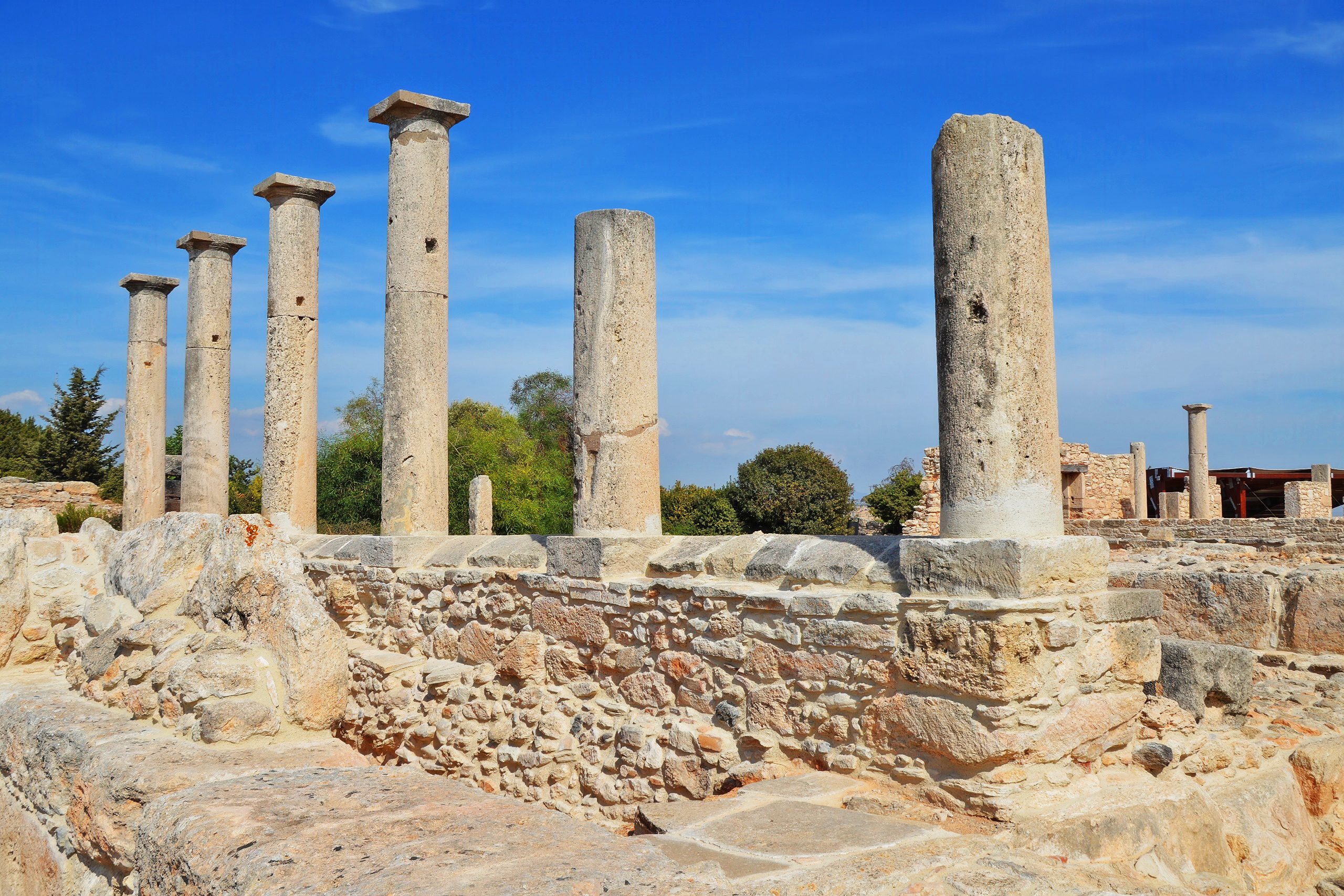
Below Kourion’s acropolis lie Roman-era villas that showcase the wealth and sophistication of ancient city life. The “House of Achilles” and “House of Eustolios” feature elaborate mosaic floors with multi-colored tiles depicting mythological scenes and geometric patterns. These villas included bathing complexes, courtyards, and sophisticated water systems – all the comforts of Roman luxury adapted to Cypriot sunshine.
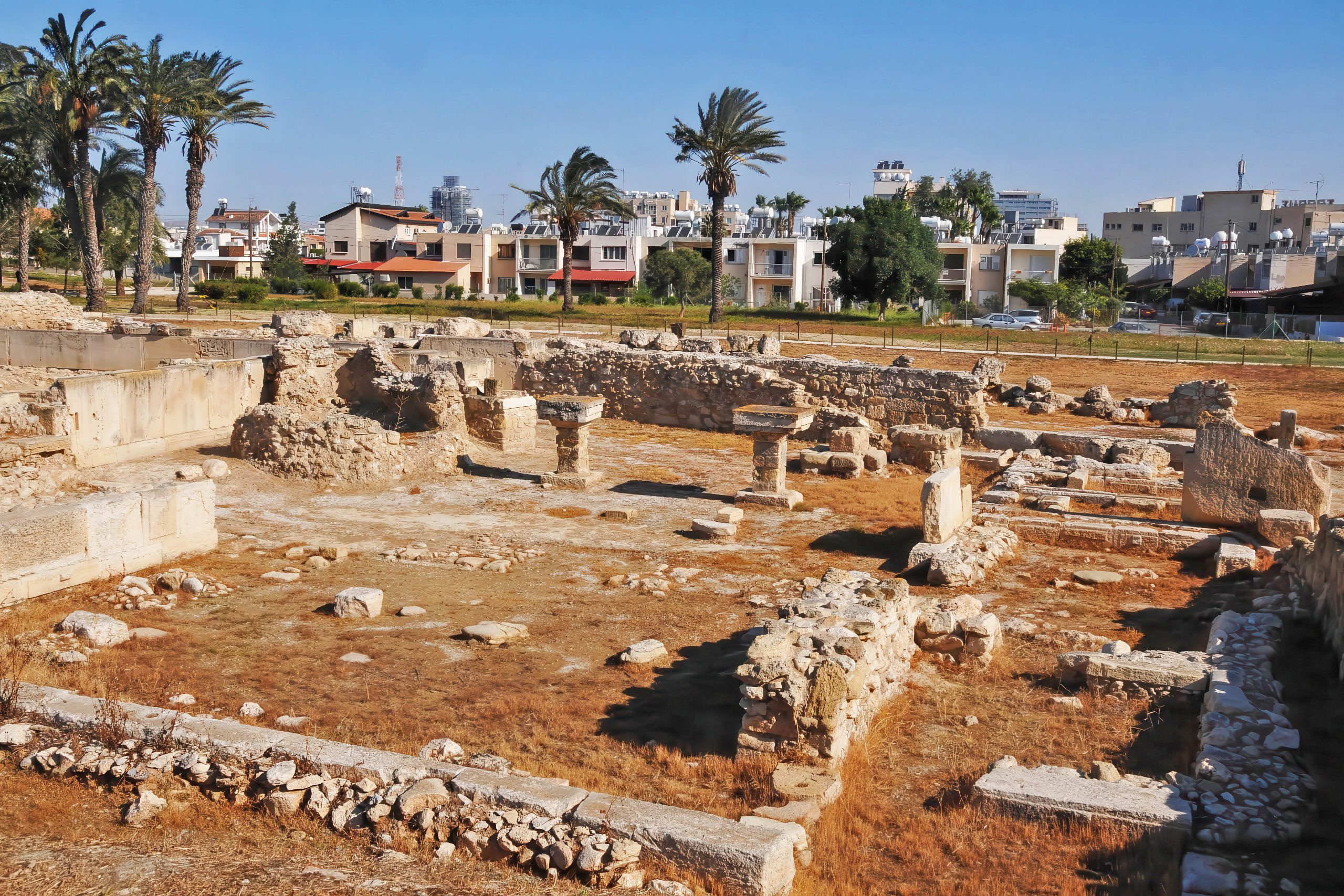
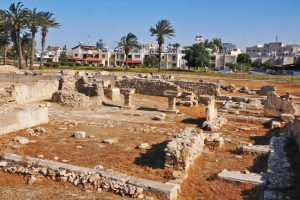
Kition on the eastern coast (near modern Larnaca) tells a different story – one of Phoenician influence. By the 9th century BC, it had become a major colony of Tyre, the great Phoenician city-state. Excavations have uncovered massive temple ruins, including Temple 1, an open-air sanctuary where the Phoenician goddess Astarte (similar to Aphrodite) was worshipped. The temple’s “holy of holies” enclosed by walls reflected Near Eastern religious architecture quite different from Greek temples.
Kition’s legacy extends beyond ruins. The modern Larnaca suburb of Kiti preserves the ancient name Citium, and the area’s Panagia Angeloktisti church contains a stunning 6th-century mosaic – a direct link to the city’s post-classical Christian era. This continuity of settlement shows how ancient cities evolved rather than simply disappearing.
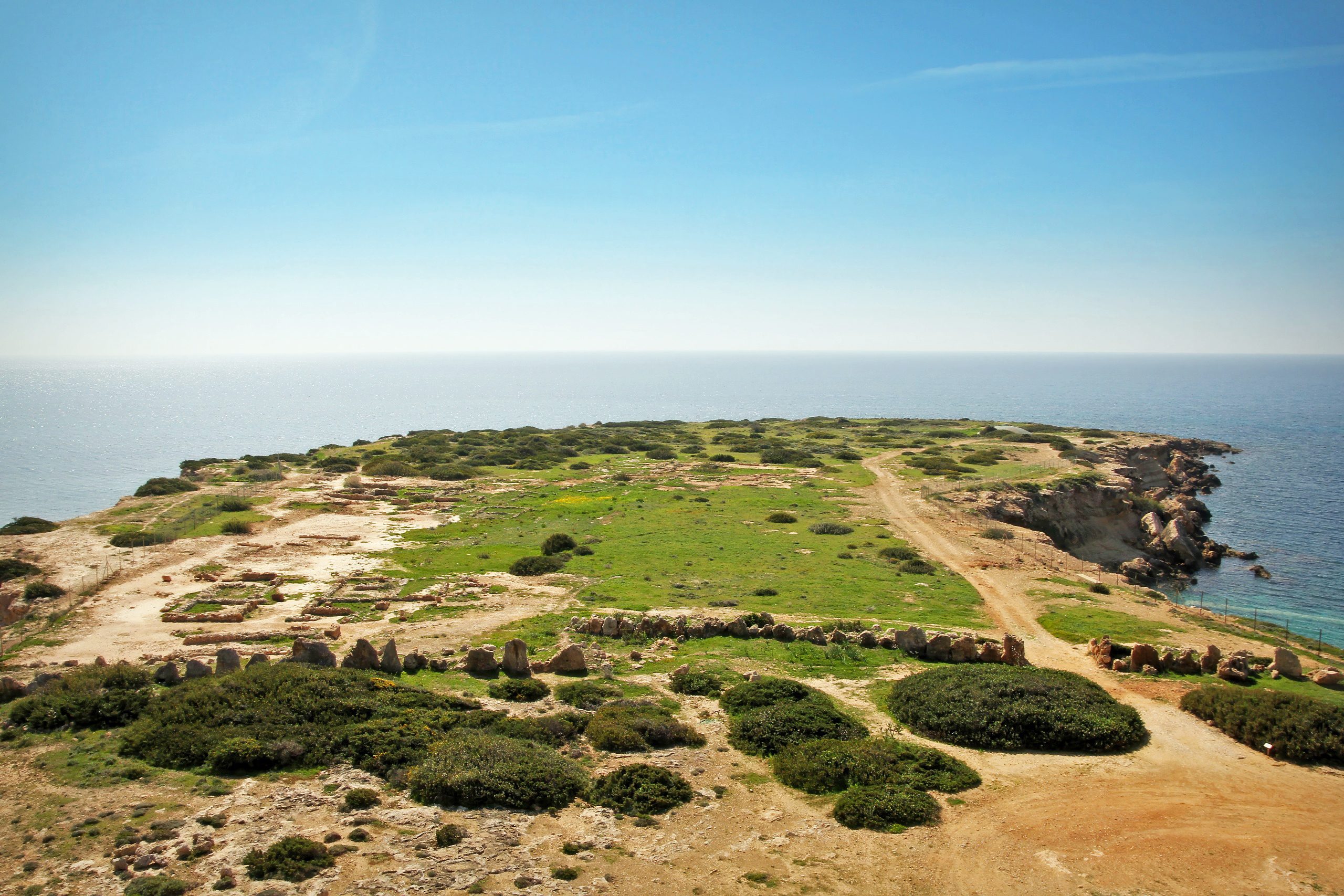
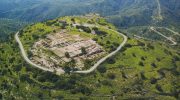
Maa-Palaiokastro near Paphos represents a brief but fascinating chapter: a fortified Mycenaean town founded around 1200 BC on a rocky coastal promontory. Its cyclopean stone walls – massive blocks fitted together without mortar – were several meters thick, protecting planned stone houses and large storage jars. The settlement had fresh water and strategic views of the sea, suggesting it served as a refuge or military outpost during the Bronze Age collapse.
Maa-Palaiokastro’s life was short and violent. Around 1180 BC, the town was destroyed by fire, possibly by the same “Sea Peoples” who devastated other Mediterranean cities. Today only wall fragments remain, but the dramatic coastal setting at Cape Drepanum makes it easy to imagine why Mycenaean settlers chose this defensible spot.
Surprising Stories from Ancient Cyprus
● Philosophy Born in Kition: The founder of Stoic philosophy, Zeno of Citium, was born in Kition around 334 BC. He moved to Athens and became one of antiquity’s most influential thinkers, teaching that virtue and wisdom matter more than wealth or pleasure – ideas that still influence ethics today.
● Heroic Founding Myths: Local tradition claimed that Kourion was founded by Greek heroes after the Trojan War, giving the city a legendary origin story connecting it to Homer’s epics. This myth helped Kourion maintain its prestige as a properly Greek city with heroic ancestry.
● Biblical Connection: The Hebrew Bible calls western peoples “Kittim” after Kition, reflecting how important and well-known Cyprus was throughout the ancient Near East. The island appeared in biblical prophecies and genealogies as a significant place.
● Ancient Theater Lives On: Kourion’s restored Greco-Roman theater hosts concerts, plays, and cultural events every summer, continuing a 2,000-year tradition of performance. Watching a Greek tragedy performed in this ancient space under Mediterranean stars is an unforgettable experience.
● Cone-Topped Ruins: The Neolithic site of Kalavasos-Tenta is protected by a distinctive modern cone-shaped shelter that has become a local landmark. This futuristic roof covers a 9,000-year-old village, creating a striking contrast between ancient and contemporary.
Religion, Architecture, and Daily Life
Religion pervaded these ancient cities, with each kingdom maintaining temples to various gods. Kition’s sanctuary of Astarte revealed the island’s Phoenician side, while Greek cities built temples to Zeus, Apollo, and especially Aphrodite – Cyprus’s patron goddess of love and beauty born from the sea. Kourion’s residents believed they were descendants of Greek heroes from Argos, strengthening their Hellenic identity.
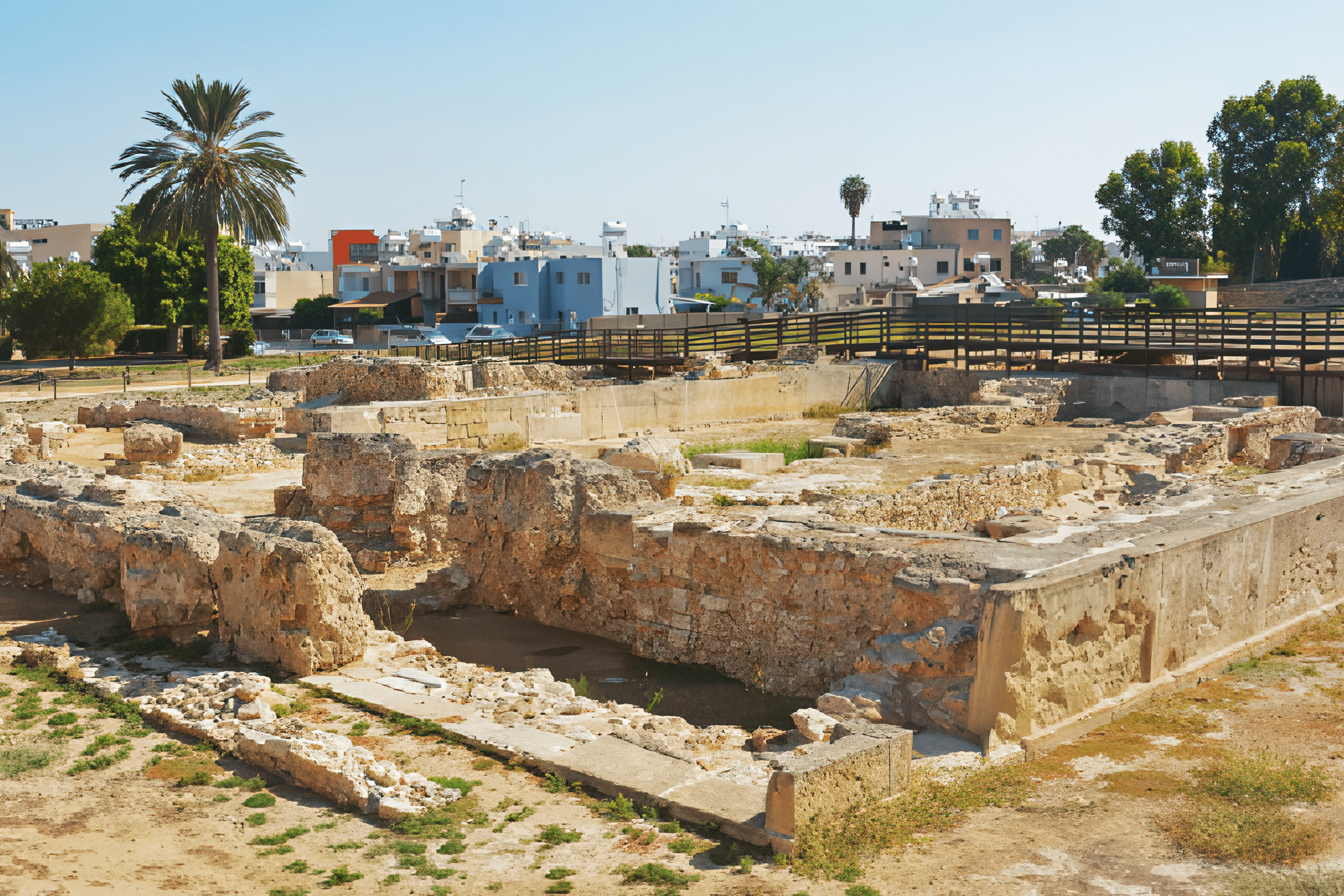
Daily life blended Greek and Near Eastern customs in fascinating ways. Inscriptions show both Greek letters and Phoenician script used side by side. Oil lamps, pottery styles, and architectural details mixed Eastern and Western influences. This cultural fusion made Cypriot cities cosmopolitan marketplaces where traders from Egypt, Greece, Phoenicia, and Persia met and exchanged goods, ideas, and religious practices.
The architectural sophistication of these communities is remarkable. Kourion’s urban core was carefully planned with roads, courtyards, public baths, and market buildings (agora) showing Roman-style city planning. The elaborate mosaic floors in wealthy villas required skilled artisans and expensive materials, demonstrating both wealth and artistic patronage.
Many Bronze and Iron Age sites met dramatic ends. Maa-Palaiokastro was destroyed by fire around 1180 BC during the Sea Peoples upheavals. Kition’s Late Bronze Age temples were burned during Hellenistic wars. These destruction layers help archaeologists date events precisely and understand the often-violent transitions between historical periods.
Living Heritage in Modern Cyprus
These ancient ruins remain vital to Cypriot heritage and identity today. Modern place names echo ancient cities: Kiti district in Larnaca preserves the name Citium, maintaining a 3,000-year connection to the Phoenician past. Tourist brochures and cultural materials celebrate these city-kingdoms as proof of Cyprus’s long, sophisticated civilization.
Cypriots actively use their ancient sites for cultural events and celebrations. Traditional dances and theatrical performances are held in Kourion’s ancient theater, bringing classical Greek drama back to a space built for exactly that purpose. This isn’t museum preservation – it’s living tradition continuing in its original setting.
Local crafts, coins, and even folk songs draw on themes from the ancient city-kingdoms. Aphrodite appears everywhere in Cypriot tourism and culture, linking modern identity to ancient worship. Archaeological discoveries regularly make national news, and schoolchildren learn about Kourion, Kition, and other kingdoms as the foundations of Cypriot history.
The archaeological sites also drive tourism and international recognition. Cyprus’s blend of Greek and Phoenician heritage makes it unique in the Mediterranean, and visitors from around the world come to see where these cultures met and merged.
Exploring Ancient Cyprus Today
● Kourion Archaeological Site: Located 19 km west of Limassol, Kourion offers the most impressive ancient experience on the island. The site has a visitor center, on-site museum, and is open daily year-round (summer hours until 7:30 PM) with a modest entry fee. You can explore the magnificent theater, walk through mosaic-floored Roman villas under protective shelters, examine public baths, and enjoy stunning views over the Mediterranean from the clifftop acropolis.
● Kition Ruins in Larnaca: The excavated temples and foundations of ancient Kition sit in downtown Larnaca, making them easily accessible for visitors staying in the city. An adjacent archaeological museum displays finds from the site. The combination of Phoenician temple remains and the nearby Byzantine church with its ancient mosaic creates a journey through multiple layers of history.
● Choirokoitia (Khirokitia): This UNESCO World Heritage Site offers a completely different experience – a journey back to Neolithic times 9,000 years ago. The site has an information museum and reconstructed circular stone huts that show how the island’s earliest farming communities lived. The fenced excavation area protects the authentic ruins, but the reconstructions let you step inside and experience Neolithic architecture firsthand.
● Kalavasos-Tenta: The distinctive cone-shaped modern shelter protecting this 9,000-year-old village makes it instantly recognizable. The roof allows visitors to see the layout of the ancient stone village while protecting the fragile remains from weather. It’s a quick but fascinating stop that shows how archaeologists preserve and present prehistoric sites.
● Maa-Palaiokastro: This site near Paphos offers a more rugged, less-developed experience. There are no on-site displays or museums – just the ancient wall fragments and the dramatic coastal landscape. Walking among these ruins requires more imagination, but the spectacular views of Cape Drepanum and the sense of standing where Mycenaean settlers built their last fortress creates a powerful connection to the Bronze Age collapse.
Why Ancient Cyprus Still Matters
Understanding Cyprus’s ancient city-kingdoms means grasping how this small island became a crucial crossroads of Mediterranean civilization. These weren’t backwater colonies but sophisticated states that minted coins, conducted diplomacy with empires, produced philosophers, and created art that still amazes today.
The blend of Greek, Phoenician, and indigenous Cypriot culture that developed in these cities shaped the island’s identity for millennia and created archaeological treasures that continue to inspire and educate.
When you walk through Kourion’s theater or stand before Kition’s temple foundations, you’re not just seeing old stones – you’re experiencing the multicultural heritage that made Cyprus unique in the ancient world and still defines it today.