Explore Cyprus with Our Interactive Map

Explore our top stories and discover ideas worth your time.

Amathus Agora

Amathus Agora

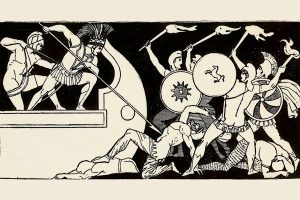
The agora at Amathus stands as one of the most important marketplace ruins in Cyprus. This ancient public square served as the commercial and political heart of a city that thrived for over two thousand years. Located in the lower town of what was once a major Mediterranean trading hub, the agora reveals how Romans organized their public spaces and conducted daily business in this eastern corner of their empire. Historical Background Amathus was founded around 1100 BC and grew into one of the ancient royal cities of Cyprus. The settlement sat on coastal cliffs about 11 kilometers east of modern Limassol, positioned where a natural harbor allowed ships to dock safely. This strategic location helped Amathus become a wealthy trading center. The city exported grain and sheep to Greek merchants and profited from rich copper mines in the surrounding hills. The city maintained strong connections with Phoenician culture and resisted joining several rebellions against Persian rule. When Onesilos of Salamis led a Greek revolt against Persia in 500-494 BC, Amathus refused to participate. After the revolt failed, the Amathusians captured and executed Onesilos. According to the historian Herodotus, they cut off his head and hung it above their city gates, where bees later built a honeycomb inside the skull. Under Roman control, Amathus became the capital of one of…

Read more
Cyprus Kalinikta Winter Rituals

Cyprus Kalinikta Winter Rituals

Winter evenings in Cyprus transform villages into centers of warmth and community as families and neighbors gather after sunset. The word Kalinikta means good night in Greek, and it represents more than just a farewell. It marks the beginning of evening rituals that have defined Cypriot winter life for generations.  As temperatures drop and darkness arrives early, the traditional kafeneio becomes the heart of village social life, with fireplaces glowing and the sounds of conversation, laughter, and backgammon pieces clicking on wooden boards. These evening gatherings preserve customs that connect modern Cypriots to their grandparents and great grandparents, maintaining traditions that might otherwise disappear.  Winter brings a slower rhythm to island life, with agricultural work reduced and more time available for storytelling, music, and shared meals that strengthen family and community bonds. The kafeneio as winter's social heart The traditional Cypriot coffee shop or kafeneio serves as the primary gathering place during winter months when outdoor work ceases early and darkness arrives by 5 PM. Men traditionally dominate these spaces, spending hours playing tavli, a form of backgammon, or pilota, a local card game. Customary bets determine who pays for the coffee, and spectators gather around tables to watch games and offer advice, often becoming as emotionally invested as the players themselves.  The aroma of Cyprus coffee fills the air,…

Read more
Kantou-Koufovounos

Kantou-Koufovounos

High on a hill near the Kouris River in the Limassol district of Cyprus sits Kantou Koufovounos, one of the island’s most significant Late Neolithic settlements. This archaeological site has quietly rewritten our understanding of life on Cyprus between 4,400 and 3,900 BC. Unlike the dramatic clifftop fortresses or coastal harbors that often capture imaginations, Kantou-Koufovounos was simply a community where people lived, worked, raised families, and built a society that lasted longer than many of its contemporary neighbors. The site takes its name from Koufovounos Hill, where it rests approximately 20 to 50 centimeters below the modern ground surface. This shallow depth speaks to how close we still are to these ancient inhabitants. The settlement sits on the western bank of the Kouris River, positioned in terrain that offered natural protection while remaining accessible to vital resources. Historical Background Excavations at Kantou-Koufovounos began in summer 1992 under the direction of the National and Kapodistrian University of Athens. This marked the first archaeological project the university undertook in Cyprus. The work continued through 1999, with additional periods in 1996, 1998, 2000, and 2001 dedicated to recording and studying the recovered materials. These careful excavations revealed rectangular residential units, storage pits, fire hearths, graves, and an extensive collection of stone tools. What makes this site particularly interesting is how much of…

Read more