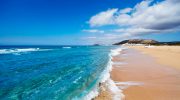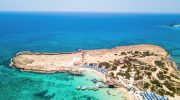
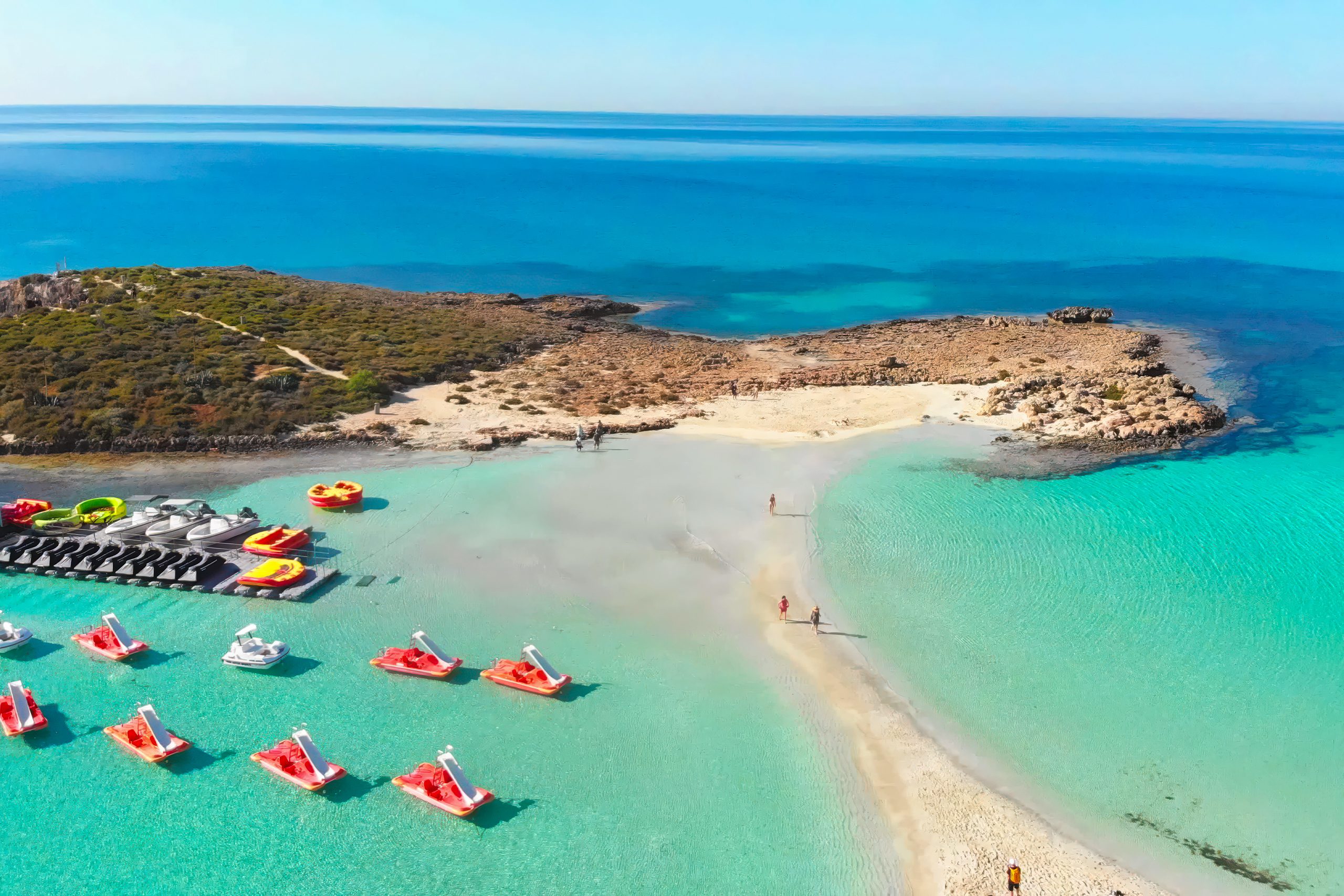
The Nissi beach stretches 500 meters along a crescent-shaped bay on the eastern coast of Cyprus, approximately three kilometers from Ayia Napa town center in the Famagusta district. The bay’s distinctive feature is the small island, or “nissi” in Greek, positioned about 50 meters offshore.
The water depth remains shallow throughout the bay, typically staying below waist level even 100 meters from shore, making the entire area accessible for wading and safe for families with children.
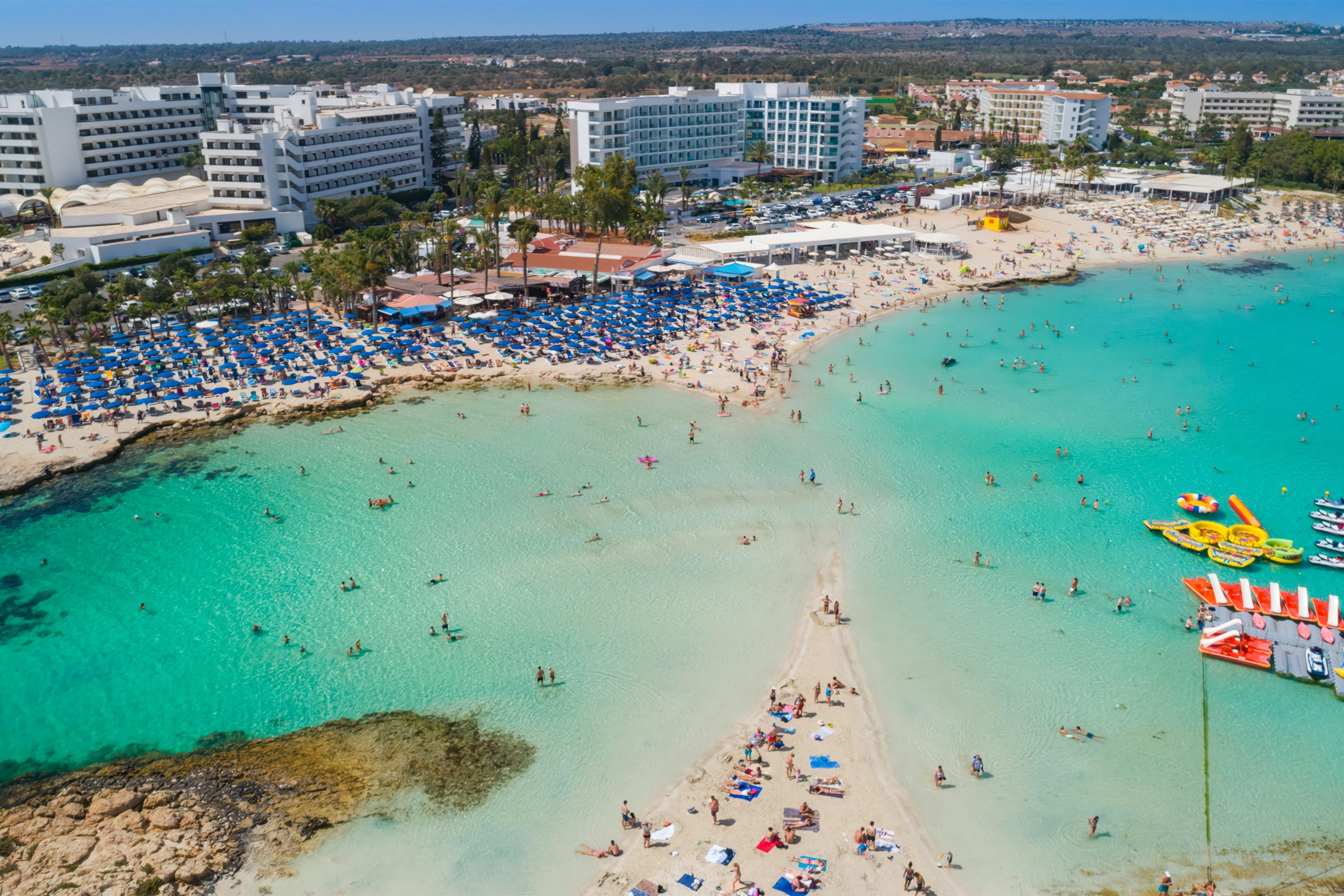
The beach actually consists of two connected sections. The main stretch near the islet attracts larger crowds and hosts most water sports activities and beach bars. A second, smaller, quieter section extends to the west, providing more relaxed conditions for visitors seeking less activity.
Both areas share the same water quality and sand characteristics that earned Nissi Beach its Blue Flag designation, an international eco-label awarded for excellent water cleanliness, environmental management, safety standards, and proper facilities.
Historical Background
Archaeological excavations conducted along the western borders of the bay in 2005 revealed firelighting equipment dating back 12,000 years. This discovery suggests the area may have been among the first locations settled by humans arriving on Cyprus. The artifacts included chipped stone tools and evidence of fire use. That shows early inhabitants recognized the bay’s advantages, including protected waters, access to marine resources, and suitable camping conditions.
During the pre-Neolithic period, sea levels stood considerably lower than today, meaning the ancient settlement likely extended further seaward than the current coastline. Underwater reconnaissance work has identified submerged archaeological sites containing additional stone tools beneath the present waterline, confirming that much of the prehistoric settlement now lies underwater.
This makes Nissi Beach significant not only as a modern tourist destination but also as an archaeological site contributing to the understanding of early Mediterranean seafaring and island settlement patterns.
The modern development of Nissi Beach as a tourist destination began in the 1970s and accelerated during the 1980s as Ayia Napa transformed from a fishing village into a major resort area. Hotels, restaurants, and beach facilities were constructed along Nissi Avenue, the main road leading to the beach.
By the 1990s, Nissi Beach had established itself as one of Cyprus’s premier beaches. The transformation continued into the 2000s when BBC Radio 1 began broadcasting live programs from the beach during summer seasons starting in 2002, establishing Nissi Beach as a destination for younger visitors and party culture alongside its family appeal.
Characteristics That Define the Experience
The sand at Nissi Beach is notably fine and white, creating a bright surface that reflects sunlight intensely. This sand differs from the golden sand found on many other Cyprus beaches, giving Nissi a more Caribbean appearance.
The fine texture makes it comfortable for walking barefoot and suitable for building sandcastles, though it becomes extremely hot during peak afternoon hours in summer.
The water maintains remarkable clarity, allowing visibility to the seabed even at greater depths. The turquoise color results from the combination of white sand reflecting light through clean water, creating shades ranging from pale aquamarine in the shallows to deeper azure in areas beyond the bay.
Water temperatures average 27 degrees Celsius during the summer months from June through September, dropping to 18 to 20 degrees Celsius in winter. Even during cooler months, the water remains swimmable for many visitors.
The islet itself measures approximately 115 feet in length and rises just a few meters above sea level. Low vegetation, including native shrubs and grasses, covers the rocky surface. The elevated position provides 360-degree views across the bay and the surrounding coastline.
A walk around the islet’s perimeter takes approximately three minutes, revealing different perspectives of the beach and Ayia Napa’s cliffs.
The bay’s sheltered position creates consistently calm conditions. The islet acts as a natural breakwater, reducing wave energy by an estimated 85 percent in the protected lagoon behind it. This makes the water typically smooth with minimal surf, ideal for swimming, snorkeling, and beginner water sports.
Seasonal currents flush the lagoon with fresh seawater, maintaining the exceptional clarity that rivals tropical destinations.
Notable Facts about Nissi Beach
Nissi Beach received Blue Flag status in 2008, confirming that both water quality and beach management meet strict international environmental and safety standards.
The certification requires regular water quality testing, proper waste management, accessible facilities, safety information, and lifeguard services during operating seasons.
Lifeguards with rescue equipment and first aid capabilities staff the beach from April through October. During April, May, September, and October, lifeguards work from 9:00 to 17:00. Summer months of June, July, and August extend coverage from 10:00 to 18:00.
The beach hosts daily parties and events from May through October at the Nissi Bay Beach Bar, featuring DJ performances, dance contests, foam parties, and live entertainment. These events established Nissi Beach’s reputation in European club culture and attract thousands of young visitors during peak season.
The party atmosphere contrasts with the family-friendly daytime beach experience, creating a dual character that appeals to different visitor demographics.
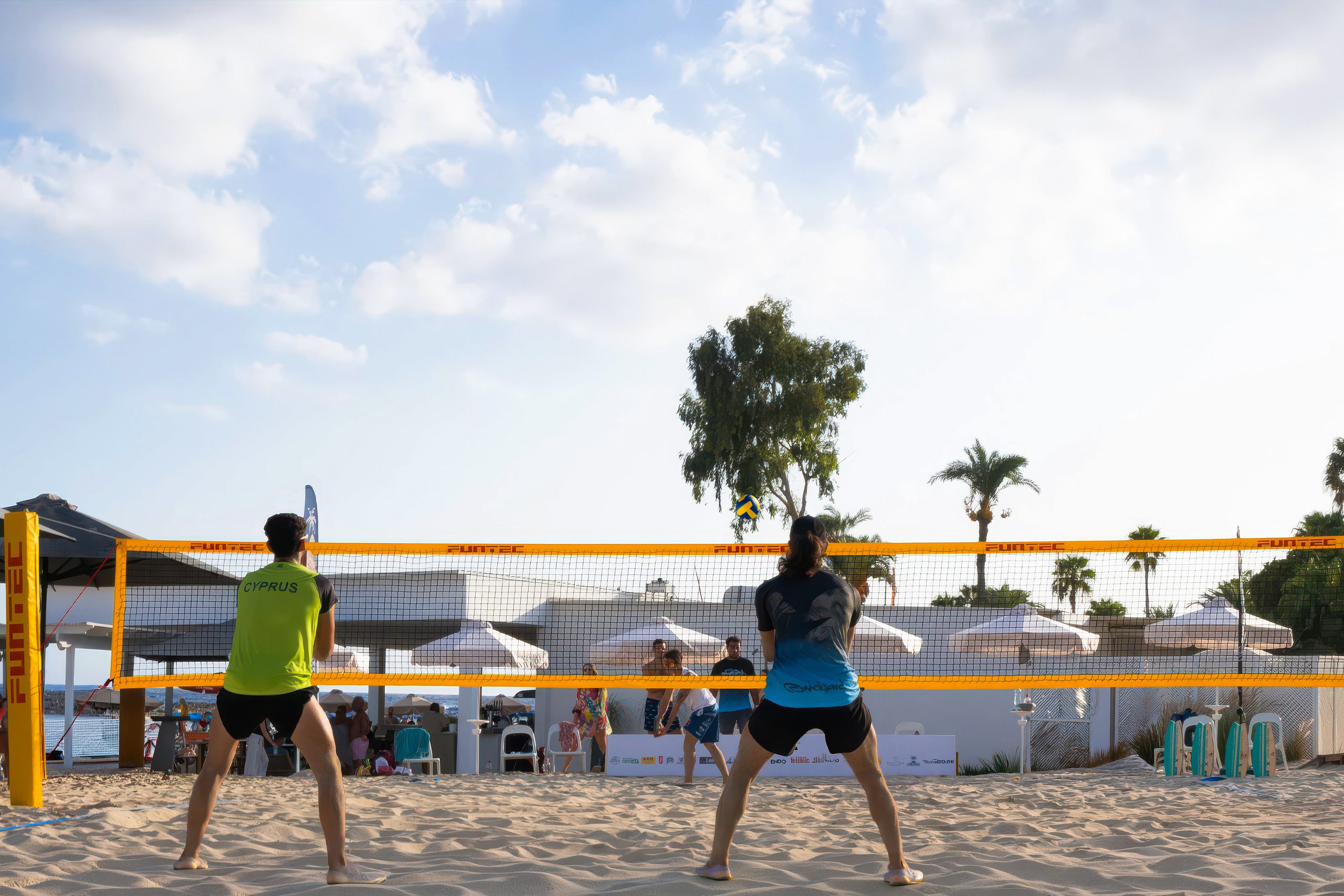
Two public beach volleyball courts operate near the main beach area, available for anyone to use without reservation during daytime hours. The courts host informal games and occasionally organized tournaments.
Winter at Nissi Beach transforms the experience completely. From November through March, daily visitor numbers drop from summer peaks of 12,000 to approximately 350.
Most beach bars close, though essential restaurants and facilities remain operational with reduced hours. Water temperatures around 18 degrees Celsius in December and January are considerably cooler than summer but still swimmable.
The dramatic decrease in crowds means visitors can enjoy the beach in near solitude, with underwater visibility nearly doubling compared to summer months.
Available Activities and Facilities
Comprehensive water sports operations function from the islet and main beach area. Available activities include jet skiing, parasailing, banana boat rides, water skiing, wakeboarding, pedal boats, kayaking, and various inflatable rides.
A diving center operates from the beach center, offering snorkeling trips and scuba diving excursions to nearby sites. Equipment rental is available directly on the beach for most activities.
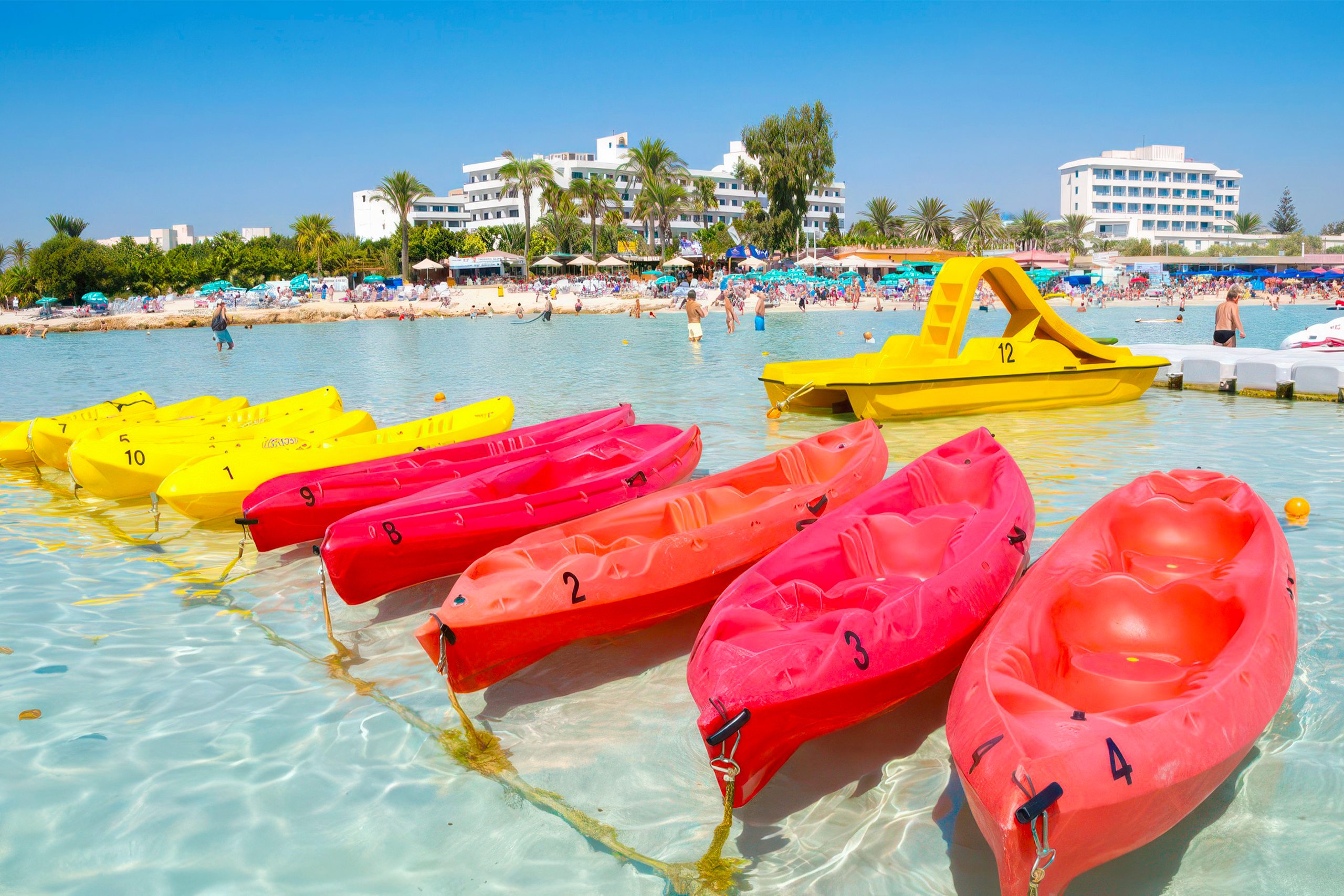
Multiple restaurants and beach bars line the waterfront. The Nissi Taverna overlooks the bay, serving fresh fish and traditional Cypriot dishes in a casual seaside setting.
Other establishments include Isola Beach Bar, Acropolis Restaurant, Luma Bar, and Puma Snack Bar. These venues serve food and drinks throughout the day, with some remaining open into evening hours during summer.
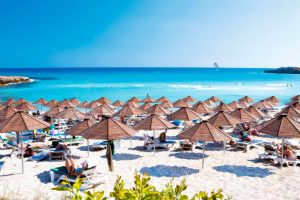
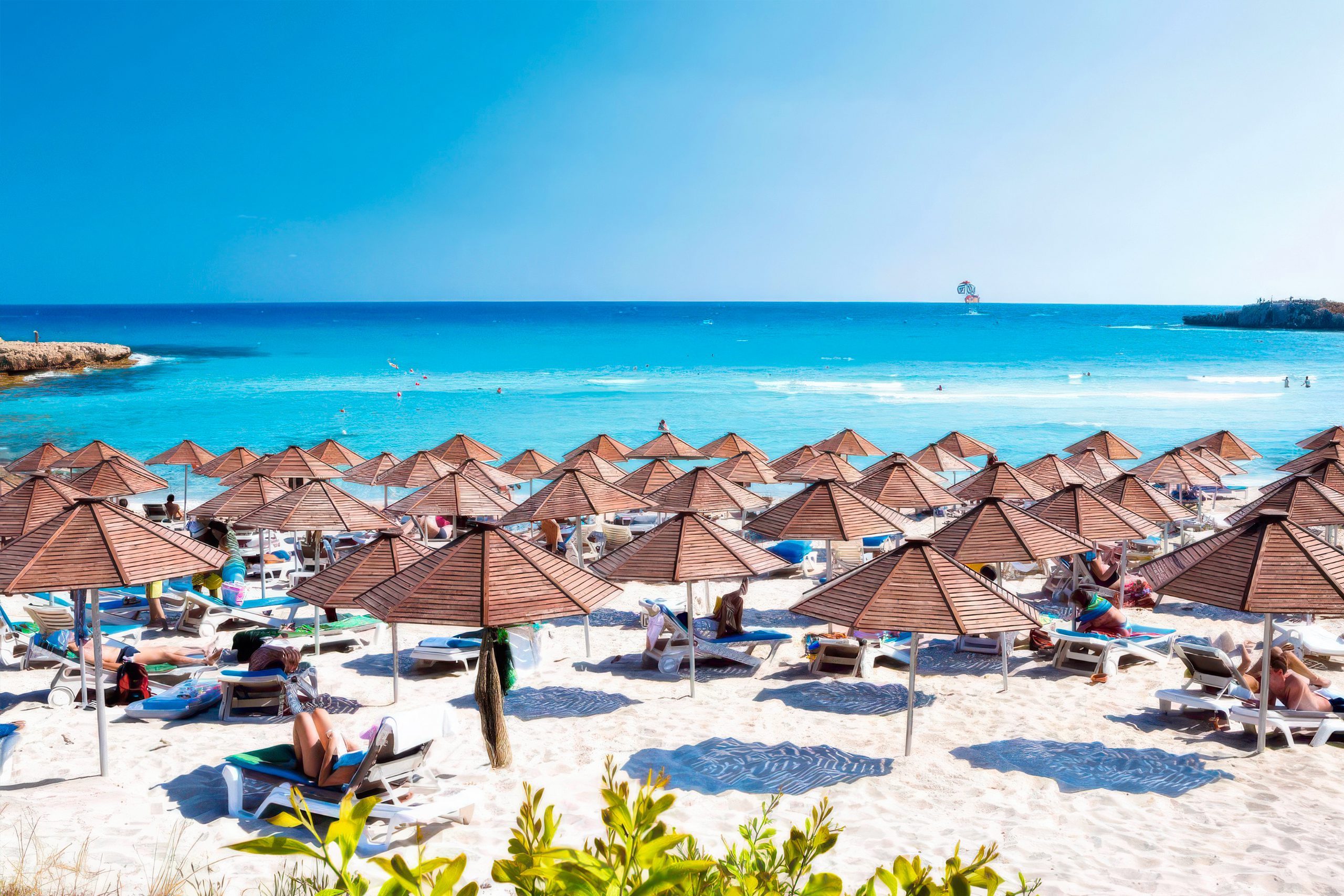
Sunbed and umbrella rental operates across the entire beach. The standard rate is approximately €7.50 for a set of two sunbeds and one umbrella. Reserved areas near certain hotels require separate payment.
Free areas of sand remain available for visitors who bring their own equipment or prefer to use beach towels.
Facilities include public toilets, showers, and changing rooms maintained throughout the operating season. These amenities are free to use.
A small church stands at the northern end of the beach. Most shops selling souvenirs, beachwear, and beach accessories are located along Nissi Avenue rather than directly on the beach.
Two large car parks serve the beach. The main parking area sits approximately 500 meters from the beach entrance and typically remains free.
An overflow lot located about 200 meters from the entrance charges hourly fees, usually around €3 per hour.
During peak summer months, both lots often fill by late morning on weekends and holidays.
Nissi Beach Role in Contemporary Cyprus Tourism
Nissi Beach functions as the flagship beach destination for Ayia Napa and one of the most recognized beaches in Cyprus internationally.
The combination of natural beauty, comprehensive facilities, and active social atmosphere makes it a primary attraction drawing visitors to the eastern coast.
Many hotels market themselves based on proximity to Nissi Beach, and the area contributes significantly to the local economy through beach services, restaurants, and related tourism activities.
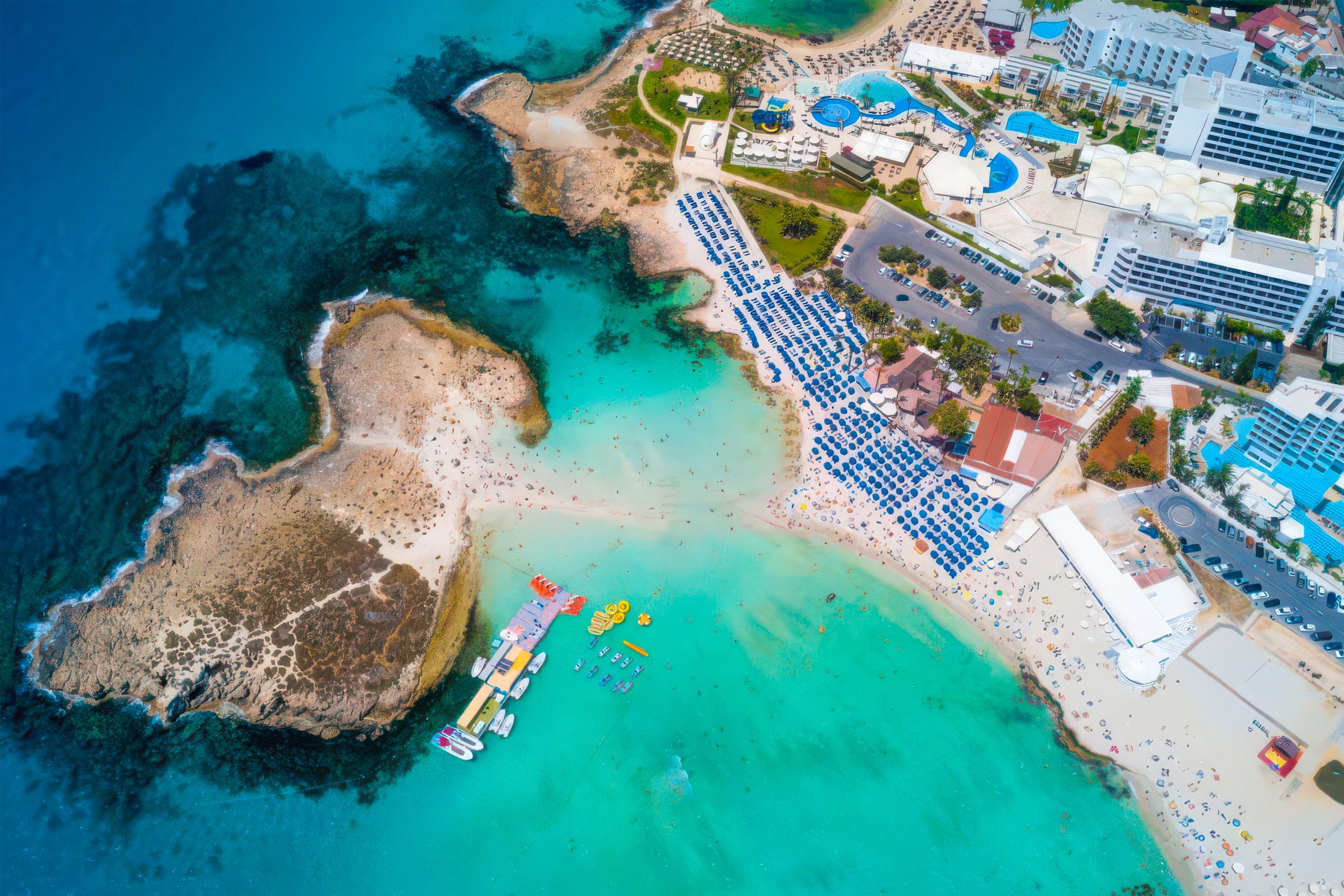
For Cypriot residents, Nissi Beach serves as a popular weekend destination, particularly for families from Nicosia and other inland cities who travel to the coast for day trips.
The beach maintains strong appeal across different age groups, from families with young children using the shallow safe waters to young adults participating in the party culture and water sports.
Why This Beach Defines Cyprus Tourism
Nissi Beach demonstrates how natural coastal features combine with modern tourism infrastructure to create internationally recognized destinations.
The beach’s success comes from the fortunate combination of geological advantages, the protective islet creating calm conditions, fine sand, clear water, and strategic location near Ayia Napa.
These natural elements would have value regardless of development, but the addition of comprehensive facilities, activities, and services transformed the bay into a complete tourism product.
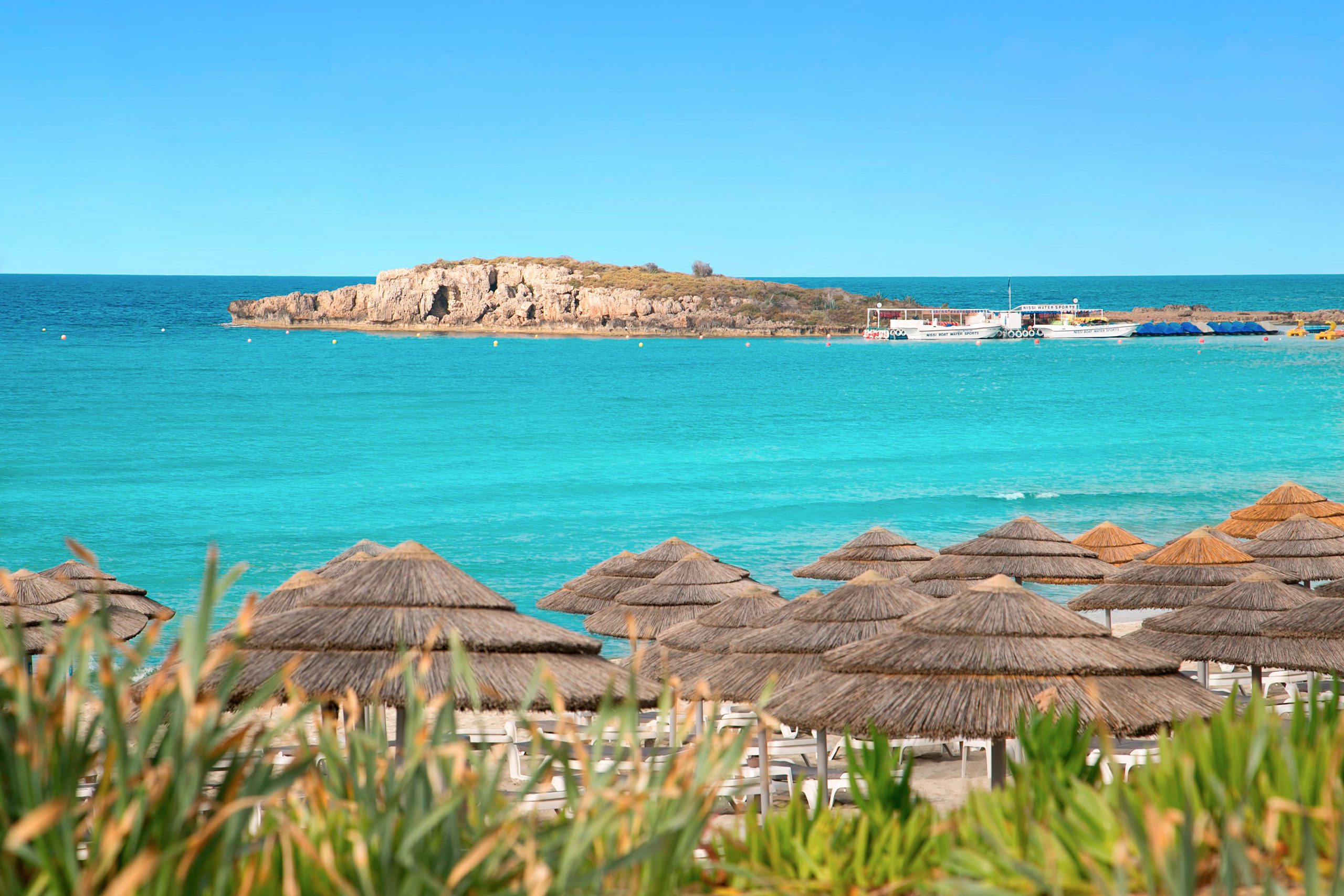
For Cyprus’s tourism industry, Nissi Beach serves as a cornerstone attraction that drives significant visitor numbers to the eastern coast.
The beach appears prominently in tourism marketing materials and functions as a recognizable symbol of Cyprus beach tourism internationally.
This visibility creates economic benefits extending beyond the beach itself to hotels, restaurants, and services throughout the Ayia Napa region.