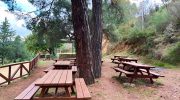
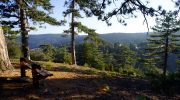
The Millomeris Waterfall Trail sits in the Kryos Potamos river bed within the Limassol district. It represents one of the highest natural falls in Cyprus at an elevation of 1,050 meters above sea level. This specific route bypasses the direct road access to provide a more immersive forest experience. Every segment of the path highlights the unique geology of the Troodos igneous complex.
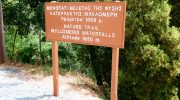
The area maintains a significantly lower temperature than the coastal plains during the summer. Moisture from the waterfall creates a microclimate that supports dense vegetation. Local history suggests the name Millomeris stems from the Greek words for “moist” and “place.” This environment serves as a critical habitat for endemic species in the Troodos National Forest Park.
Hikers find the trailhead near the church of Faneromeni in Pano Platres. The path is well-marked and maintained by the Department of Forests. It offers a direct connection between the village center and the base of the falls. This walk provides a practical alternative to the tourist-heavy vehicle access points located further south.
Trail Overview
- Location: Pano Platres, Troodos Mountains, Cyprus
- Distance: 1.4 miles (2.2 km)
- Route Type: Out & Back
- Difficulty: Moderate
- Elevation Gain: 130 feet (40 meters)
- Duration: 1 hour
- Best Time to Visit: March to June
- Terrain: Dirt path, stone steps, and wooden bridges
Geological Profile of the Kryos Potamos Path
The descent starts with a gradient that requires sturdy footwear for stability on loose soil. Gabbro and diabase rocks line the path and reflect the volcanic origin of the range. The Kryos Potamos river follows the trail and maintains a perennial flow even in dry months.
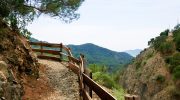
This water source is vital for the local ecosystem and the village water supply. The trail crosses several points where the bedrock is exposed and smooth. Careful foot placement prevents slips on these natural stone surfaces.
Endemic Flora and Forest Composition
The canopy consists mainly of Platanus orientalis and Alnus orientalis which thrive near the water. These trees provide a high percentage of shade that regulates the trail temperature. One also finds the golden oak, Quercus alnifolia, which is a shrub unique to Cyprus.
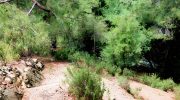
This plant features leathery leaves with a yellow underside to conserve water. Rare ferns and mosses occupy the damp rock faces near the river bank. These botanical details offer a look into the high-altitude biodiversity of the Mediterranean.
Structural Specs of the Millomeris Waterfall
The waterfall itself drops 15 meters over a vertical rock face into a shallow plunge pool. This pool has a base of smooth stones and clear mountain water. The force of the water depends on the seasonal snowmelt from the higher peaks of Mount Olympus.
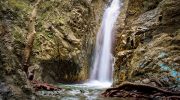
During spring, the volume of the fall increases significantly and creates a dense mist. A wooden bridge near the base provides a safe vantage point for structural observations. The surrounding cliffs consist of hard igneous rock that resists rapid erosion.
Safety and Practical Site Management
The path includes man-made stone steps to manage the steeper sections of the valley. These structures prevent soil erosion and provide a clear route for visitors. It is essential to remain on the designated track to protect the fragile undergrowth.
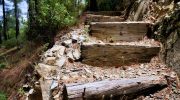
The Department of Forests installs signs that detail the distance and direction at key junctions. No public facilities or water stations exist along the actual trail. Hikers must carry adequate supplies from the village before the start.
Seasonal Accessibility and Wildlife Activity
The trail remains open year-round but conditions vary with the weather. Winter snow can make the steps icy and hazardous for inexperienced walkers. Spring offers the best visual experience as the local wildflowers bloom in the crevices.
Fauna in the area includes the Cyprus wheatear and various mountain lizards. These animals are often active near the rock walls during the early morning hours. The lack of human noise in the deep valley allows for better wildlife sightings.