Cyprus has developed into a recognized center for environmental research in the Eastern Mediterranean and Middle East region. Multiple research institutions conduct studies on climate change, air and water quality, biodiversity, energy systems, and agricultural sustainability.
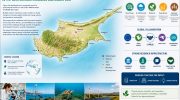
These organizations collaborate with international partners from Europe, North America, and the Middle East to address environmental challenges through scientific investigation, technological innovation, and policy development.
The research infrastructure spans government agencies, independent research centers, universities, and private sector partners who share data, resources, and expertise.
Building the Research Foundation
The Cyprus Institute stands as the primary driver of environmental research since its establishment in 2005 under the Cyprus Research and Educational Foundation. Planning occurred between 2000 and 2004, led by international scholars including former U.S. Secretary of Energy Ernest Moniz, former CERN Director-General Herwig Schopper, and founding president Costas N. Papanicolas. A 2002 convocation of world leaders and academics chaired by Hubert Curien endorsed the vision. Operations formally commenced in 2007 with the launch of the first research center.
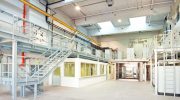
The Energy, Environment and Water Research Center was founded in 2007 in partnership with the Massachusetts Institute of Technology. It focused initially on the energy, environment, and water nexus for the Eastern Mediterranean Middle East region. MIT developed the initial scoping report that articulated the research agenda. The center has since adapted to address the Water-Energy-Food-Ecosystems nexus as climate challenges have evolved.
Cyprus secured major European Union funding through the Horizon 2020 program’s Teaming for Excellence initiative. Six Centers of Excellence received up to 15 million euros each from the EU, with Cyprus matching the funding for each center. This investment transformed research capacity across multiple environmental disciplines.
Major Research Institutions and Programs
The Climate and Atmosphere Research Center was established in January 2020 through EU Horizon 2020 funding and Cyprus government resources. It acts as a knowledge hub for environmental and climate change research, combining experimental research with data-informed computer modeling of the regional atmospheric environment and climate impacts. The center leads regional efforts in climate observation and policy development for the Eastern Mediterranean and Middle East.

In 2025, researchers from the Computation-based Science and Technology Research Center, operating in partnership with the University of Illinois, published the first global maps of ultrafine air pollution using machine learning models. This center manages the region’s Tier-1 supercomputing facility, which enables climate modeling, environmental simulations, and data-intensive computational research.
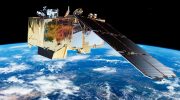
The ERATOSTHENES Centre of Excellence focuses on earth surveillance and space-based monitoring of the environment. It develops applications that utilize Copernicus Atmosphere Monitoring Service products tailored to Cyprus’s specific geographical and climatic conditions. The center addresses local air quality challenges, including particulate matter that often exceeds EU limits and ground-level ozone problems during summer months.
Fascinating Research Achievements
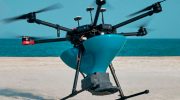
The Autonomous Flying Platforms for Atmospheric and Earth Surface Observations project deployed four unmanned aerial vehicles equipped with specialized instruments. These platforms can fly at extremely low altitudes in stormy weather and operate autonomously along predefined transects for hours. They measure air chemistry, aerosol characteristics, vegetation changes, water reservoir contamination, and forest fire conditions. A dedicated mobile mission control unit enables operations almost anywhere on the island.
Cyprus experiences approximately 50 days per year when desert dust transport from North Africa and the Middle East significantly affects particulate matter levels. Research monitoring documents these events and tracks their health impacts on the population.

The Cyprus Centre for Environmental Research and Education on the Akrotiri Peninsula became the first independent environmental center in Cyprus. It promotes environmental education, research, and information through interactive systems and experiential learning programs.
International Partnerships and Networks
The Cyprus Institute maintains strategic partnerships with world-class institutions. Research centers operate in collaboration with MIT, the Centre de recherche et de restauration des musées de France, and the University of Illinois. These partnerships ensure development alongside world leaders in respective fields.

Cyprus participates in the European Environment Agency and designated 69 Natura 2000 sites covering 37.4 percent of land area under EU conservation regulations. Marine research implements monitoring programs under EU directives for species such as Mediterranean monk seals and marine turtles, plus habitats including Posidonia meadows.
The LIFE SIRIUS project aims to improve governance in urban air quality through collaboration with multiple EU partners. The Edu4ClimAte initiative engages advanced partners from France, Austria, Germany, and Finland to strengthen scientific excellence of higher education institutions from Greece and Cyprus. The project establishes a regional hub of knowledge in air pollution and climate change research.
Current Research Priorities
Air quality monitoring represents a major focus. The Department of Labour Inspection operates nine monitoring stations measuring ozone, nitrogen dioxide, sulfur dioxide, carbon monoxide, particulate matter, and meteorological parameters, plus four mini stations. Real-time data is made available to the public through dedicated websites. Cyprus faces distinct air pollution challenges from local emissions, cross-border influences, and natural desert dust transport.
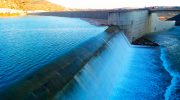
Water resource management addresses the semi-arid Mediterranean climate. Research develops novel monitoring techniques, numerical models of hydrologic processes, and assessment of sustainable water and land management innovations. The Department works on climate change adaptation and combating desertification through transdisciplinary approaches with stakeholders across the Mediterranean region.
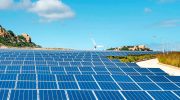
Energy research evaluates new renewable energy technologies, energy policy and technoeconomics, and energy efficiency in the built environment. Projects assess technologies with potential to mitigate air pollution and support the green transition of Cyprus and the wider region.
Education and Training Programs
The Cyprus Institute Graduate School offers accredited postgraduate programs integrated into research centers. For 2025 to 2026, specialized MSc and PhD tracks include Environmental Sciences, Energy Resources, Digital Cultural Heritage, and High-Performance Computing and Machine Learning. Students work alongside experts on complex scientific challenges through strong international partnerships that provide joint or dual degrees and access to global research networks.

Seminars, workshops, and professional development courses enhance both academic and transferable skills. The multicultural setting fosters cross-cultural collaboration essential for future leaders in academia, industry, and public service. Research-driven programs engage students in hands-on involvement with cutting-edge projects and access to advanced infrastructure.
Experiencing Environmental Research
Research facilities welcome collaborations with national and international scientists. The PROTEAS facility at the Energy, Environment and Water Research Center provides strategic research infrastructure serving research communities across Cyprus and the region. Advanced laboratories enable specialized studies in atmospheric science, water quality, and energy systems.
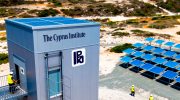
Public engagement occurs through educational programs at environmental centers, workshops, conferences, and symposiums. The Cyprus Centre for Environmental Research and Education provides programs for visitors to the Akrotiri Peninsula, with emphasis on young students interested in learning about ecological value of natural ecosystems.
Data platforms make research findings accessible to policymakers, businesses, and citizens. Real-time air quality information supports public health decisions. Climate models inform resilience strategies for commercial operations. Water quality data guides agricultural practices and resource management.
The Value of Scientific Collaboration for Cyprus
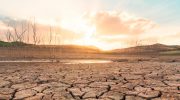
Environmental research addresses critical challenges facing the island and the Eastern Mediterranean region. Climate change threatens water resources in a semi-arid environment where precipitation has decreased 16 percent over the past century. Scientific understanding enables adaptation strategies that protect agriculture, human health, and natural ecosystems.
International partnerships position Cyprus as a bridge between Europe and the Middle East for research collaboration. The strategic location enables regional cooperation that benefits countries facing similar environmental pressures. Knowledge generated in Cyprus informs policy decisions across the broader Mediterranean basin.
Research excellence supports the transition to a knowledge-based economy. Scientific institutions attract top international talent, generate innovation, and create high-skilled employment. Cutting-edge infrastructure like supercomputing facilities enables research that would be impossible in isolation.
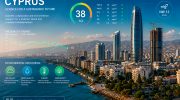
Environmental monitoring and forecasting protect public health by providing early warning of air pollution episodes, water quality problems, and climate extremes. Evidence-based recommendations guide government policy on energy, climate action, and resource management. Cyprus demonstrates how small nations can achieve scientific leadership through strategic investments, international collaboration, and commitment to addressing environmental challenges that extend far beyond national borders.