Explore Cyprus with Our Interactive Map

Explore our top stories and discover ideas worth your time.

Wildflowers and Vineyards of Cyprus

Wildflowers and Vineyards of Cyprus

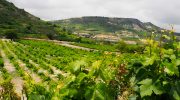
Cyprus is located at the crossroads of the three major flora zones of Europe, Asia, and Africa. This strategic position has produced remarkable botanical diversity, with approximately 1,950 species of flowering plants recorded on the island. About 8 percent of the indigenous plants, totaling 139 endemic species and subspecies, are found nowhere else on Earth. The island's great variety of habitats, attributed to varied microclimate and geology ranging from coastal sand dunes to mountains reaching 1,952 meters, creates the perfect conditions for this exceptional flora. Meanwhile, the wine industry thrives on terraced slopes where vines have grown for thousands of years, producing varieties like Commandaria that trace their origins back over 800 years. When Wildflowers Transform the Landscape The first orchids bloom in January in Cyprus, and by mid-February, the countryside is already alive with fresh green meadows and almond trees in bloom. Late February to the end of April are the optimum months for seeing Cyprus in full bloom. The flora is very much dependent on how much rain has fallen the previous winter, as the heat of the summer months from April onwards brings an end to wildflowers. You will find hardly any wild flora in May and June. Various woodland species emerge during winter months such as cyclamen, narcissi, crocus, and muscari. The endemic Cyclamen cyprium, unique…

Read more

Famagusta Salt Lake Formations & Flamingos

Famagusta Salt Lake Formations & Flamingos

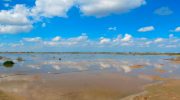
The Famagusta district hosts several seasonal salt lakes and wetlands that transform dramatically between summer and winter. Paralimni Lake, a natural seasonal wetland in the Famagusta district, is one of the few remaining wetlands of its kind in Cyprus. This shallow water body covers approximately 350 hectares and represents the largest natural inland lake on the island. North of the city of Famagusta Glapsides Salt Lake, a smaller coastal salt lake favored by migrating birds. These wetlands share common geological origins and ecological functions despite their different locations within the district. Ancient Seas and Modern Salt Lakes The formation of Cyprus's salt lakes connects to both recent geological history and ancient Mediterranean events. Around 5.96 to 5.33 million years ago, the Mediterranean Sea underwent the Messinian Salinity Crisis when the Strait of Gibraltar closed, cutting off water from the Atlantic. The entire Mediterranean basin experienced extreme evaporation, depositing thick layers of salt and gypsum across the seafloor. When the strait reopened, seawater flooded back and covered these deposits. Cyprus's current salt lakes formed much more recently through different processes. Paralimni Lake is a slightly brackish, shallow temporary water body with an average depth of 15 centimeters during the wet period. The lake occupies a natural depression that collects rainwater runoff during winter months. In 1893 due to excess humidity channels…

Read more
Ancient Amathus, Cyprus

Ancient Amathus, Cyprus

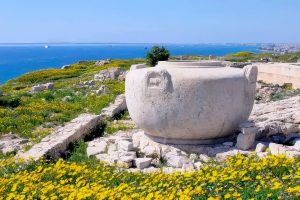
Amathus is one of the oldest royal cities on the island of Cyprus. Situated on the southern coast, just 11 kilometers east of modern Limassol, it sits among sandy hills and coastal cliffs overlooking the Mediterranean Sea. The city dates back to around 1100 BC, making it over three thousand years old. For centuries, it was one of the most powerful and wealthy kingdoms on the island. Today, its ruins tell a story of trade, religion, myth, and survival that stretches across dozens of generations. Historical Background The first people to settle in Amathus were the Eteocypriots, an indigenous group who lived on Cyprus before both the Greeks and the Phoenicians arrived. They chose a rocky coastal hill for a reason: it offered a natural harbor below and a defensible position above. The earliest signs of human presence at the site date to around 1100 BC, which places its founding right at the start of the Iron Age in the Eastern Mediterranean. The name itself likely comes from the Greek word "amathos," which simply means "sand," a fitting reference to the dunes and sandy hills surrounding the city. Legend, however, tells a different story. According to myth, the city was founded by a king called Cinyras, who named it after his mother, Amathous. Other myths connect the place to Adonis,…

Read more