Cypriot folk dance and song are not museum traditions but a living social system that still organises how people gather, celebrate, and remember. Shaped by weddings, saint-day festivals, and village life, performance in Cyprus blends improvisation, audience participation, and distinctive instruments to create belonging in real time.
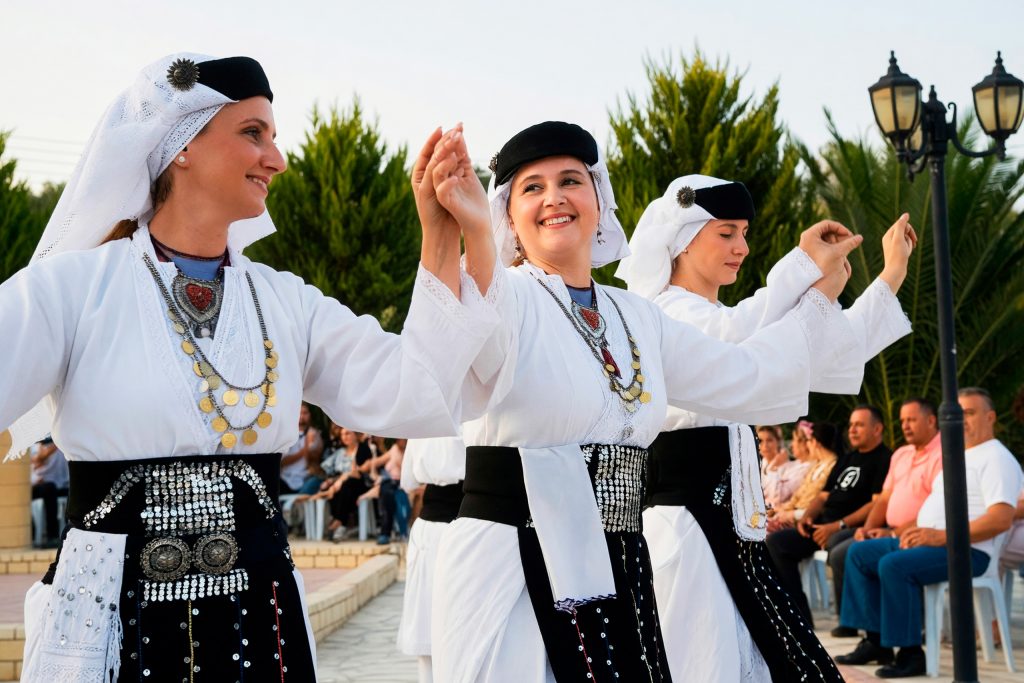
This article explains the main dance forms, vocal traditions like tsiattista, the instruments and costumes that carry regional identity, and why shared rhythms persist across communities despite modern change.
- Culture You Join, Not Watch
- Steps Learned in Real Life
- Sickles, Knives, Glass Balance
- Voices that carry memory
- Violin Leads, Laouto Holds Time
- Costumes as moving history
- Performance tied to the calendar of life
- Shared heritage across the division
- Tradition in motion, not in storage
- Why Performance Stays Flexible
Culture You Join, Not Watch
Traditional Cypriot dance developed as a social language rather than a formal spectacle. It emerged from weddings, religious festivals, seasonal fairs, and informal gatherings, where music and movement flowed naturally from shared experience. Unlike many European folk traditions that later became rigidly choreographed, Cypriot dance retained space for improvisation and personal expression.
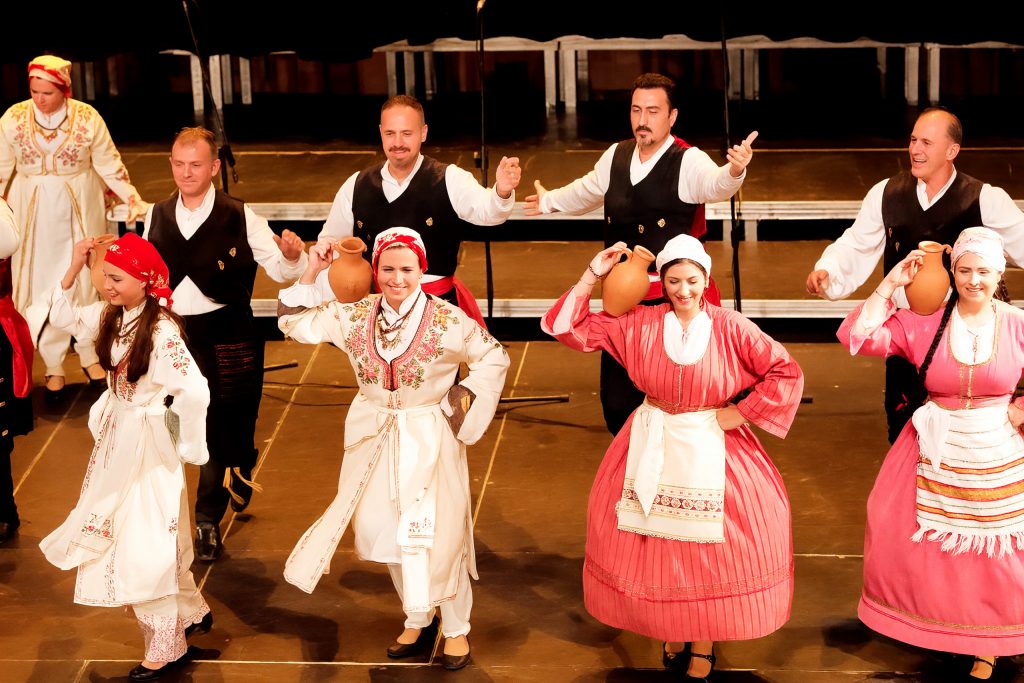
Dancers are not expected to disappear into uniformity. Individual temperament matters. Subtle variations in timing, posture, and intensity are encouraged, especially from experienced performers. The dance becomes a conversation between the lead dancer, the musicians, and the watching crowd.
Steps Learned in Real Life
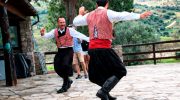
Many Cypriot dances are built around face-to-face interaction. The antikristos, often linked with the karsilamas tradition, is performed by pairs who mirror and respond to each other’s movements. The emphasis is not on competition, but on mutual recognition and balance.
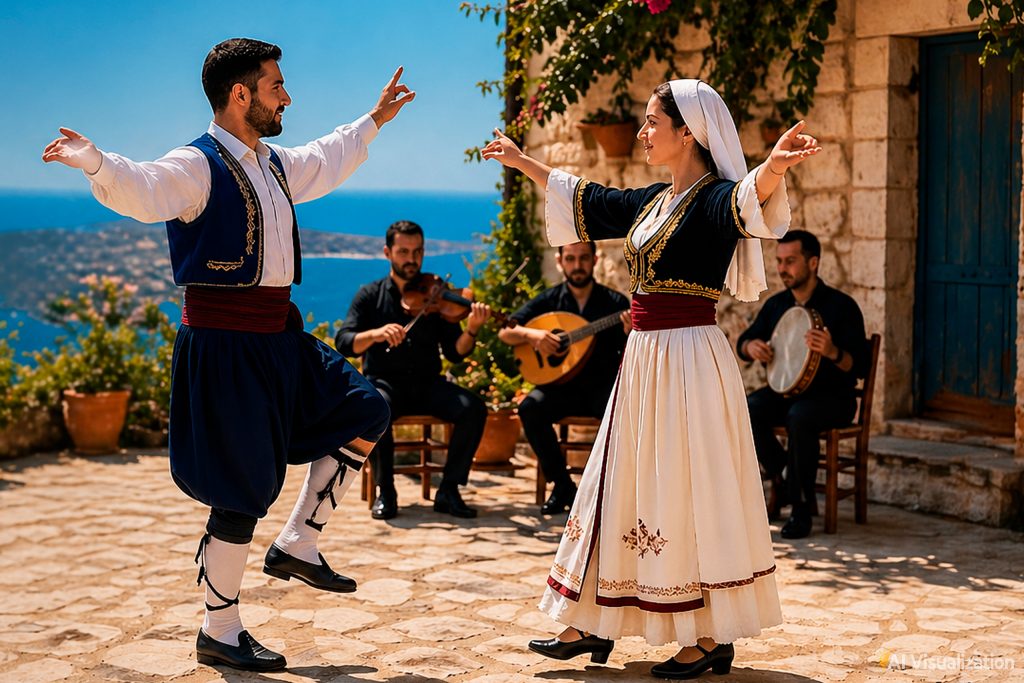
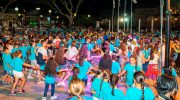
Other dances expand outward into collective form. Chain and circle dances, such as the syrtos, draw participants together through repeated steps that emphasise unity rather than individual display. These dances often grow organically as more people join, turning personal movement into a shared rhythm.
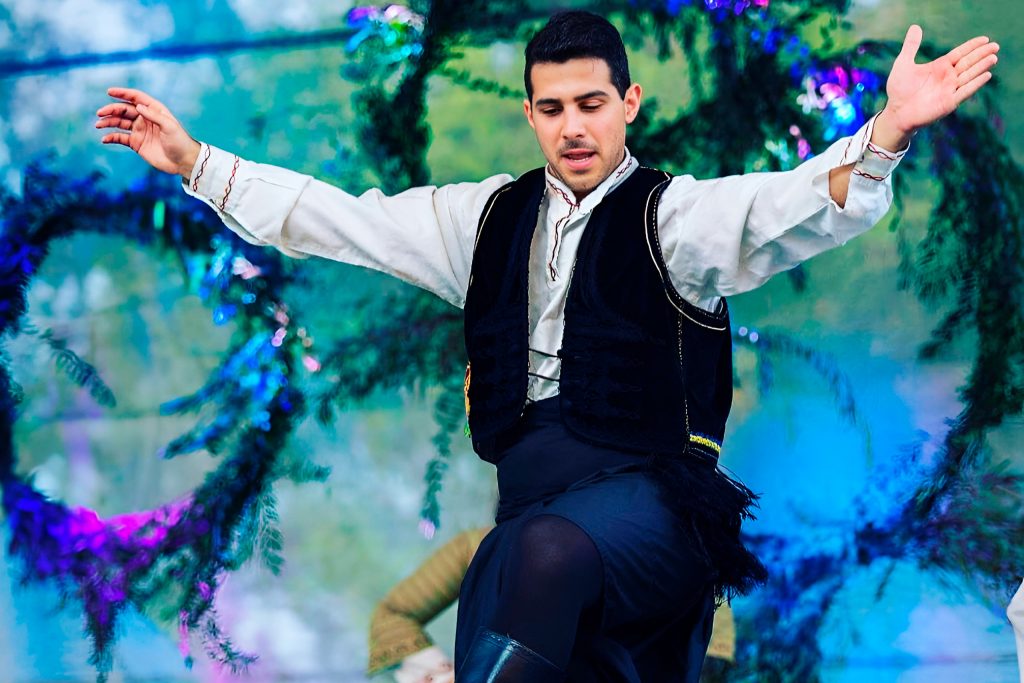
In contrast, solo dances such as the zeibekiko shift inward. Heavy, grounded steps and controlled movement allow the dancer to express emotion privately, even while performing in public. Together, these styles reveal how Cypriot dance moves easily between social bonding and personal expression.
Sickles, Knives, Glass Balance
Some of the most striking Cypriot dances involve tools and household items. These performances highlight dexterity, balance, and control, while also reflecting the realities of rural life.
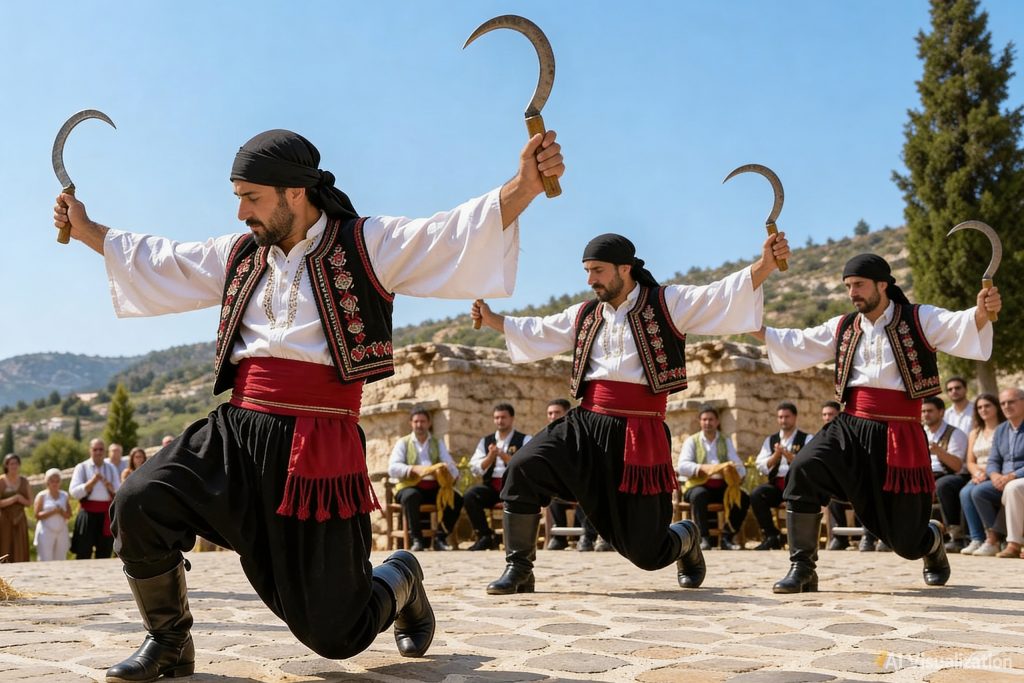
A sickle dance may celebrate harvest and agricultural continuity. Knife dances demonstrate precision and confidence. Glass-balancing dances showcase extraordinary control and grace, particularly during weddings. These performances transform ordinary objects into symbols of skill, prosperity, and communal pride.
Among Turkish Cypriot traditions, the pot dance remains especially meaningful. An earthenware pot filled with coins and sweets is danced around before being broken, allowing children to gather its contents. The act blends movement with ritual blessing, reinforcing the idea that dance is not entertainment alone, but a carrier of social meaning.
Voices that carry memory
Music in Cyprus extends beyond melody into memory, language, and shared storytelling. Alongside instrumental performance, vocal traditions preserve forms of expression that rely on participation rather than formal training. One of the most distinctive of these is fones, a style of poetic singing that supports oral verse and improvised dialogue.
This tradition reaches its most recognisable form through tsiattista, a verbal exchange where poet-singers trade rhyming couplets in front of an engaged audience. These performances often unfold during weddings, festivals, and village celebrations, where humour, wit, and cultural knowledge are tested in real time. The singers draw not only on linguistic skill, but on memory, local history, and social awareness.
The audience plays an active role. Laughter, applause, and shouted reactions shape the rhythm and direction of each exchange. In this way, Tsiattista becomes a collective creation rather than a fixed performance, preserving dialect, humour, and cultural references that rarely survive in written form.
Violin Leads, Laouto Holds Time
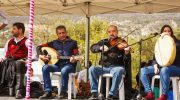
The sound of Cypriot folk music is shaped by a small but distinctive group of instruments whose roles are clearly defined. The violin leads most ensembles, guiding both melody and tempo with expressive variation. Its voice carries across open spaces, making it ideal for outdoor gatherings and village squares.
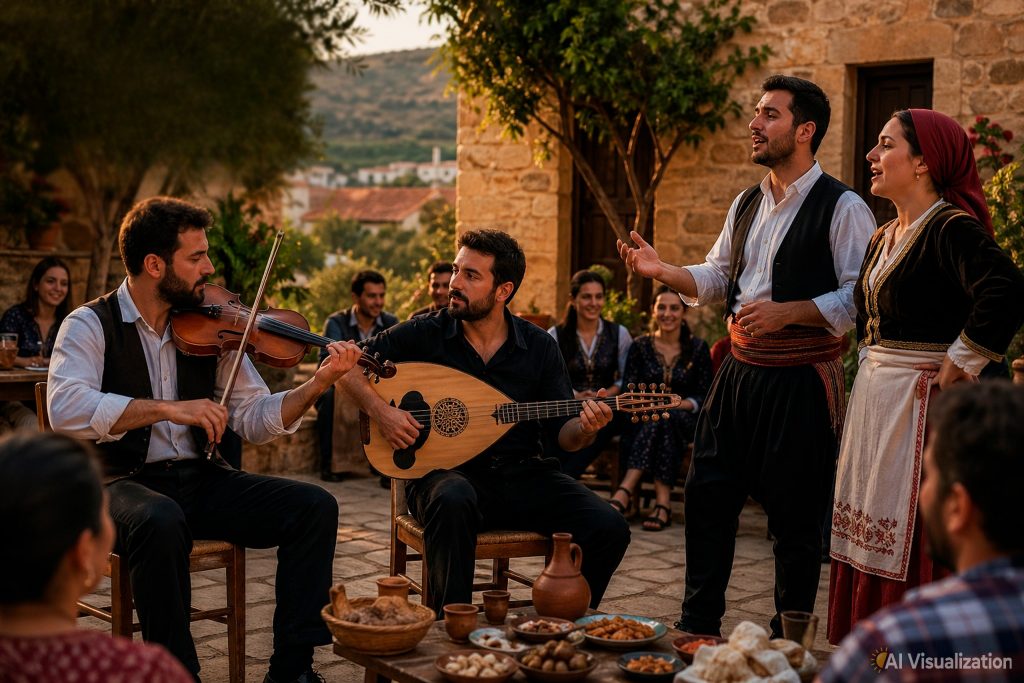
Supporting the violin is the laouto, a long-necked lute that provides rhythmic structure and harmonic depth. Its steady presence anchors the music, allowing dancers to follow and respond with confidence. In rural settings, wind instruments such as the pithkiavli once accompanied shepherds during long hours in the fields, blending music into the routines of agricultural life.
Percussion instruments, including frame drums and everyday objects adapted for rhythm, add texture and energy, especially during festive occasions. Together, these sounds create a musical landscape that reflects the island’s geography, labour patterns, and communal habits.
Costumes as moving history
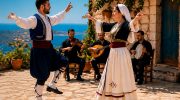
Traditional dress plays a crucial role in performance, turning dancers into living expressions of regional history. Men’s attire is often defined by the vraka, a heavily pleated black garment associated with rural endurance and practical movement. Its construction required specialised techniques, and the way it was worn communicated social identity.
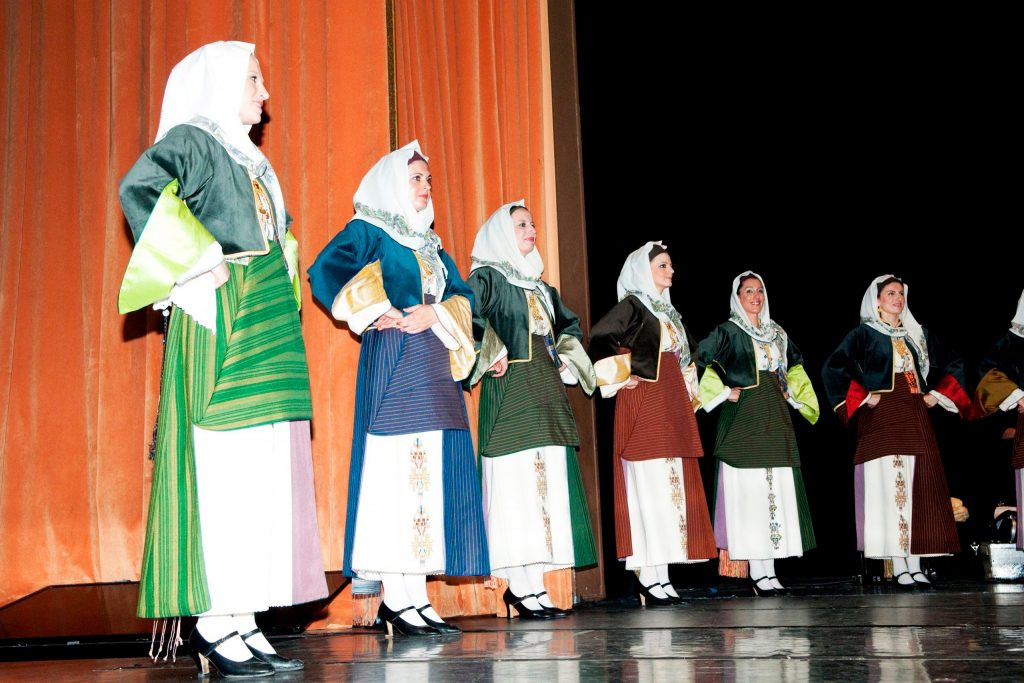
Women’s costumes varied significantly across regions, reflecting local weaving traditions and household craftsmanship. Garments such as the sayia and sarka carried information about marital status, family skill, and regional identity. Embroidery and lacework demanded patience and precision, making clothing a visible record of labour and care.
When these garments appear in dance, they do more than replicate the past. They animate it, allowing history to move through the present rather than remain static.
Performance tied to the calendar of life
Traditional music and dance in Cyprus follow the rhythm of both the agricultural year and the human life cycle. Religious festivals transform village squares into communal stages, where Easter celebrations, saints’ days, and harvest festivals bring movement and sound into shared public space.
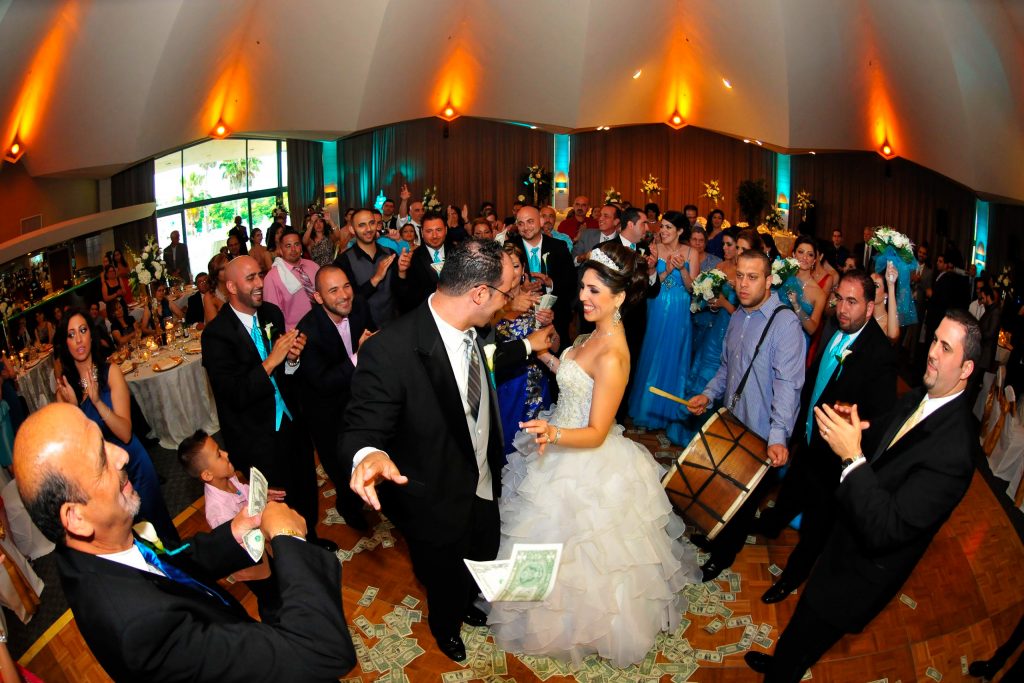
Weddings remain the most elaborate setting for performance. Ritual dances accompany key moments such as bed-making, gift exchanges, and communal offerings, reinforcing the collective responsibility of the community toward the new household. Each sequence of movement carries meaning shaped by repetition across generations.
Through these events, performance becomes a way of marking time, binding personal milestones to collective memory.
Shared heritage across the division
Despite political separation, the Greek Cypriot and Turkish Cypriot communities continue to share many musical structures, rhythms, and dance forms. Melodies cross linguistic boundaries, and performance styles reveal a continuity that predates modern divisions.
Bicommunal choirs and dance groups actively work to sustain this shared heritage, performing together at festivals and cultural events. These collaborations show how traditional arts can foster dialogue and recognition, even when other forms of communication struggle.
Tradition in motion, not in storage
Cypriot folk performance survives because it remains flexible. Cultural associations bring children and elders together. Schools integrate traditional dance into everyday education. Researchers document movement using modern tools without stripping it of context or spontaneity.
Younger generations experiment with staging, blend traditional sounds with contemporary influences, and carry performance into urban and digital spaces. Yet the foundation remains unchanged. Participation, shared rhythm, and communal presence continue to define the tradition.
Why Performance Stays Flexible
Folk dance and music endure in Cyprus because they fulfil real social needs. They create belonging, transmit memory, and offer a language for celebration, grief, and continuity. They remind people that culture is not something to observe passively, but something to practice together.
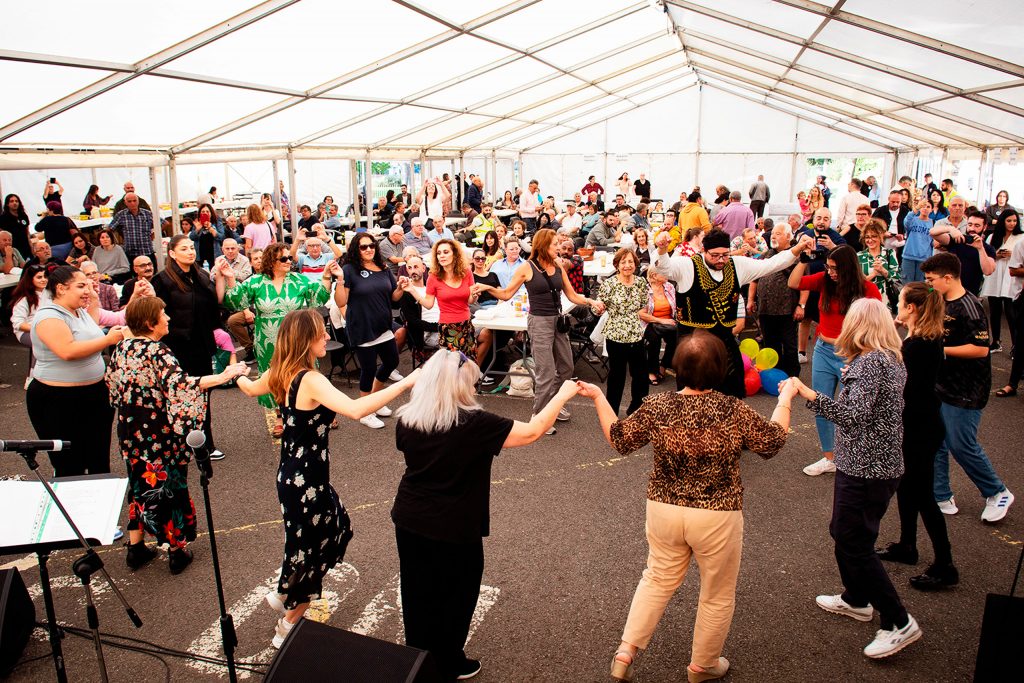
In village squares, wedding halls, festival stages, and informal gatherings, Cyprus continues to perform itself. Each dance becomes a shared story, and each song another way of keeping the island’s living identity in motion.