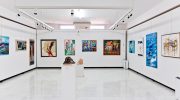
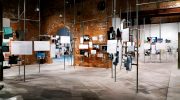
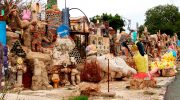
The State Gallery of Contemporary Art operates from two main locations in Nicosia as Cyprus’s premier institution for modern and contemporary art. The original building sits at the corner of Stasinou Avenue and Kritis Street in a beautifully restored colonial-style structure.
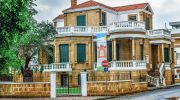
The second branch, known as SPEL, opened to the public for the first time on January 31, 2019, following extensive renovations of a modernist building on Ammochostou Street near the historic Famagusta Gate.
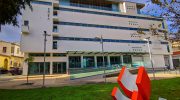
Both galleries house paintings and sculptures by 20th and 21st century Cypriot artists. The institution falls under the management of the Cultural Services of the Ministry of Education and Culture and is expected to form part of the planned Cyprus Museum of Contemporary Art, known as MOCA Cyprus. The gallery maintains archives of artists’ biographical and bibliographical information, a slide archive, and a photo archive.
Historical Background
The SPEL building hosts contemporary artworks from the State Collection starting from the 1950s onwards, including works that employ non-conventional and new media. The collection documents the dramatic transformation of Cypriot art during the island’s transition from British colonial rule to independence in 1960.
The 1950s and 1960s marked a critical period when Cypriot artists sought to align with international art movements while developing their own distinctive voice. Artists of this generation experimented with abstraction, incorporated traditional Cypriot motifs into modern contexts, and challenged established artistic hierarchies.
The collection includes works ranging from figurative paintings to abstract compositions, sculptures, mixed media pieces, and experimental installations. The gallery preserves evidence of how Cyprus participated in broader Mediterranean and European artistic dialogues during the second half of the 20th century.
Christoforos Savva and His Legacy
Christoforos Savva was born on June 8, 1924 in Marathovounos village on the Mesaoria plain. After serving in the Cyprus Regiment of the British Army from 1943 to 1946, he moved to London in 1947 and attended St. Martin’s School of Art, Central School of Art, and then Heatherley’s School of Fine Art from 1948 to 1954.
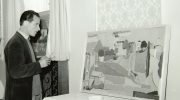
In June 1956, he traveled to Paris where he studied at the Académie Montparnasse under André Lhote. In May 1960, Christoforos Savva and Welsh artist Glyn Hughes established the Apophasis Gallery, which became the epicenter of cultural activity in the first half of the 1960s.
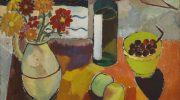
The gallery hosted exhibitions, lectures, plays including the first performances in Cyprus of works by Ionesco and Beckett, film screenings, and discussions. In June 1968, he represented Cyprus along with five other artists at the 34th Venice Biennale.
Savva died just weeks after the opening, at age 44. His work ranged from paintings to sculptures, experimentations with wire, cement, and fabric leftovers, plus forays into furniture design and architectural interventions.
Important Works in the Collection
Stymphalian Birds from 1960, measuring 104 x 147 cm, is one of the most significant paintings in Cypriot art and is part of the State Gallery collection. The painting drew inspiration from the Greek myth of Hercules’s sixth labor for Eurystheus, where the hero had to deal with destructive birds laying waste to the shore of a Stymphalian swamp in Arcadia.
Savva played the role of catalyst in introducing and spreading abstract art in Cyprus while finding common points between Cypriot and international art. The gallery also holds cement reliefs, yfasmatographies (fabric works), and pin reliefs that demonstrate his innovative use of materials.
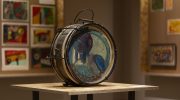
His cement sculptures incorporated pulverized rocks and tiles for color, sometimes adding stones, glass, or wood, with materials sourced from construction sites around Nicosia. The diversity of styles and the wide range of themes and references in his work set him apart from both the previous generation and his contemporaries.
Cultural Programs and Research Activities
The gallery operates an art library with publications on art history and theory, catalogs from major international art exhibitions, and monographs of significant historical and contemporary artists. Educational programs target school groups and the general public. Free tours for visitor groups are conducted after contact with the Cultural Services of the Ministry of Education and Culture.
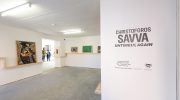
The institution organizes temporary exhibitions alongside its permanent collection displays. In 2019, the SPEL building inaugurated with a major survey exhibition of Christoforos Savva, curated by Jacopo Crivelli Visconti, which coincided with Cyprus’s participation in the 58th Venice Biennale dedicated to the same artist.
The gallery hosts workshops, lectures, and cultural events throughout the year. A museum shop offers exhibition catalogs, monographs, and art publications. The institution promotes critical engagement with art and culture while preserving, analyzing, and promoting Cypriot art from the 20th and 21st centuries both locally and internationally.
Modern Significance in Cypriot Culture
The State Gallery serves as a platform for both established and emerging Cypriot artists. The institution fosters conversations about creativity, innovation, and cultural identity in a post-colonial context. The collection demonstrates how Cyprus navigated its artistic development while dealing with the complex legacy of British rule, the trauma of intercommunal conflict, and the island’s division after 1974.
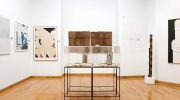
The gallery preserves works that reflect these historical tensions while also celebrating artistic achievement independent of political narratives. The planned transformation into MOCA Cyprus represents an effort to establish a world-class contemporary art museum that will operate under new organizational structures and legal frameworks.
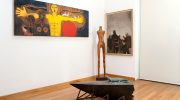
The Costas Argyrou Museum in Mazotos is expected to join the two Nicosia branches under this unified institutional structure. The gallery contributes to broader European networks of contemporary art institutions while maintaining its specific focus on Cypriot artistic production.
Visiting the Gallery Locations
The original gallery on Stasinou Avenue operates Monday through Friday from 10:00 to 16:45 and Saturday from 10:00 to 12:45. The gallery closes in August and on public holidays. Admission is free.
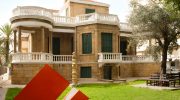
Parking is available next to the gallery and within walking distance at the city park of the moat Ntavila. The gallery is accessible for wheelchair users. The SPEL branch on Ammochostou Street sits near the Famagusta Gate, one of the main entrances to old Nicosia, and is easily accessible on foot from most locations within the old city. Visitors typically spend one to two hours exploring the exhibits across multiple floors.
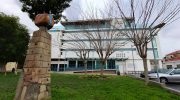
The galleries provide luminous, open spaces that invite deep engagement with the artworks. Most visitors find the second floor of the main gallery particularly impressive. Staff members are knowledgeable about art history and can provide information about displayed works and artists. The location near pleasant parks adds to the appeal as a cultural destination.
Why This Institution Matters
The State Gallery of Contemporary Art preserves a crucial chapter in Mediterranean art history that might otherwise remain marginalized in broader narratives dominated by Western European and American movements.
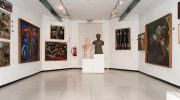
The institution demonstrates how artists from small island nations contributed to modernist and contemporary art dialogues while developing distinctive approaches shaped by their specific geographic, political, and cultural contexts.
Christoforos Savva’s work exemplifies how Cyprus participated in international artistic trends while refusing to simply imitate them. The gallery documents the emergence of a contemporary art scene in a newly independent state that lacked established institutional frameworks for artistic production and display.
By making these collections freely accessible to the public, the gallery ensures that Cypriots can engage with their own artistic heritage and understand how their cultural identity developed through visual expression. The planned evolution into MOCA Cyprus signals a commitment to elevating contemporary art’s role in national cultural life and international artistic exchange.