Explore Cyprus with Our Interactive Map

Explore our top stories and discover ideas worth your time.

Cyprus Three Continents Landscape

Cyprus Three Continents Landscape

Cyprus isn't just sitting on the Mediterranean - it's rising from deep inside the Earth itself. The island's mountains, plains, and dramatic coastlines tell a story millions of years in the making, a story written by colliding continents, ancient oceans, and forces powerful enough to lift the ocean floor into the sky. Understanding Cyprus's geography means understanding why civilizations flourished here, why copper made the island famous, and why the landscape itself feels almost mythical. An Island Shaped by Deep Forces Cyprus stands where Europe, Asia, and Africa nearly touch, and this position at the crossroads of three continents isn't just cultural - it's geological. The island's dramatic landscape reflects its location along active tectonic boundaries where massive plates of Earth's crust push, pull, and collide. This created an island unlike almost anywhere else on Earth, with features that have fascinated geologists, attracted ancient miners, and shaped human history for thousands of years. The island is defined by contrasts: dark volcanic mountains in the south, pale limestone ridges in the north, and a flat plain stretched between them. Rocky headlands meet sandy beaches, mountain forests give way to sun-baked lowlands, and seasonal rivers carve valleys that run dry under the summer sun. This geographic diversity packed into one relatively small island created the conditions for civilization to take root and…

Read more
Ancient Enkomi Cyprus Bronze Age City

Ancient Enkomi Cyprus Bronze Age City

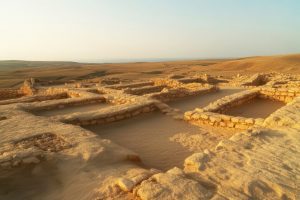
On the eastern coast of Cyprus near today’s Famagusta, Enkomi was one of the most important Bronze Age cities in the Mediterranean. For over 600 years, this walled city controlled much of the region’s copper trade and acted as a key link between the Near East, Egypt, and the Aegean world. visitnorthcyprus-com Enkomi was a major Late Bronze Age settlement, occupied from around 1650 BCE to 1050 BCE. The city grew near a Mediterranean inlet, which has since filled with silt, leaving the ruins several kilometers from the sea. At its height, between 1340 and 1200 BCE, Enkomi was one of Cyprus’s main centers for copper production and export. Historical Background Enkomi was first settled in the Middle Bronze Age, around 2000 BCE, when Cyprus traded with Egypt’s Middle Kingdom. Activity at the site slowed during the 17th and 16th centuries BCE, possibly because Hyksos control in Egypt disrupted trade. mail-com The city became important again after 1550 BCE, when Egypt’s Eighteenth Dynasty reunited the country and started importing copper again. This period marked the start of Enkomi’s rise as a major urban center. During the Late Bronze Age, Cyprus was part of a wider trade network across the eastern Mediterranean. Cities like Ugarit, Byblos, Sidon, and Tyre became regular trading partners, and by 1400 BCE, Mycenaean Greeks also developed…

Read more
The House of Aion Mosaics

The House of Aion Mosaics

The House of Aion in Kato Paphos preserves a late Roman mosaic program designed to communicate ideas, not just decorate a room, using myth to argue for cosmic order, education, and limits on human ambition. Made in the 4th century AD during the empire’s rapid Christianisation, the floor reads as a coherent statement from a pagan elite defending continuity through refined symbolism rather than confrontation. archaeology-com This article explains where the building sits in ancient Paphos, how the five scenes build one argument, and what the mosaics reveal about power, belief, and artistic change in late antiquity. Paphos, Power, and Maloutena The House of Aion lies in the Maloutena district of ancient Nea Paphos, once the island's administrative and cultural centre under Roman rule. This was a prestigious neighbourhood, close to the seat of the Roman governor and surrounded by villas that reflected wealth, education, and political influence. wikimedia-org Its location matters. The house was not hidden or marginal. It stood among the most powerful spaces in the city, signalling that the ideas expressed inside were meant to be seen, discussed, and shared by those at the top of provincial society. A Reception Room for Debate Although commonly called a “house,” the structure breaks with standard Roman domestic design. The main reception room, a large triclinium, sits directly near the…

Read more