Food in Cyprus is rarely just about what is on the plate. It is about time, generosity, and the simple act of being together. One of the clearest expressions of this way of life is the meze, a long, shared dining experience made up of many small dishes that arrive gradually at the table.

Traditional food and meze events offer more than a chance to taste local flavors. They reveal how Cypriots understand hospitality, patience, and community, values that have shaped island life for centuries. At its core, meze is not a menu choice. It is an agreement to slow down and share.
More Than a Meal, a Social Ritual
In practical terms, meze refers to a succession of small dishes served as one extended meal. Instead of ordering individual plates, everyone at the table eats the same food, prepared according to what is fresh, seasonal, or traditional that day.
In Cyprus, this structure carries meaning. Meze is not designed to impress through excess or novelty. It unfolds with balance and intention. Light flavors lead into richer ones. Cold dishes prepare the palate, while warm and grilled plates arrive later, anchoring the meal. The experience encourages conversation, pauses, and shared attention rather than speed. This is why meze cannot be rushed. It is meant to be lived through, not completed.
How Shared Dining Took Root in Cyprus
The origins of meze in Cyprus reflect the island’s history as a crossroads of cultures. For thousands of years, Cypriot cooking absorbed influences from the Levant, Anatolia, and the wider Mediterranean. These influences were filtered through village life, agriculture, and seasonal rhythms.
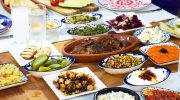
The word “meze” itself comes from older Eastern traditions, meaning a “taste” or “small portion.” In Cyprus, that idea expanded into a full dining ritual. Rural communities, where food was prepared collectively and resources were shared, naturally favored meals that brought everyone to one table.
Hospitality became central to this tradition. Offering many dishes was a sign of care and respect, and abundance at the table symbolized welcome. This mindset continues today, where refusing food can feel more uncomfortable than eating more than planned.
The Natural Rhythm of a Meze Meal
A traditional meze follows a gentle progression guided by the kitchen, not the diner. Dishes arrive in stages, allowing the table to settle into a rhythm rather than a sequence.
The meal usually begins with cold starters served alongside fresh bread. These early plates encourage sharing and conversation. Warm dishes follow, bridging into more filling courses. Toward the end, grilled or slow-cooked dishes appear in smaller portions, bringing depth without heaviness. Dessert, when served, is simple and refreshing rather than elaborate.
This pacing reflects a local philosophy often described as “slowly, slowly,” a reminder that enjoyment comes from attention, not haste.
What Typically Appears on a Meze Table
While no two meze meals are exactly the same, most follow a familiar structure shaped by season and region.
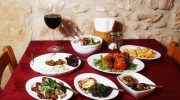
The First Plates: Light and Inviting
These dishes open the meal and set the tone.
- Yogurt-based dips with herbs and garlic
- Sesame and citrus spreads
- Chickpea-based preparations
- Olives and pickled vegetables
- Fresh village-style salads with local greens
They are meant to be tasted, not consumed quickly.
The Middle Course: Warm and Grounding
These dishes add substance without overwhelming the table.
- Grilled halloumi with a crisp exterior
- Vegetable fritters made with herbs or zucchini
- Vine leaves filled with rice and herbs
- Seasonal greens cooked simply with olive oil or eggs
This stage often defines the personality of the meal.
The Final Dishes: Slow and Satisfying
The last dishes are richer but still restrained.
- Grilled meats served in small portions
- Slow-cooked stews prepared with wine and spices
- Oven-roasted dishes are cooked for hours until tender
- Charcoal-grilled plates with smoky depth
Quantity remains secondary to balance. The aim is to taste widely, not to overfill.
Why Meze Is Meant to Be Shared
Meze is rarely eaten alone. It is built around groups, whether family, friends, or guests. Shared plates remove formality and encourage conversation. Everyone reaches for the same food, creating a sense of ease and equality around the table.
This is why meze appears at celebrations, religious holidays, village gatherings, and long weekend meals. Even casual dinners can stretch into entire evenings when meze is ordered. The focus is not on finishing the food, but on staying.
Music, storytelling, and laughter often accompany the meal, especially in traditional taverns, where the table becomes a social anchor rather than a destination.
Meze Beyond Restaurants: Events and Festivals
Beyond taverns and family kitchens, meze finds its fullest expression in public gatherings, where the shared table becomes a communal stage for memory and belonging. Across Cyprus, village festivals, harvest celebrations, and religious feast days often revolve around long tables filled with familiar dishes prepared collectively by local cooks.
In these settings, meze feels less like a dining option and more like a ritual of inclusion. People arrive as individuals and leave as participants in something larger, having eaten, talked, and listened together under the open sky. Music drifts between tables, conversations overlap, and strangers become temporary neighbors, bound by shared plates and unhurried time.
For visitors, these events offer a rare glimpse into how meze operates within everyday cultural life rather than curated hospitality. Here, food is not a performance. It is a conversation.
Regional Differences You Can Taste
While the structure of meze remains consistent, its character shifts with the landscape, reflecting the island’s diverse geography and local identity.

Along the Coast
In coastal towns and fishing villages, the sea shapes the table. Grilled fish arrives simply dressed with lemon and olive oil. Octopus, small fried catches, and seafood stews replace many meat dishes, emphasizing freshness and restraint rather than complexity. The rhythm of the meal mirrors maritime life, guided by what the day’s catch provides.
In Mountain Villages
Inland, meze reflects preservation and patience. Smoked meats, cured pork, and oven-roasted dishes recall times when refrigeration did not exist, and preparation was tied to seasons rather than convenience. Wild greens, mushrooms, and foraged herbs appear frequently, grounding the meal in the surrounding hills and valleys.
Through these regional variations, meze becomes a culinary map, revealing how communities adapt shared traditions to their environment while maintaining a common dining language.
Drinks That Complement the Table
Meze is accompanied by drinks that support its slow unfolding rather than compete with it. Local wines, both dry and sweet, are poured generously, while grape-based spirits are served in small quantities to encourage sipping rather than excess. In warmer months, yogurt-based drinks and herbal syrups diluted with water offer refreshment and balance.
The emphasis is always on moderation and rhythm, reinforcing the idea that meze is meant to stretch across hours, not minutes.
Meze in Contemporary Cyprus
In modern Cyprus, meze continues to evolve without losing its essence. Contemporary chefs reinterpret traditional dishes with refined presentation, yet the shared structure remains intact. Seasonal sourcing has gained renewed importance, reconnecting restaurant dining with agricultural cycles that shaped the tradition in the first place.

At the same time, plant-based meze options have expanded, drawing on fasting traditions that already emphasized legumes, vegetables, and grains. Rather than replacing heritage, these changes extend it, allowing the tradition to remain relevant in a changing society.
What Visitors Should Know Before Ordering Meze
For those unfamiliar with the tradition, understanding the rhythm of meze enhances the experience.
- Meze is typically priced per person and shared across the table
- Meals unfold gradually and can last several hours
- Dishes arrive in waves rather than all at once
- Eating slowly helps preserve appetite and appreciation
- Trusting the kitchen often leads to the most authentic experience
Approached with patience, meze reveals itself not as a meal to complete, but as an evening to inhabit.
Why Meze Still Matters in Cyprus
Meze remains central to Cypriot identity because it embodies values that extend far beyond cuisine. It reflects generosity, time, and the importance of being present with others. Through shared plates, people reaffirm social bonds that stretch across families, villages, and generations.
To sit at a meze table is to participate in a living tradition that prioritizes connection over efficiency and hospitality over spectacle. It is a reminder that culture is sustained not only through monuments and museums, but through repeated, ordinary acts of gathering.
A Shared Table That Tells the Story of the Island
The enduring presence of meze in Cyprus reveals a society shaped by collective experience rather than individual consumption. Every dish, conversation, and pause adds another layer to a story that continues to unfold with each gathering.
To understand Cyprus through meze is to see an island that values time, community, and continuity. It is to recognize that some of the deepest cultural truths are found not in grand narratives, but in the simple act of sharing a table.