Explore Cyprus with Our Interactive Map

Explore our top stories and discover ideas worth your time.

Cyprus Museum Nicosia

Cyprus Museum Nicosia

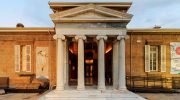
The Cyprus Museum stands on Museum Street in central Nicosia as the oldest and largest archaeological museum in Cyprus. Founded in 1882 during British occupation, the museum houses the most extensive collection of Cypriot antiquities in the world. The institution displays only artifacts discovered on the island, creating a focused narrative of Cyprus's archaeological heritage from the Neolithic period through the Roman era.  wikimedia.org The museum building itself carries historical importance, with construction commencing in 1908 and completing in 1924 when Cyprus remained a British colony. Extensions added in 1961 created additional galleries, storerooms, and offices that surround a central square area housing auxiliary offices, a library, and laboratories for preserving and studying items. Fourteen display halls follow chronological and thematic succession, though the collection has far outgrown existing capacity with only a small fraction on display at any time. How a petition saved Cyprus's heritage The museum was founded following a petition delivered to British authorities by a delegation headed by religious leaders of both Christian and Muslim populations. The catalyst for this action was several illicit excavations and the smuggling of antiquities off the island during the early British period.  tandfonline.com Cypriots recognized that their archaeological heritage was disappearing to foreign museums and private collections, prompting joint action across religious communities. The British administration agreed to establish a…

Read more
Salamis Bathhouse Mosaics

Salamis Bathhouse Mosaics

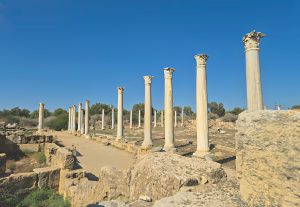
The Salamis bathhouse mosaics show how Roman Cyprus combined leisure, engineering, and civic identity inside one of the island’s most ambitious public complexes. These floors were designed to shape movement and atmosphere, pairing mythic scenes with technical skill, imported materials, and heated rooms that made bathing a daily performance of status. This article explains how the mosaics worked within the bathhouse system, what their imagery signalled, and why their survival still matters for understanding Roman urban life on Cyprus. googleusercontent-com A Capital Built to Be Seen Salamis was not an ordinary provincial town. For long periods, it functioned as the administrative and commercial heart of Cyprus, benefiting from trade routes that linked the Aegean, the Levant, and Egypt. When the city was rebuilt after a devastating earthquake in the first century AD 76/77 and a later insurrection in AD 116, Roman emperors invested heavily in its public architecture. googleusercontent-com The gymnasium and bathhouse complex became one of the most imposing structures in the eastern Mediterranean. Its scale alone communicated status. Wide colonnades, marble-clad halls, and carefully planned water systems transformed bathing into a public performance of Roman order and prosperity. Bathing as a Social Ritual In Roman cities, baths were not private spaces for cleanliness. They were communal environments where physical care, leisure, and social interaction blended into a daily…

Read more

Vouni Palace in Cyprus

Vouni Palace in Cyprus

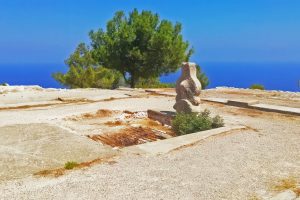
Perched on a rocky hilltop 250 meters above the Mediterranean Sea, the ruins of Vouni Palace stand as a remarkable architectural anomaly in ancient Cyprus. This site represents the only known example of Persian palace design not just on the island but throughout the entire eastern Mediterranean, built during one of history's most intense power struggles between two great civilizations. visitnorthcyprus-com Historical Background Around 500 BC, Cyprus found itself caught in the crossfire of the great wars between the Persian Empire and the Greek city-states. The island's ten kingdoms split into opposing camps, with some supporting the Persians and others backing the Greeks. This division led to bitter conflicts across Cyprus, on both land and sea. google-com The ancient city of Soli, located near modern Lefke on the northwest coast, firmly supported the Greek cause. This position threatened Marion, a nearby pro-Persian kingdom situated close to present-day Polis. King Doxandros of Marion, a ruler loyal to the Persian Empire, decided to take action against his pro-Greek neighbor. In 500 BC, Doxandros established a military settlement on a strategic hill overlooking Soli. The location was perfect for surveillance. From this elevated position, Persian forces could monitor all sea traffic along the coast and observe every activity in the city below. What began as a simple military outpost would transform into one…

Read more