Seafood in Cyprus is not simply food. It is a social signal, a religious accommodation, and a shared language that connects families, communities, and generations. Although the island is often associated with meat-based traditions, the sea quietly shapes how Cypriots gather, celebrate, fast, and mark time.

This article explores how seafood functions as a cultural marker in Cyprus, from tavern tables and religious calendars to seasonal rhythms and modern environmental change.
An island that learned to live both with and away from the sea
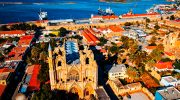
Cyprus is surrounded by water, yet for much of its history, daily life in the interior unfolded at a distance, but coastal cities like Famagusta and Limassol were vital hubs. Repeated invasions, piracy, and political instability pushed communities inland, where farming and herding offered greater security than fishing. This historical caution shaped a culture that relied heavily on land-based food, even as the sea remained ever-present.
Rather than dominating everyday meals, seafood became something more selective. It marked moments of gathering, ritual, and occasion. When it appeared, it carried meaning beyond nourishment. This balance between proximity and restraint explains why seafood in Cyprus feels intentional rather than constant.
The fish tavern as a social stage
The psarotaverna, or fish tavern, is one of the most important social spaces on the island. It is not defined by speed or efficiency. Meals unfold slowly, plate by plate, following the familiar Cypriot rhythm of siga siga.

Ordering fish is rarely an individual act. Groups often inspect the day’s catch together, choosing a whole fish to share. This moment is both practical and symbolic. It establishes trust, demonstrates knowledge, and reinforces the idea that the meal belongs to the table, not the person.
Conversation, not consumption, sets the pace. Seafood here functions as a facilitator of time spent together, not something to be rushed through.
Meze and the culture of sharing
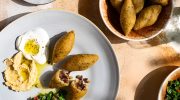
Nowhere is seafood’s social role clearer than in the seafood meze. This extended sequence of small dishes turns eating into a collective experience. Plates arrive gradually: dips, fried fish, shellfish, grilled octopus, whole fish, and finally something sweet.
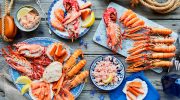
The structure matters. Because dishes are shared and staggered, no one eats alone or quickly. The meal stretches, encouraging conversation and connection. Abundance is intentional. Leftover food is not a failure but proof of generosity. For visitors, this can be surprising. For Cypriots, it is a clear expression of hospitality and social care.
Religious rhythms and “bloodless” food
The Orthodox calendar deeply influences Cypriot food habits, and seafood plays a special role within it. During major fasting periods, meat and dairy are forbidden. Mollusks and shellfish, are permitted throughout the fast, while fish with backbones is only allowed on specific feast days (like Palm Sunday).
This distinction turns seafood into the centerpiece of fasting celebrations rather than a compromise. Octopus, squid, shrimp, and mussels become markers of devotion and restraint, allowing communities to gather and eat together while observing religious rules.
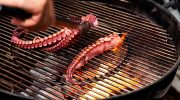
Green Monday, the first day of Lent, brings this practice into public life. Families picnic outdoors, grill octopus, fly kites, and begin the fasting period with food that is both symbolic and communal.
Learning the sea through family
Seafood knowledge in Cyprus is passed down informally, often in the kitchen or at the table. Children learn how to debone fish, recognize freshness, and appreciate parts of the fish that other cultures discard.
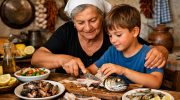
The fish head, in particular, carries status. Cheeks, collars, and eyes are prized for their texture and flavor. Knowing how to eat them signals familiarity and respect for the ingredient. These habits are not taught formally. They are absorbed through observation, repetition, and shared meals. Grandparents play a central role in this transmission, anchoring culinary memory across generations.
Seasonal patterns that still matter
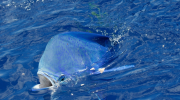
Even today, the Cypriot relationship with seafood follows seasonal rhythms. Certain fish appear briefly and are celebrated intensely. Tuna marks the height of summer. Mahi-mahi arrives in autumn. Their presence shapes conversations, menus, and social plans.
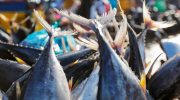
Catching or securing these fish is often followed by gatherings where the catch is shared. The event matters as much as the food itself. These cycles offer a sense of time rooted in nature rather than calendars.
Adapting to a changing sea
Modern Cyprus faces new challenges at sea. Invasive species have disrupted ecosystems and fishing livelihoods. Some, like toxic pufferfish called Silver-cheeked Toadfish (Lagocephalus sceleratus), are purely destructive. Others, like lionfish, have been adapted into the culinary landscape.
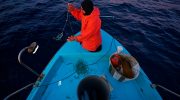
By encouraging people to eat invasive species, Cypriots are responding to environmental change using familiar tools: the table, the tavern, and shared meals. Once again, seafood becomes a marker of resilience and adaptation.
Why seafood still matters in Cyprus
Seafood in Cyprus is never just about taste. It signals care, patience, faith, and belonging. It slows time, brings people together, and bridges divides between generations and communities.

In a culture shaped by uncertainty and change, the sea remains a constant reference point. Not always dominant, but always present. Through seafood, Cypriots continue to negotiate identity, memory, and connection along the edge of the Mediterranean.