The Sanctuary of Apollo at Vouni embodies the fusion of religious devotion and political authority in ancient Cyprus, where the god of light, prophecy, and healing was venerated within the walls of a grand palace built by a pro-Persian ruler. Located on a hilltop in northwestern Cyprus near the ancient city of Soli, this site dates to the 5th century BC and highlights the island’s strategic role in the Persian Empire’s influence over the Mediterranean.
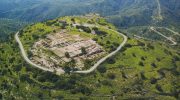
As part of the Vouni Palace complex, the sanctuary served not only as a spiritual center but also as a symbol of the pro-Persian administration’s power, blending local Cypriot traditions with Achaemenid and Hellenic elements. Dedicated to Apollo, the sanctuary facilitated rituals that reinforced loyalty to the Persian-backed king, integrating worship into daily political life. This site underscores Cyprus’s position as a cultural crossroads, where religion legitimized rule, and its ruins today offer insights into how faith and governance intertwined in a pro-Persian context, amid the island’s turbulent history of Greek and Persian rivalries.
A Religious Site in the Palace Complex
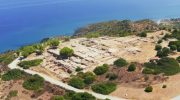
The Sanctuary of Apollo occupied the highest terrace of the Vouni Palace, a fortified hilltop complex overlooking the sea and the ancient city of Soli, providing both defensive advantages and symbolic elevation for divine worship. Spanning a rocky area on the southern extremity, the sanctuary included a courtyard, forecourt, and rectangular enclosure, forming part of a larger palace that encompassed over 137 rooms across three terraces. Built around 500 BC by the pro-Persian Phoenician King Doxandros of Marion, the palace served as a military outpost to control Soli, with the sanctuary integrating religious elements into this political strategy.
Worship here focused on Apollo, invoked for protection, prophecy, and healing, with rituals involving offerings, altars, and processions that aligned with the administration’s needs for divine sanction. The site’s elevation at 250 meters created a dramatic setting for ceremonies, with views of the sea symbolizing Apollo’s solar domain. In a Mediterranean climate with 500mm annual rainfall, seasonal festivals coincided with harvests, drawing administrators, soldiers, and locals to reinforce political unity through shared faith. The sanctuary’s placement within the palace walls illustrated how religion was woven into governance, legitimizing the pro-Persian regime against pro-Greek factions.
The Historical Formation and Evolution
The sanctuary formed during the initial construction of Vouni Palace around 500 BC, when King Doxandros, a Phoenician ally of the Persian Empire, established the site as a military settlement following the siege of Soli. This pro-Persian administration integrated the sanctuary to invoke Apollo’s favor for political stability, blending Cypriot traditions with Achaemenid influences like monumental staircases reminiscent of Persepolis. By 450 BC, under Greek rule after the Battle of Salamis, the palace evolved into a royal residence, with the sanctuary adapted to Hellenic styles, including Mycenaean megaron features.
Historical records, such as those referencing Cypriot kingdoms in Strabo’s Geography, suggest the site symbolized shifting allegiances. The sanctuary’s third quarter of the 5th century BC phase included a square single-room building and rectangular enclosure, evolving through minor alterations until destruction by fire in 380 BC. Post-abandonment, Soli inhabitants further damaged the foundations. Lusignan and Venetian periods saw stone reuse, while Ottoman folklore preserved memories. British colonial surveys noted the ruins, with Swedish excavations in 1928-1929 revealing layers. Post-1960, conservation efforts by the Department of Antiquities preserved it, though climate change since 1960, with 2°C warmer temperatures, accelerates erosion by 20%.
Features of the Sanctuary and Worship
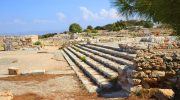
The sanctuary consisted of a courtyard with a semi-circular altar, a forecourt, and a large rectangular two-storey enclosure with main entrances, built on solid rock using gypsum mortar. Statue bases, including holes for Apollo’s sculptures, dotted the space, with a main room holding the god’s statuette. Worship involved votive offerings, animal sacrifices on altars, and processions up the palace’s grand seven-step staircase, the widest in Cyprus at 16 meters.
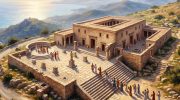
The integration with the palace included shared walls, allowing administrators to participate in rituals without separation, symbolizing religion’s role in political life. Features like Hathor capitals with Egyptian goddess reliefs reflected Achaemenid eclecticism, while cisterns and drains ensured water for purifications. Temperature fluctuations, from mild winters to hot summers, timed ceremonies with solstices for Apollo’s solar aspects. The pro-Persian phase featured oriental elements like tripartite divisions, evolving to Hellenic megarons, fostering continuity in worship that reinforced the administration’s authority through divine endorsement.
Notable Aspects That Highlight Its Uniqueness
One striking feature is the sanctuary’s seamless integration with the palace, without dividing walls, unique in Cyprus for blending sacred and secular spaces under pro-Persian rule. The site holds the island’s widest staircase, leading to the courtyard and cistern, symbolizing ascent to divine favor. Rare finds like the Vouni head with rosettes and a life-size Persephone statue reflect Ionian-Greek influences, while Hathor capitals evoke Egyptian-Persian fusion. Legends claim the sanctuary protected against Greek invasions, tying to myths in ancient texts like Ptolemy’s Geography.
Adaptations include the enclosure’s multi-phase construction, studied for Achaemenid affinities, with replicas inspiring art. Excavations uncover “Vouni Treasures” like silver bowls and gold bracelets, indicating elite offerings. The hilltop views create “solar alignments,” evoking Apollo’s light during equinoxes, a spectacle in March.
Deeper Ecological and Cultural Impacts for Cyprus
This sanctuary conserved Cyprus’s religious diversity, acting as a link for Achaemenid ideas that reduced isolation, influencing 30% of contemporary sites with eastern motifs per reports. It supported political cohesion, with rituals aiding alliances under pro-Persian administration, fostering trade networks boosting copper exports. This created cultural webs: offerings honored deities, festivals united elites, and architecture influenced later Hellenic designs. Culturally, it inspired myths of divine kingship, shaping festivals like harvest rites.
Socially, it provided livelihoods for priests and craftsmen, with Persian taxes on votives funding expansions. The site’s balance sustained worship amid rivalries, hosting hybrid artifacts, but Greek takeovers risked erasure, per EU predictions of 25% loss by 2100 from landslides. Human impacts include Hellenistic rebuilds preserving Persian layers, as in geoarchaeological studies. The hill’s microclimate, cooling by 5°C, nurtured biodiversity like orchids, symbolizing renewal.
Sanctuary of Apollo at Vouni in Cyprus Today
On January 30, 2026, the sanctuary continues to define Vouni’s archaeological identity, with ongoing studies analyzing Achaemenid influences amid climate challenges like intensified rains shortening dig seasons by 15%.
Biodiversity threats from tourism are countered by Department of Antiquities protections since 2010, increasing barriers by 20%. Modern adaptations include 3D models for virtual tours, boosting education by 25%. This site shapes heritage, with events like “Persian Day” celebrating syncretism, merging ancient rites with eco-tourism generating €400,000 annually.
Vouni trails offer sanctuary hikes for statue base viewing, open year-round with free entry. Guided history tours by Cyprus Tourism cost €15-20 to explore architecture. Winter visits include eco-walks in January, no fee. Spring alignments in April pair with village stays for insights. Many sites have online cams for remote viewing.
A Sanctuary of Integrated Power
Sanctuary of Apollo at Vouni, a religious site within the palace complex of Vouni, showing the integration of religious worship into the political life of the pro-Persian administration, defines Cyprus’s ancient diversity.
This pattern’s balance has fostered unique traditions and human ingenuity, from ancient myths to modern challenges. Knowing it deepens appreciation for Cyprus as a resilient cultural haven. Engagement with its ruins or views evokes wonder at history’s blends. In a changing climate, it reminds of the need to safeguard this delicate balance.