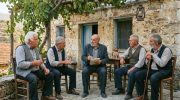
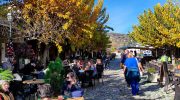
Village squares, called plateia in Greek, represent the beating heart of Cyprus villages where religious, commercial, and social life converges. These open spaces, typically paved with stone or concrete and shaded by ancient plane trees or figs, serve as meeting points where community members gather daily for coffee, conversation, and celebration.
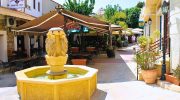
The traditional kafeneio coffee shops that ring village squares function as male social clubs where men play backgammon, debate politics, exchange business information, and maintain the complex social networks that define village identity. Churches or mosques occupy prominent positions on or near the square, establishing spiritual authority over community life.
The plateia evolved organically as villages developed, becoming the natural center where radiating streets converged and where public buildings like schools, municipal offices, and cooperatives located themselves for accessibility.
Ancient Roots of Public Square Tradition
The concept of plateia descends from ancient Greek urban planning where main streets called plateiai, typically three per city, formed the framework of orthogonal town plans. These major thoroughfares connected to narrower stenopoi streets that ran perpendicular, creating rectangular building blocks. The classical agora or marketplace occupied central locations where commerce, politics, and social life intersected, establishing patterns that influenced Mediterranean urban design for millennia.
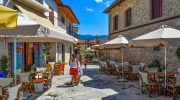
Cyprus participated in this Greco-Roman tradition during classical antiquity when cities like Salamis, Kourion, and Paphos featured planned layouts with designated public spaces. The Roman forum concept reinforced the importance of central squares for civic administration, religious observance, and commercial exchange. Byzantine churches inherited these prominent locations, transforming pagan temples and civic buildings into Christian worship centers that maintained their geographical centrality.
Village squares in their current form developed during the Ottoman period from 1571 to 1878, when rural settlements expanded around agricultural economies and Orthodox religious communities. The kafeneio emerged as a distinctly Ottoman institution that persisted after British colonial rule began in 1878. British administrators attempted to introduce European-style town planning but largely left existing village structures intact, allowing traditional plateia patterns to continue evolving organically.
The Kafeneio as Male Social Institution
The traditional Cyprus coffee shop represents far more than a beverage service establishment. According to a 1930 British government survey titled “A Survey of Rural Life in Cyprus,” the average Cypriot spent approximately 10 percent of annual income at the local kafeneio, a remarkable figure demonstrating these institutions’ centrality to village life. The survey also noted that Kyrenia district had the highest concentration of coffee houses in Cyprus, suggesting regional variations in coffee culture intensity.
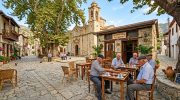
Coffee shops became so popular in some villages that men sometimes queued to enter or waited for chairs to become available. This demand prompted multiple kafeneio openings in single villages, with each establishment aligning itself with local sporting clubs, football teams, or political movements. The competition created specialized venues where patrons shared common interests and ideological positions, fragmenting village social life along political and recreational lines while maintaining the coffee shop’s overall importance.
The kafeneio functioned as information exchange center where news, gossip, business opportunities, and marriage arrangements circulated through male networks. Before widespread literacy, coffee shops held evening newspaper readings where designated village readers recited stories and news aloud for assembled men. When wireless radios became available, kafeneio owners were first to install them, rendering newspaper readings obsolete as men gathered to hear broadcasts from around the world. Coffee shops similarly pioneered gramophones, billiard tables, table football, televisions, pinball machines, and electronic arcade games, consistently embracing innovations that attracted customers.
Traditional Coffee Preparation Ritual
Cyprus coffee preparation follows precise ritual unchanged for generations. The kafetzis, the traditional barista, takes a briki or tzisves, a small long-handled metal pan, and adds finely ground coffee powder and water. He places the briki on the outzaki, a traditional coffee machine consisting of a small tray filled with heated sand that distributes heat evenly. The coffee comes to a boil forming kaimaki, the creamy froth that indicates proper preparation. The kaimaki rises from the briki’s sides until reaching the center, when the kafetzis removes it from heat and pours it into a small cup with saucer.

The coffee is served on a tin tray accompanied by a requisite glass of cold water. Customers order coffee as sketo without sugar, metrio medium sweet, or gliko very sweet. Those seeking exceptional quality request it “meraklitiko parakalo,” meaning please make it with extra attention and care. The ritual of preparing and serving coffee represents craft knowledge requiring years of practice to master proper timing, temperature, and proportions. The kaimaki must not collapse or the coffee is considered poorly prepared, a breach of professional standards that damages the kafetzis’s reputation.
Cyprus coffee uses finely ground Arabica beans with no added spices except occasional cardamom. The strong flavor and distinctive aroma mark the beverage as fundamentally different from European coffee traditions, emphasizing its Ottoman and Eastern Mediterranean origins. The coffee is consumed slowly while conversing, never rushed as a quick caffeine delivery system. This unhurried approach reflects broader village time orientation where productivity matters less than social connection and community maintenance.
Games and Social Activities
Backgammon, called tavli in Cyprus, dominates kafeneio gaming, with experienced players engaged in serious competitions that attract spectator crowds. The game combines skill, strategy, and chance, allowing for complex play while remaining accessible to beginners. Spectators gather around tables offering advice, making jokes, and becoming invested in outcomes. The loser typically pays for both players’ coffee or treats, adding stakes to matches while redistributing costs across the group.
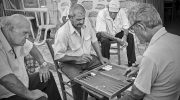
Card games including pilota compete with backgammon for players’ attention. Some coffee shops maintain dedicated card tables where regular groups gather at specific times for ongoing competitions. Xisto scratch cards sold by traveling lottery men, called lachiopolis, offer gambling opportunities for those hoping luck might smile upon them. The combination of skill games and chance gambling creates varied entertainment options suited to different personality types and risk tolerances.
The social atmosphere encourages prolonged sitting that spawned the humorous tradition of needing four chairs to properly relax, one to sit on, a second to outstretch legs, a third to rest arms, and a fourth for comfort. The village of Ora in the Larnaka district took this tradition further, with residents using seven chairs at once, earning them the nickname “eftatsaerites” meaning seven chair people.
Gender Separation and Women’s Spaces
Traditional kafeneio culture strictly excluded women, maintaining gender-separated social spheres that characterized Cyprus society until recently. Women conducted their social interactions in homes, courtyards, and while performing communal tasks like laundry at village fountains or textile work in groups. This separation reflected broader Mediterranean patterns where male public space contrasted with female domestic space, with each gender maintaining distinct social networks.
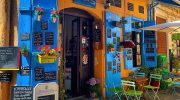
The first women’s coffee shop in Cyprus opened only in 2003, a remarkably recent development demonstrating how entrenched gender separation remained. These women’s establishments allowed ladies to discuss news, play backgammon, and enjoy coffee without male presence. The venues represented significant social progress while acknowledging that some women desired the same social infrastructure men had enjoyed for centuries.
Contemporary village squares show softening gender boundaries as younger generations reject strict separation. Mixed-gender groups now occupy kafeneio tables, particularly in tourist-frequented villages where commercial pressures encourage inclusive service. However, many traditional coffee shops in remote villages maintain their male-dominated character, with elderly men spending entire afternoons in familiar chairs surrounded by lifetime acquaintances.
The Square as Festival and Celebration Space
Village squares transform during religious feast days, weddings, baptisms, and national holidays into festival venues accommodating large crowds. Tables and chairs are removed or rearranged, temporary stages erected for musical performances, and food stalls positioned around the perimeter. The open space allows dancing circles where participants of all ages join traditional folk dances that reinforce community cohesion through coordinated movement.
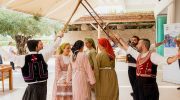
Panigyria, the religious festivals honoring patron saints, center on village squares after church services conclude. Loukoumades vendors fry honey-soaked doughnuts fresh for crowds, souvla roasts on charcoal spits, and wine flows freely as families celebrate together. The combination of sacred and secular, religious observance and abundant eating, creates layered celebrations that satisfy multiple community needs simultaneously.
Weddings often feature receptions in village squares when family courtyards cannot accommodate large guest lists. The public setting allows entire villages to participate in celebrations, reinforcing social bonds and collective investment in the new family being formed. This openness contrasts with urban wedding venues where guest lists are restricted and celebrations occur in commercial spaces removed from community life.
Contemporary Changes and Tourism Impact
Modern village squares face pressure from changing social patterns including urban migration, automobile dependency, and digital communication that reduces face-to-face interaction. Young people increasingly prefer urban cafes with WiFi, modern music, and contemporary aesthetics over traditional kafeneio with elderly clientele, old furniture, and unchanged decoration. This generational shift threatens coffee shop viability in villages with declining permanent populations.
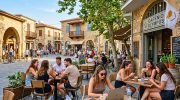
Tourism provides economic lifeline for some village squares as visitors seek authentic experiences unavailable in beach resorts. Restored villages including Omodos, Kakopetria, and Lefkara attract day-trippers and overnight guests who patronize kafeneio, purchase traditional crafts, and photograph picturesque settings. The tourist income supports preservation of buildings and traditional activities while creating tensions between authentic village life and commercialized heritage displays designed for foreign consumption.
Some villages have adapted by creating hybrid spaces that combine traditional kafeneio elements with modern cafe features. These establishments serve Cyprus coffee alongside cappuccinos, offer traditional sweets plus international desserts, and maintain backgammon boards while providing WiFi access. The fusion approach attracts broader demographics while risking loss of distinctive character that made traditional coffee shops culturally significant.