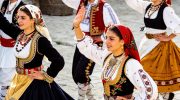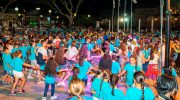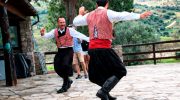
Along the Cypriotшнрлрло coast, some of the island’s most elegant traditions unfold not in grand halls but in village squares, wedding courtyards, and seaside promenades. Antikristos and Ballos are couple dances shaped by restraint rather than spectacle, where movement becomes a quiet dialogue between two people standing face to face. This article explores where these dances come from, how they are performed, why they developed along the coast, and how they continue to live on in modern Cyprus.
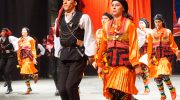
Where Elegance Meets the Sea
Cyprus has many folk dances, but coastal communities developed a style distinct from the energetic, high-leaping dances of the Troodos Mountains. In fishing towns and port cities, dance became more measured and composed, shaped by maritime trade, social etiquette, and exposure to outside influences.

Antikristos and Ballos emerged in this environment. They are not group dances built around communal circles, but intimate pairings that reward control, posture, and timing. Rather than filling space, the dancers contain it.
Dancing Face to Face
The name Antikristos literally means “opposite” or “face to face,” describing the defining formation of the dance. Two dancers stand a few feet apart, mirroring and responding to each other without touching. Eye contact, balance, and rhythmic precision create the connection.
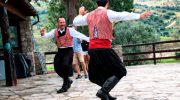
In everyday language, many Cypriots also refer to the dance as Karsilamas, a broader Eastern Mediterranean term for face-to-face dances. In Cyprus, however, Antikristos developed into a distinctive local suite rather than a single fixed pattern, especially in coastal villages.
A Dance Built in Parts
What makes the Cypriot Antikristos unique is its structure. Traditionally, it unfolds as a suite of several sections that gradually increase in speed and complexity. Early parts are slow and controlled, allowing dancers to establish rhythm and presence. Later sections demand sharper footwork, faster reactions, and greater confidence.
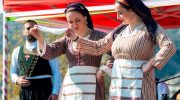
Ballos often appears as the final section, adding a slightly more playful and flowing quality to the sequence. Its name reflects Venetian influence, a reminder of Cyprus’s long history as a crossroads of Mediterranean cultures.
Why the Coast Shaped the Dance
These dances did not take root along the coast by coincidence. Coastal towns such as Larnaca, Limassol, and Paphos were places where people lived publicly, worked collectively, and interacted regularly with outsiders. Dance in these settings became a form of social communication, shaped by visibility and shared standards of behaviour.
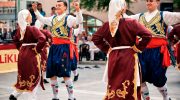
In such environments, restraint carried meaning. Movements were expected to be deliberate rather than explosive, expressive without becoming excessive. Grace signalled respectability, while control suggested maturity and social awareness. Even as tempos increased, the expectation remained that a dancer would remain composed, attentive, and grounded.
The sea itself played a role. Life along the coast required patience, timing, and adaptation, qualities mirrored in dances that emphasised rhythm, balance, and measured response rather than raw energy.
How the Dance Feels to Watch
To observe Antikristos is to watch a conversation unfold without words. The dancers remain close, rarely travelling far from their shared centre. Weight shifts replace leaps. Turns are compact and intentional. Each step responds to the rhythm and to the partner standing opposite.
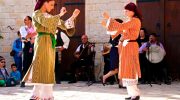
The lack of physical contact intensifies the exchange. Without touch, connection must be maintained through timing, posture, and mutual awareness. When a handkerchief appears, it serves as a symbolic link rather than a functional hold, reinforcing the idea of connection without possession.
This quiet tension gives the dance its distinctive presence. Nothing is rushed. Nothing is wasted.
Music That Guides, Not Dominates
The music accompanying Antikristos and Ballos does not overpower the dancers. Instead, it guides them. Violin leads with ornamented phrases, supported by lute, tambourine, and sometimes santouri. The rhythm carries subtle irregularities, requiring dancers to listen closely rather than rely on repetition.

This creates a relationship between musician and dancer that feels almost conversational. A skilled violinist may extend a phrase or soften a cadence in response to a dancer’s movement, allowing the performance to breathe and adapt in real time.
Sound and motion remain in balance, neither commanding the other.
Weddings, Status, and Quiet Display
Historically, Antikristos and Ballos belonged to weddings and major community gatherings, moments when families were seen and remembered. Dancing well reflects upbringing, discipline, and awareness of social norms. Excessive display was discouraged. Elegance was the goal.

Money pinned to dancers’ clothing functioned less as spectacle and more as a communal blessing, offering symbolic support to newly formed households. Scarves carried layered meanings as well, often associated with preparation, domestic skill, and transition into new social roles.
Every gesture carried weight, even when performed lightly.
From Village Squares to Cultural Stages
As village life changed in the mid-20th century, these dances shifted from spontaneous celebration to intentional preservation. Cultural associations began documenting steps, teaching sequences, and presenting Antikristos and Ballos on formal stages.
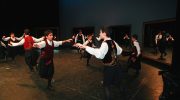
While this process standardised certain elements, it also ensured continuity. Today, full multi-part suites are less common in everyday settings, but individual sections remain woven into weddings and festivals. Events such as the Kataklysmos celebrations in Larnaca continue to showcase the dance as both heritage and living practice.
The transition from square to stage did not erase the dance’s meaning. It reframed it.
Seeing the Dance Today
Visitors encountering Antikristos and Ballos today often do so during summer festivals, village celebrations, or organised cultural evenings. Some performances are designed for audiences, but many dancers are deeply trained and remain faithful to traditional forms.
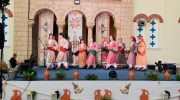
Observation is always the best introduction. The rhythm is unfamiliar to many newcomers, and the face-to-face structure carries its own unspoken etiquette. Participation is welcomed when invited, but understanding begins with watching.
Why These Dances Still Matter
Antikristos and Ballos endure because they express something fundamental about coastal Cypriot life. They favour balance over excess, dialogue over display, and connection without intrusion. Shaped by the sea and centuries of exchange, these dances reflect a worldview where presence matters more than dominance.
Standing face to face, guided by rhythm rather than force, the dancers carry forward a tradition that remains relevant precisely because it refuses to rush, overwhelm, or compete. In their restraint, Antikristos and Ballos continue to speak with quiet clarity, unmistakably Cypriot.