Explore Cyprus with Our Interactive Map

Explore our top stories and discover ideas worth your time.

Cyprus Kleftiko Dish

Cyprus Kleftiko Dish

Kleftiko is one of the most recognisable dishes in Cyprus, yet its importance has little to do with flavour alone. This slow-cooked lamb, sealed away from air and fire, tells a story of survival, patience, and rural ingenuity. More than a recipe, Kleftiko reflects how Cypriots adapted to hardship and turned necessity into tradition. Understanding it means understanding why time, restraint, and shared meals still matter deeply on the island. A Dish Built on Secrecy and Time At its core, Kleftiko is lamb or goat cooked slowly in a sealed environment. The defining feature is not the meat itself, but the method. By trapping steam and heat, the meat softens gradually, breaking down until it can be pulled apart with little effort. This approach was developed for practical reasons. Cooking openly created smoke and scent that could travel far. Sealing the meat allowed it to cook invisibly, protected from wind, flame, and unwanted attention. Over hours, sometimes an entire day, the process transformed tough cuts into something rich and deeply aromatic. Kleftiko’s slowness is not incidental. It is the point. Time is the primary ingredient, and patience is the main technique. Why It Is Called Kleftiko The name Kleftiko comes from the Greek word kleftis, meaning “thief.” During periods of Ottoman rule, groups of mountain fighters and shepherds relied on…

Read more
Cyprus Rocky Coastal Ecosystems

Cyprus Rocky Coastal Ecosystems

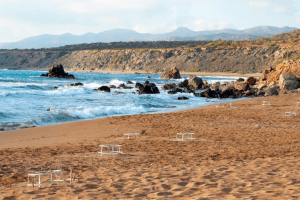
Rocky Coastal and Cliff Ecosystems are specialized habitats along Cyprus's shoreline, where flora and fauna have adapted to limestone cliffs, constant sea spray, and arid conditions. These ecosystems, featuring rugged vertical faces and narrow ledges, support resilient plants like sea lavender and animals such as the Mediterranean monk seal, creating a unique blend of marine and terrestrial life. They highlight the island's geological diversity, where erosion and salt exposure forge niches for species found nowhere else, underscoring the delicate balance of coastal biodiversity. A Specialized Habitat Along the Shore Rocky coastal and cliff ecosystems in Cyprus form dramatic landscapes where vertical limestone walls meet the sea, shaped by waves, wind, and salt spray. These habitats, spanning much of the island's 648km coastline from Cape Arnaouti to Cape Greco, endure arid conditions with rainfall under 400mm annually and constant aerosol from breaking waves. Flora clings to crevices, with roots penetrating rock for stability, while fauna exploits sheltered nooks for breeding. This environment supports over 200 plant species and 50 reptiles, many endemic, making it a key biodiversity zone. Sea spray deposits salt, creating halophytic conditions that select for adapted life, while cliffs' height (up to 100m at Episkopi) provides isolation, promoting speciation. Formation Through Geology and Time These ecosystems emerged from Miocene limestone deposits 5–23 million years ago, uplifted by tectonics,…

Read more
Education and Academic Institutions

Education and Academic Institutions

Education in Cyprus is overseen by the Ministry of Education, Sports and Youth. The education system is divided into pre-primary education for ages 3 to 6, primary education for ages 6 to 12, secondary education for ages 12 to 18, and higher education for ages 18 and above. Full-time education is compulsory for all children aged between 5 and 15. State-provided schooling including higher education is paid for by taxes, making public education free at all levels for eligible students. The Cypriot education system follows the Bologna framework, meaning degrees from Cyprus are recognized across Europe and globally, offering students internationally accepted qualifications. The Three Levels of Schooling Pre-primary education begins at age 3 and continues until age 6, though it is not mandatory. Public kindergartens operate under the Ministry of Education and follow a structured curriculum preparing children for primary school. Private kindergartens also exist, often offering bilingual or English-language programs. Primary education lasts six years from ages 6 to 12. The curriculum includes Greek language, mathematics, natural sciences, history, geography, religious education, physical education, music, and art. English language instruction typically begins in the third grade. Primary schools operate as single-shift schools, with classes from morning through early afternoon. Secondary education divides into two cycles. Lower secondary education, called Gymnasio, covers three years from ages 12 to 15.…

Read more