Explore Cyprus with Our Interactive Map

Explore our top stories and discover ideas worth your time.

Trooditissa Monastery

Trooditissa Monastery

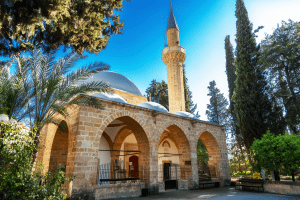
Trooditissa Monastery is a historic monastic site located on the southern slopes of the Troodos Mountains at an altitude of around 1,300 meters. It lies near the village of Platres and is surrounded by dense pine forests. The monastery is officially known as Panagia Trooditissa, a name that reflects its geographical setting within the Troodos mountain range. Historical references place the origins of the monastery around the late 10th century, shortly after the Byzantine iconoclasm period. While the present buildings are later reconstructions, the site is recognized for its long-standing monastic presence and its role in the religious and cultural landscape of Cyprus. Historical Background During the 8th and 9th centuries, the Byzantine Empire experienced a period in which religious imagery was officially restricted and many icons were removed or destroyed. In this broader historical context, some monks and religious communities migrated to remote regions such as Cyprus, where local monastic life continued with less direct imperial enforcement. According to traditional accounts, a monk associated with this period brought a religious icon from Constantinople and initially settled at a monastic site near Limassol, later associated with the Monastery of Saint Nicholas. After spending many years there, he is described in local tradition as moving toward a more isolated monastic lifestyle in the Troodos Mountains, eventually establishing a hermitage in a…

Read more
How the Sea Shapes Cyprus Identity

How the Sea Shapes Cyprus Identity

Seafood in Cyprus is not simply food. It is a social signal, a religious accommodation, and a shared language that connects families, communities, and generations. Although the island is often associated with meat-based traditions, the sea quietly shapes how Cypriots gather, celebrate, fast, and mark time. This article explores how seafood functions as a cultural marker in Cyprus, from tavern tables and religious calendars to seasonal rhythms and modern environmental change. An island that learned to live both with and away from the sea Cyprus is surrounded by water, yet for much of its history, daily life in the interior unfolded at a distance, but coastal cities like Famagusta and Limassol were vital hubs. Repeated invasions, piracy, and political instability pushed communities inland, where farming and herding offered greater security than fishing. This historical caution shaped a culture that relied heavily on land-based food, even as the sea remained ever-present. Rather than dominating everyday meals, seafood became something more selective. It marked moments of gathering, ritual, and occasion. When it appeared, it carried meaning beyond nourishment. This balance between proximity and restraint explains why seafood in Cyprus feels intentional rather than constant. The fish tavern as a social stage The psarotaverna, or fish tavern, is one of the most important social spaces on the island. It is not defined by…

Read more
Azarole in Cyprus

Azarole in Cyprus

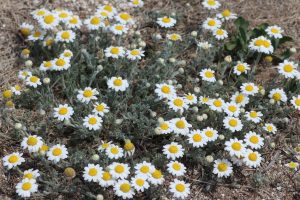
Wander almost any rocky hillside or sunlit maquis in Cyprus during a warm spring day, and you may spot a graceful small tree loaded with clusters of snowy-white flowers that seem to glow against the green. Later in the season those flowers give way to plump, golden-orange fruits that look like miniature apples or medlars hanging like little lanterns among the leaves. This is the azarole hawthorn, a quiet treasure of the island’s wild places that has sweetened Cypriot tables and stories for thousands of years. A Rose-Family Gem of the Mediterranean Crataegus azarolus, commonly known as the azarole, Mediterranean hawthorn or Mediterranean medlar, belongs to the vast Rosaceae family the same clan as apples, roses and cherries. In Cyprus it grows as a deciduous shrub or small tree, usually reaching 3–8 metres tall, perfectly at home in the mosaic of maquis and open woodland that covers so much of the island. Roots Deep in Ancient Soil and Texts The azarole has been part of Cyprus’s landscape since long before recorded history. When Dr F. Unger and Dr Th. Kotschy explored the island in 1862, they recorded it (often under the older name Crataegus aronia) as a common shrub whose tasty fruits were gathered and eaten by locals. Even earlier, the great ancient physician Dioscorides described a “second kind of…

Read more